Environmentalists outline blue-trifecta energy priorities in Capitol rally
Nov 17, 2026 | 4:14 pm ET
Description
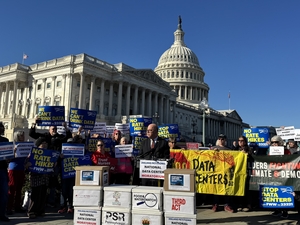
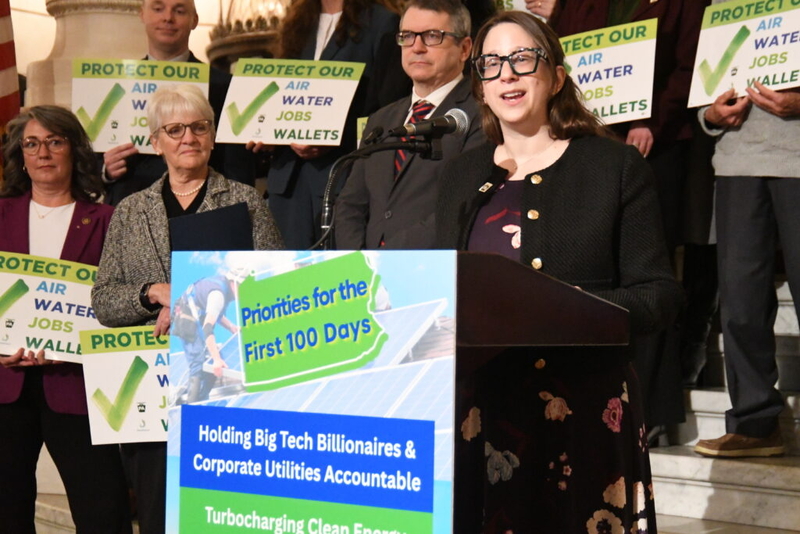
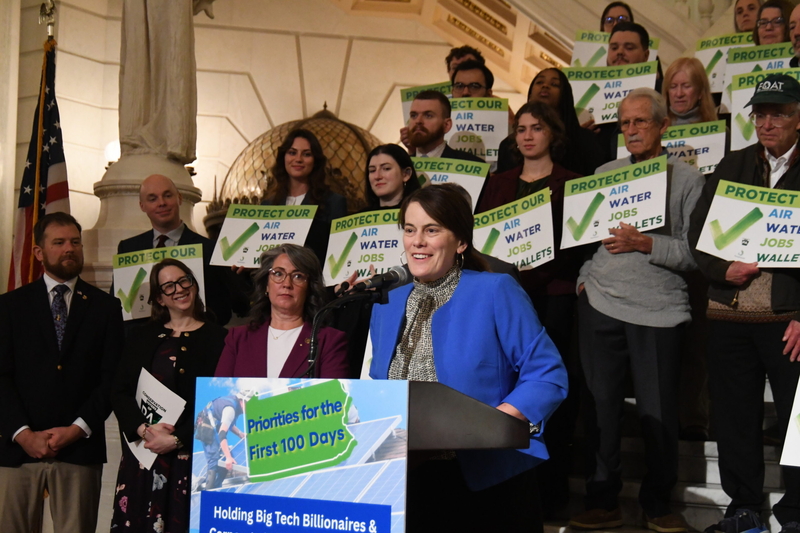
Molly Parzen, executive director of Conservation Voters of Pennsylvania, speaks at a rally on legislative priorities on energy Tuesday, Nov. 17, 2026. (Photo by Peter Hall/Pennsylvania Capital-Star)
Pennsylvania’s divided legislature has proven frustrating for environmentalists and lawmakers who have seen legislation to place guardrails on data center development, expand clean energy and lower utility bills marooned in the Republican-controlled Senate.
With Democrats set to take control in both chambers of the General Assembly, they now hope those legislative efforts will reach Democratic Gov. Josh Shapiro’s desk.
“Pennsylvania voters went to the polls and they delivered an unmistakable mandate for change,” Molly Parzen, executive director of Conservation Voters of Pennsylvania said Tuesday in a rally at the state Capitol.
In the blue wave election that swept legislative races earlier this month, Democrats expanded their one-seat majority in the state House to 13. Democrats also flipped four seats in the state Senate to take control of the upper chamber. And Shapiro skated to a second term, defeating Republican state Treasurer Stacy Garrity.
The legislative session starting in January will be the first without a Republican majority in the Senate in more than 30 years.
“Voters from across the commonwealth demanded an end to the endless gridlock we’ve seen in Harrisburg these last few decades. They demanded a comprehensive agenda to address affordability, and they demanded that their elected representatives deliver on policies that will make real and tangible improvements to their lives,” Parzen said.
Conservation Voters and environmental justice group Penn Future unveiled a plan setting a 100-day agenda for the new legislative session focused on reining in big tech, creating opportunities for renewable electricity and protecting consumers from skyrocketing energy costs.
Patrick O’Donnell, president and CEO of PennFuture, noted that many of the initiatives detailed in the agenda have already passed in the House but languished in the Senate.
“There were no hearings on these bills. There was no discussion on the floor about these bills,” O’Donnell said. “It’s more than just the votes. It’s the voice of people not being able to be heard in that chamber, and it’s important that we’re able to finally have that voice heard in both chambers of our legislature.”
Data center speculation across the commonwealth has contributed to increased electricity bills, bitter fights between developers and communities and concerns about pollution as energy producers look to fossil fuels to quickly increase supply.
The agenda calls on lawmakers to ensure that 100% of the cost of connecting data centers to the grid is paid by developers and that utility regulators have the power to enforce consumer protections. It also cites the need for a ban on non-disclosure agreements between tech companies and government officials.
And it asks lawmakers to pass strict requirements for data center developers to supply their own clean power from sources in the commonwealth and prohibit data centers from running on polluting diesel and natural gas backup generators.
Incoming Senate Energy Committee Chair Carolyn Comitta (D-Chester) said the election also marked an end to fossil-fuel-first energy policy in the General Assembly.
“When it comes to priorities, renewables are at the top of our list,” Comitta said, noting that solar energy is the least expensive way to add new capacity to the grid. But as utilities have satisfied state quotas for renewable energy production, installation of new wind and solar energy facilities has plateaued, she said.
The environmental groups say lawmakers must pass bills that promote renewable energy by requiring all warehouses and distribution centers to be built ready for solar panels to be installed. They also call for legislation establishing state targets for utility-scale battery storage to capture solar energy during the day and release it into the grid during periods of high demand.
Other priorities include bills allowing renters and others in multi-family dwellings to subscribe to community solar power projects and enabling smart-grid technology to allow consumers to link residential batteries and electric vehicles to supply power to the grid during peaks in demand.
The agenda also calls for a 30% tax credit on the cost of manufacturing clean energy products in Pennsylvania, which proponents say will drive economic growth and the creation of union jobs. And it calls on lawmakers to hold utility companies accountable by limiting profits, curbing rate hikes and expanding assistance for people who can’t afford their energy bills.
House Energy Committee Chairperson Elizabeth Fiedler (D-Philadelphia) said the chamber has passed a “tremendous amount” of legislation related to energy, consumer protection and the environment that has already been vetted with stakeholders. Often, those bills have had bipartisan support, she noted.
“A lot of the work that we’ve done over the last two years sets us up really, really well to come out of the gate strong on energy,” Fiedler said, adding that it’s among the topics, such transit funding and raising the minimum wage, both the House and Senate Democratic caucuses plan to tackle early next year.
“All of us recognize this is a huge opportunity, and we need to be on the same page … and have real meaningful conversations about how we can improve people’s lives,” she said. “I feel tremendously optimistic. It is a lot of work, but we are very lucky to have the chance to do this.”
Harrisburg, PA