Legal fight escalates over physician’s sanctions for past drug use
Nov 09, 2026 | 5:36 pm ET

Description
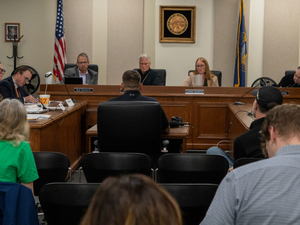
The Iowa Board of Medicine regulates the state's medical profession as part of the Iowa Department of Inspections, Appeals and Licensing. (Photo by Getty Images, board seal courtesy the State of Iowa)
The Iowa Board of Medicine is fighting to sanction an emergency room physician who allegedly “drank to excess and used cocaine, opiates, mushrooms, and marijuana,” often within 24 hours of working.
According to the Iowa Board of Medicine, Dr. Chad Becker, who once practiced at UnityPoint Health’s Iowa Methodist Medical Center in Des Moines, admitted routinely consuming an excessive amount of drugs and/or alcohol prior to 2022, resulting in a referral to the Iowa Physician Health Program for treatment.
According to the board, Becker ultimately chose not to comply with the program’s requirements and so the issue of his substance abuse was referred back to the board in November 2022. In February 2026, the board ruled a license suspension of 90 days was warranted, as was an $8,000 civil penalty.
Becker then went to Polk County District Court, seeking judicial review of that sanction as well as the board’s subsequent refusal to grant him a new hearing on the matter.
In court papers filed earlier this year, Becker said he is currently working as a full-time emergency room physician in California. He stated that after the Iowa board’s disciplinary action was reported to the National Practitioner Data Bank, which tracks physician discipline across all 50 states, the federal Drug Enforcement Administration became involved and a DEA investigator demanded he sign a “voluntary surrender” of his DEA registration to handle controlled substances.
“They claimed that it was because my DEA registration had not been ‘retired’ after my Iowa medical license had expired,” Becker said in a sworn affidavit. He said he has refused to sign the document, and the DEA is now “reconsidering the situation” due to his demand for a hearing on the matter.
“I could lose my career over this,” Becker told the court in his affidavit. “I am sure my career would have been over if I had a lifetime NPDB report that said the federal DEA and the Department of Justice had revoked my DEA registration for ‘admitted’ violations of federal narcotics laws.”
Becker said his “employer group” has applied for privileges at a hospital but has been notified that the hospital “is now in a deep review of my application for privileges due to the NPDB report.” Becker is asking the court “to at least temporarily void” the medical board’s report to the National Practitioner Data Bank pending further orders of the court.
(The board) should not be required to wait until the habitual intoxication becomes so debilitating that there is immediate danger of harm to patients.
“I do not understand why the Iowa Board of Medicine seems so adamant in interfering with my practice in California when they know there were serious issues with the way the whole matter was handled over all these years in Iowa over the complaints by my long-time ex-girlfriend and my ex-wife,” Becker told the court. “It would be horrible if I am run out of practice due to these preliminary notices and actions.”
The dispute centers on the March 2025 action by the board in which Becker was charged with two counts of misconduct: substance abuse and committing a practice harmful or detrimental to the public. The board initially alleged Becker’s substance abuse created the “actual harm of providing care while impaired,” although it later reversed itself on that point.
Becker then entered rehabilitation, according to the board, and began working as a physician in California. It was during his treatment there, the board alleges, that Becker acknowledged he had been using cocaine daily, along with other substances.
At a hearing on his disciplinary charges, the Iowa board presented evidence that Becker admitted to hallucinating while at work and to needing fluids prior to work shifts. Becker has argued the board lacks the authority to impose sanctions against him in part because no patients were harmed, and partly because he no longer practices in Iowa.
In a brief filed recently with the court, the Iowa Board of Medicine took issue with both claims, noting that the Iowa Supreme Court has, in past cases, considered the extent to which a licensee’s substance abuse must interfere with their practice before they’re subject to board discipline.
In those cases, the board says, the court held that a licensing board “should not be required to wait until the habitual intoxication becomes so debilitating that there is immediate danger of harm to patients. The (law) should be liberally applied so as to protect the public by allowing the board to interfere when harm is imminent, and before it occurs.”
As for whether the board can sanction a physician not currently working in Iowa, the board has argued that, absent the disciplinary action it took against Becker, he would have been eligible to renew his license to work in Iowa without any sort of board review.
Becker, the board argues, “drank to excess and used cocaine, opiates, mushrooms, and marijuana on multiple occasions from 2022 until December 2023, often within 24 hours of a work shift.”
The court has yet to rule on the matter.
Des Moines, IA