Greater Yellowstone grizzly bear deaths spike past previous record
Nov 10, 2026 | 6:05 pm ET
Description
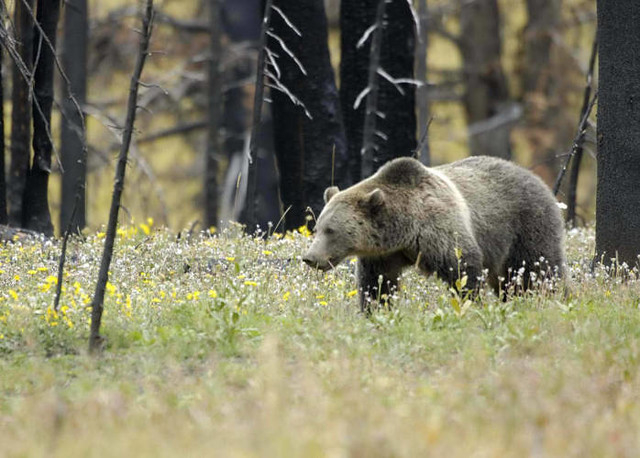
Grizzly bears in the lower 48 states are federally protected as a threatened species. A new memo from U.S. Fish and Wildlife Service Director Brian Nesvik says that endangered animals may be killed as long as the action was not “intentionally directed at a particular animal or animals.” (Photo courtesy of Terry Tollefsbol/U.S. Fish and Wildlife Service)
In Yellowstone National Park and areas just outside the park, a record number of at least 81 grizzly bears have died in 2026, mostly at the hands of humans.
That’s according to preliminary data, through Nov. 10, released by the U.S. Geological Survey and a group of researchers that focus on the species across the Rocky Mountain region.
The database, documented by the Interagency Grizzly Bear Study Team, lists 84 grizzly mortalities this year, including one death dated to last fall and two live removals of bears sent to zoos. The number is the highest documented known and likely grizzly mortalities in a calendar year on record.
In 2025, published USGS data listed 72 known or probable grizzly deaths, though the numbers are routinely updated as wildlife managers continue to investigate some incidents.
With two months left in the year, 2026 is at least a 50% increase from the 10-year average of 54 deaths in the region, and a 12.5% jump from the last two years.
Grizzly bears are classified as a threatened species under the Endangered Species Act, though members of Congress have pushed to delist them in recent years.
Federal shifts
This summer, Secretary of the Interior Doug Burgum journeyed to Montana to announce a proposed rule shifting management of grizzly bears from federal to state control, a long-time goal of Montana, Idaho and Wyoming — the three states with the highest grizzly concentrations.
A population of more than 2,000 grizzlies lives along the Continental Divide, most heavily concentrated in two areas — around Glacier National Park and the Bob Marshall Wilderness area, and Yellowstone National Park.
Under the proposed rule, grizzlies would remain under threatened status under the Endangered Species Act, but a new tiered system would allow more management authority to state wildlife agencies in the Greater Yellowstone and Continental Divide ecosystems — essentially expanding the allowable killing of bears by wildlife managers.
The proposed rule would not authorize a hunting season.
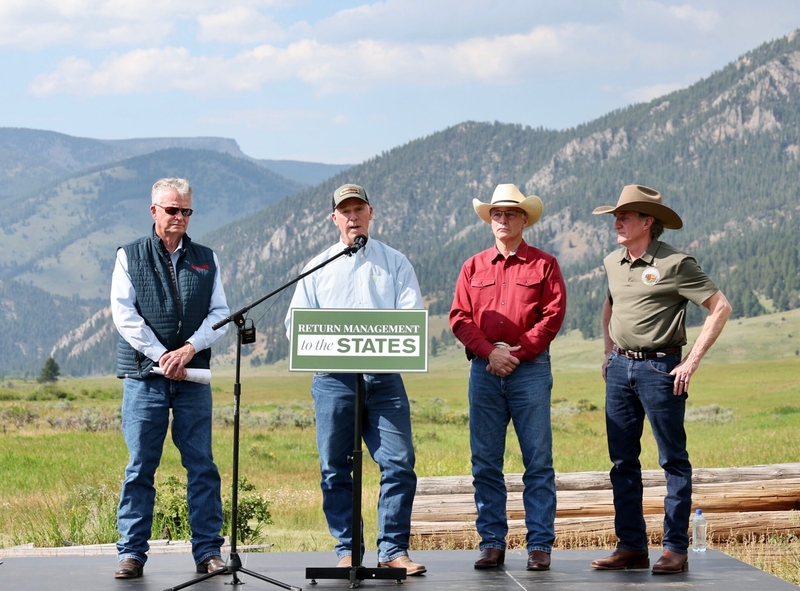
Montana’s all-Republican federal delegation and governor have long-supported delisting grizzly bears and support the proposed rule, while wildlife and conservation organizations decried it as a slippery slope to lowering the population.
Many of those groups raised concerns over the high mortality rate seen around Yellowstone this year as well, saying such an increase in deaths should be a reason to slow down the shift to state management.
“Record high grizzly deaths show bears need more protection, not less, as they continue expanding their range and attempt to reoccupy the places they once freely roamed,” said Adam Rissien, rewilding manager with WildEarth Guardians. “It is no surprise conflicts are increasing and more grizzlies are getting killed. Bears are having to search for more food in more places because of shorter winters, more severe summer heat and drought, and a steep drop in whitebark pine nuts that they’ve historically relied on for a substantial portion of their fall diet.”
Among the documented mortalities in the Yellowstone area, more than 50 were attributed to humans, including 11 killed by vehicles, two that drowned in a man-made canal, one killed in self-defense and one attributed to a human when a tracking collar was found with no carcass.
Wildlife agency officials killed 36 “problem bears” that had either killed cattle, damaged crops or become habituated to humans or food rewards.
“Dead grizzlies are the predictable price of putting more cattle in grizzly country,” said Patrick Kelly, Montana director for Western Watersheds Project. “Livestock conflict has killed more Greater Yellowstone grizzlies this year than any other cause, yet the Trump administration is pushing national forests across the region to restock vacant grazing allotments, and several already have.”
Matthew Gould, the Interagency Grizzly Bear Study Team’s leader, told the Daily Montanan last year that record-high number of bears in the region, and record crowds flocking to public lands, including Yellowstone, create more instances of bears and humans coming into conflict.
Of the 84 grizzly deaths listed, 15 are still under investigation.
In the 406
In Montana, the state department of Fish, Wildlife and Parks has its own grizzly mortality information dashboard, launched in 2024, to track human-caused grizzly deaths.
FWP said in a news release at the time that the dashboard is part of an effort to increase transparency, educate Montanans on why grizzlies are killed or die when they are currently federally protected, and to prove that the state is ready to manage grizzly bears on its own.
According to the dashboard, there have been 41 human-related grizzly mortalities this year, up from 32 in 2025. Some of those deaths overlap with the data from the Greater Yellowstone Ecosystem.
Similar to that data, the majority of deaths are human-related.
Eleven recorded deaths were due to vehicle collisions, one was considered self-defense, four a case of mistaken identity, and 15 were conflict management removals.
Helena, MT