Idaho judge orders release of police employment records to InvestigateWest, Invisible Institute
Nov 10, 2026 | 4:10 pm ET
Description
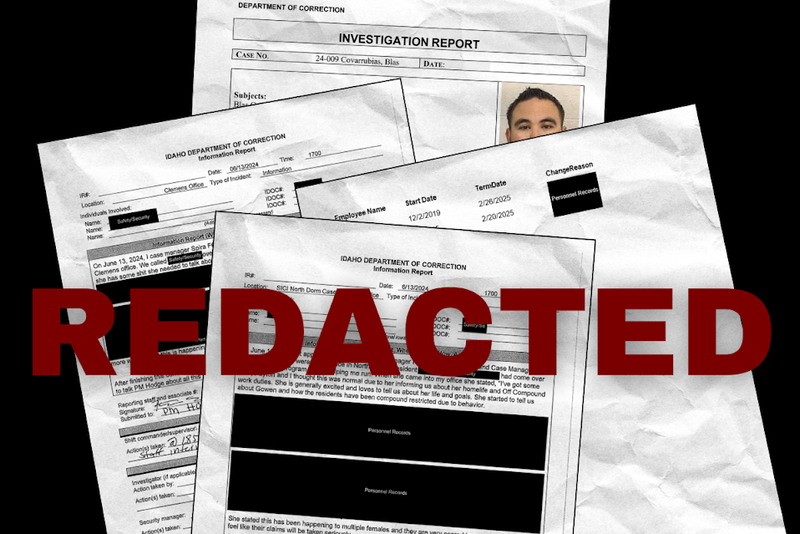
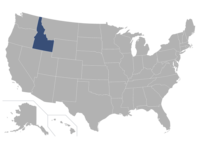
After InvestigateWest and Invisible Institute filed a lawsuit seeking the records, Ada County District Judge Patrick J. Miller ordered Idaho State Police and Idaho Department of Correction to release information about officers’ employment history, including the dates of their employment and the reason for their separation. (InvestigateWest illustration)
This article originally published in InvestigateWest on Nov. 10.
Idaho State Police and the Idaho Department of Correction improperly withheld police employment records and other information from two news organizations, according to a state court ruling ordering the information be released.
InvestigateWest and the Invisible Institute sued the state agencies on June 16 for allegedly concealing information about officers’ employment histories that were previously disclosed to the news outlets. InvestigateWest used officer employment records to expose alleged sexual misconduct by dozens of Idaho prison guards in an October 2025 series, and to show how many were allowed to resign without facing other disciplinary action or criminal prosecution. The reporting prompted Idaho lawmakers to remove a loophole in a sexual abuse law that made it more difficult for prosecutors to charge prison staff, and to order an independent review of how the women’s prison system handles reports of sexual abuse.
After those stories were published, reporters from InvestigateWest and the Invisible Institute sought updated officer employment records, but the Department of Correction and state police denied those requests, stating that they would no longer disclose whether an officer retired, resigned or was fired. A records clerk also told the Invisible Institute that Idaho State Police leadership decided to “disable” a tool that allowed them to search an internal employment database.
In a Nov. 5 ruling, Ada County District Judge Patrick J. Miller ordered the state agencies to release information about officers’ employment history, including the dates of their employment and the reason for their separation. That includes information about two former prison guards accused of sexually assaulting an inmate, who described the assaults and the mental toll it took on her to an InvestigateWest reporter.
“This ruling is a win for government transparency — and accountability — in Idaho,” said Jacob Fries, InvestigateWest’s executive director. “These public records had been essential to our reporter’s work, which led directly to a new state law helping protect incarcerated people from abuses of power.”
State law broadly defines “employment history” to include the entire course of a person’s employment, from when it started to the nature of how it ended, Judge Miller wrote, concluding that whether someone was terminated, retired or resigned is public information.
The agencies argued that disclosing an officer was terminated, for example, would suggest potential disciplinary action against the individual, and that legislators specifically exempted disciplinary details from disclosure. Idaho State Police also claimed the requested employment history information was contained in confidential decertification files that it said are exempt.
Judge Miller said disclosing the reason for separation doesn’t amount to revealing the underlying details behind an employee’s departure. And just because an officer’s employment history and dates of service are in the same file as confidential details doesn’t mean they “lose their character” as disclosable records, the judge wrote.
The Idaho Public Records Act “does not categorically shield every piece of information contained within an otherwise exempt file. To hold otherwise would permit an agency to withhold nonexempt employment-history information based solely upon the location in which it is maintained,” according to the ruling.
The judge also ordered the prison system and state police to go back and search for database records requested by the news organizations.
The Invisible Institute had previously obtained a database of all officers who had been certified in Idaho to date, and later requested updated information. The nonprofit public accountability journalism organization, which is based in Chicago, uses the data for its National Police Index, a searchable database of certified police and correctional officers by state and where they’ve worked.
Idaho State Police responded that the tool it used to generate those reports was no longer in use because it was unreliable and was generating different results for the same queries. The agency said it had no records in response to the public records request.
The state’s Public Records Act doesn’t require agencies create new records when one doesn’t already exist. But Miller said Idaho State Police’s decision to deactivate a tool doesn’t eliminate those records or “transform them into nonexistent information.”
A public-facing search tool on the state Peace Officer Standards and Training website that allows people to search and retrieve similar information about officers is also “inconsistent” with ISP’s claim that it doesn’t have records, Miller said.
“An agency may not defeat the public’s statutory right of access by choosing to maintain public records in a system from which the agency claims it cannot retrieve them, by disabling a retrieval function, or by shifting to the requester the burden of identifying each responsive record by a name or identifier already contained within the agency’s records,” according to the ruling.
The court said Idaho State Police hasn’t shown that it properly searched for records and ordered it to go back and look for the information.
Miller also ordered the disclosure of the names of several state employees accused of misconduct, finding they were improperly redacted from records.
This litigation was supported by the National Freedom of Information Coalition through a grant from the John S. and James L. Knight Foundation, by the Society of Professional Journalists through a grant from the SPJ Legal Defense Fund, and a grant from the Idaho Press Club.
Boise, ID