Lawsuit: Forest Service ignoring more than 1 million acres of lynx habitat to OK logging, burning
Feb 26, 2026 | 4:26 pm ET
Description
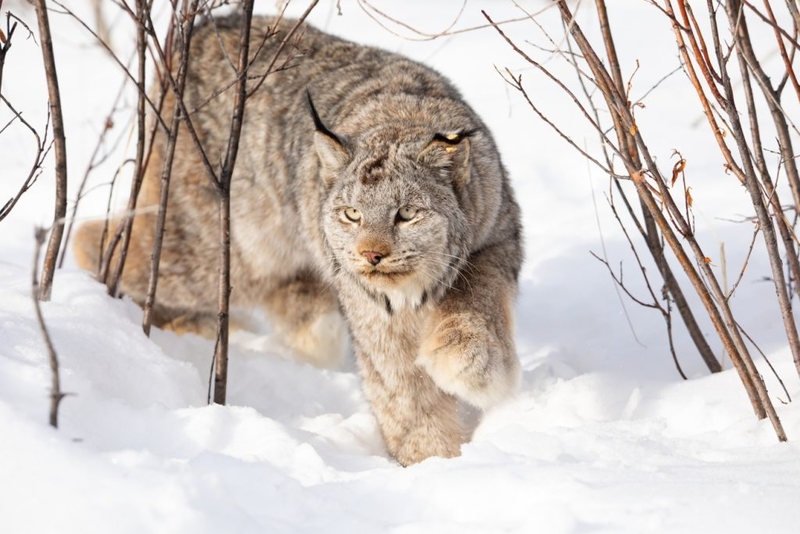
The U.S. Fish and Wildlife Service is proposing a new rule designating new areas of Idaho, Montana, Colorado and New Mexico as critical habitat for Canada Lynx. (Courtesy photo, USFWS)
A new lawsuit filed by four conservation groups alleges that the United States Forest Service approved a large logging project in southern Montana by ignoring habitat critical to Canada lynx and grizzly bears, disregarding scientific input and either disregarding or shortening public input.
The suit, filed in federal court in Missoula, alleges that the Beaverhead-Deerlodge National Forest decided to disregard more than 1.1 million acres of mapped lynx habitat in order to green-light a commercial logging project on more than 1,000 acres, with prescribed burning on more than 12,000 acres, while creating nearly 30 miles of temporary or permanent road construction. The Greenhorn Project Area is located 10 miles south of Virginia City and five miles east of Ruby Reservoir, and it encompasses 41,900 acres of National Forest Systems lands.
The four groups — Alliance for the Wild Rockies, Gallatin Wildlife Association, Native Ecosystems Council and the Council on Fish and Wildlife — say the Forest Service’s plan is a violation of the National Environmental Policy Act, the National Forest Management Act and the the Endangered Species acts.
“The federal agencies concede that the project is likely to adversely affect grizzly bears and white bark pine, which are both listed under the Endangered Species Act,” the suit said.
The U.S. Forest Service has a policy of not commenting on pending litigation.
While the lawsuit is new, the controversy itself stretches back several years. What began in September 2017, culminated in May 2025 when, after objections, lawsuits, and a biological opinion from the United States Fish and Wildlife Service, the Forest Service withdrew its decision to authorize the Greenhorn Project.
However, on Nov. 20, 2025, the Forest Service issued a decision that updated estimations of lynx habitat in Montana, removing 1.1 million acres from the Beaverhead-Deer Lodge Forest’s management plan. Two weeks later, the Forest Service issued a finding of no significant impact for the Greenhorn Project, and also ruled that the project would be exempt from the administrative objection process. The next day, the Forest Service opened the public comment period for only five days.
“The Forest Service did not allow public comment on the final supplemental (environmental assessment) and Finding of No Significant Impact,” the lawsuit said.
The lynx habitat has been in place in the Beaverhead-Deerlodge National Forest since 2001, and there have been more than 2.7 million mapped acres for the habitat. A team of researchers in 2020 determined that the Beaverhead-Deerlodge National Forest met the criteria for an “occupied” lynx forest.
“The proposed action would result in direct effects to lynx habitat by changes in stand structure and species composition by regeneration harvest, pre-commercial thinning harvest, upland cutting and prescribed fire actions,” the Forest Service has admitted. “There would also be potential disturbance effects to lynx due to increased traffic, human activity, and equipment use during project activities.”
The lawsuit also claims that 11 of the 16 commercial logging areas proposed for the Greenhorn Project are located in areas considered to be have high or moderate chances of being lynx habitat, according to research performed in the forest in 2021.
“In other words, all commercial logging units for the Greenhorn Project are located in areas mapped by Olson et. Al. (2021) as lynx habitat,” the lawsuit said.
The lawsuit, while primarily concerned with lynx, also references the area as grizzly bear habitat and an important connector to the Greater Yellowstone Ecosystem, as well as critical habitat for sage grouse.
The court documents allege that the Forest Service did not disclose the area’s proximity to sage grouse leks.
“The project analysis documents do not disclose the amount of grizzly bear ‘secure habitat’ under the Forest Plan definition,” the suit said. As much as 33% of the known grizzly bear habitat in the Forest “could be temporarily affected,” by the Greenhorn Project, the group said.
“The Forest Service repeatedly downplays the effect of implementing the 2020 map, at times, even representing that no lynx habitat is impacted,” the lawsuit said. “These statements are misleading and/or false.”
The groups ask federal magistrate Kathleen L. DeSoto, who has been assigned the case, to declare that the project violates federal law and to vacate it and award attorneys fees.
“This amendment undermines lynx recovery, which the Forest Service is legally bound to pursue for all species listed under the Endangered Species Act,” said Mike Garrity, the executive director of Alliance for the Wild Rockies. “Although both the Forest Service and Fish and Wildlife are required by law to follow the best available science, in this case, both agencies are ignoring the best available science.”
Helena, MT