Kansas child welfare committee plans five-hour closed meeting to review foster care cases
Jun 29, 2026 | 9:08 am ET
Description
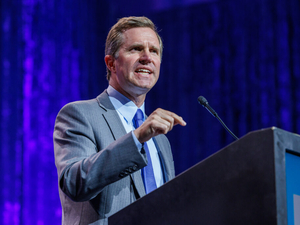
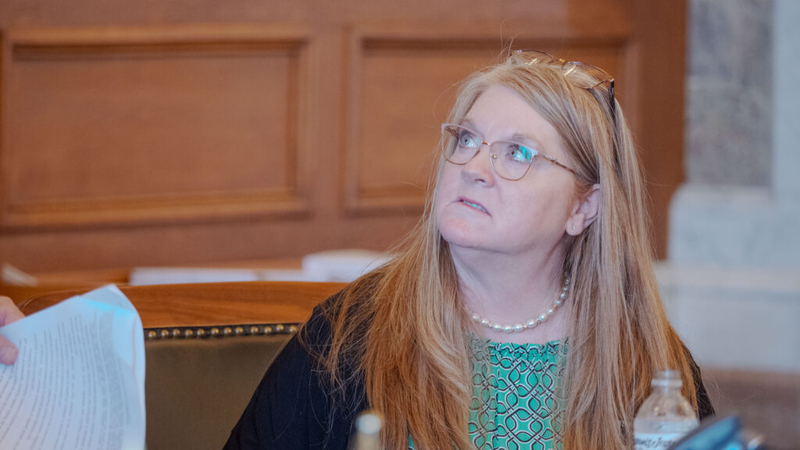
Rep. Cyndi Howerton appears during a March 26, 2026, legislative hearing at the Statehouse in Topeka. She is defending her decision as chair of the joint foster care committee to shut the public out of a planned five-hour meeting with foster care providers. (Photo by Sherman Smith/Kansas Statehouse)
TOPEKA — A Kansas legislative committee plans to meet in secret for five hours Tuesday to discuss foster care cases with state agencies, raising questions from transparency advocates about why so much of the meeting is closed to the public.
The Joint Committee on Child Welfare System Oversight meeting agenda says five foster care contractors will discuss cases but does not specify whether those discussions will include identifying information about children, how many cases each agency will present or what lawmakers hope to accomplish.
Committee chair Rep. Cyndi Howerton, R-Wichita, said the committee requested the Department for Children and Families and each agency bring cases where family reintegration and permanency have been challenging.
“The purpose is not to shield providers or DCF from scrutiny,” Howerton said. “Reviewing those cases across providers allows the committee to identify common themes, service gaps, policy barriers, or other issues that may require legislative attention.”
Some child welfare advocates think the closed meeting is unnecessary.
“I feel at this point that the committee sides with the agencies, and those agencies’ statistics can be skewed,” said Sherry Lesher. “A lot of what they present is statistics. I don’t know how accurate they are, but the committee seems to take their word as gold.”
Lesher regularly attends and speaks at committee meetings, and has done so since her 17-year-old son A.J. Iverson died by drug overdose. The day before he died, Lesher pleaded with Saint Francis Ministries, one of the state’s foster care contractors, to take him to a psychiatric facility. When a therapist was sent to their home, Iverson, who had what Lesher said was the mentality of a 10-year-old, promised he wouldn’t do drugs again. The therapist refused to intervene and Iverson died in his sleep that night.
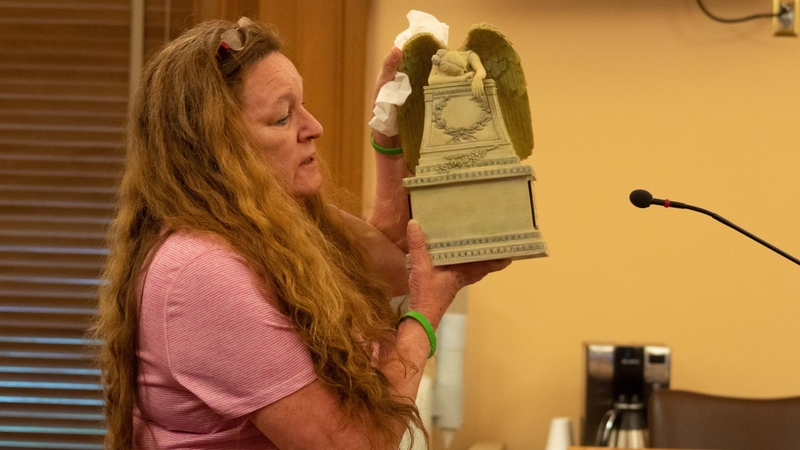
Lesher said the committee’s meetings have begun to feel like they have a “prickly divide” after a recent rule change that limits members of the public’s ability to speak before the committee to once per year, unless invited by the committee to testify.
“Doing this behind closed doors — if they needed to talk to the foster care agencies like this, why couldn’t they schedule this for another day, or do it one by one, instead of closing the meeting?” Lesher said. “If they were so above board, they wouldn’t have so many people up there saying they’re wrong.”
Howerton said the private meeting time will allow committee members to ask questions “without risking the disclosure of protected information.”
Emily Bradbury, director of the Kansas Press Association and co-chair of the Kansas Coalition for Open Government, said closed meeting would make sense if it were going to include identifying information of children in foster care, but not if lawmakers are only reviewing agency data.
“Kids in the foster care system should absolutely be protected,” Bradbury said. “But I have a hard time thinking that it’s going to be specific. If it’s going to be speaking in generalities and talking about harm done, then the public needs to know.”
Bradbury said closed meetings can be necessary, but she questioned whether the agenda provides enough information about why this meeting needs to be closed. The Kansas Open Meetings Act allows meetings to adjourn and meet privately to discuss specific, legally authorized matters. No official votes or final actions can occur while the meeting is closed.
“As an advocate for transparency, I do understand that there are instances where meetings need to be closed, but I also believe that those meetings should be used as little as possible,” Bradbury said. “That’s a really long time to have a closed meeting, especially when we’re talking about members of our population that are very vulnerable.”
Lesher said the closed meeting adds to what she views as a lack of transparency surrounding the committee’s work.
“People need to watch this committee,” Lesher said. “It’s not transparent. So much of this stuff is done in the dark. These are everybody’s kids.”
Howerton said the closed meeting does not represent a lack of transparency and that key takeaways will be discussed publicly during a later part of the meeting “without jeopardizing the privacy of any Kansan.”
Topeka, KS