Judge says U.S. Fish and Wildlife can reevaluate cattle grazing decision in Red Rock Lakes
Dec 19, 2025 | 10:27 am ET
Description
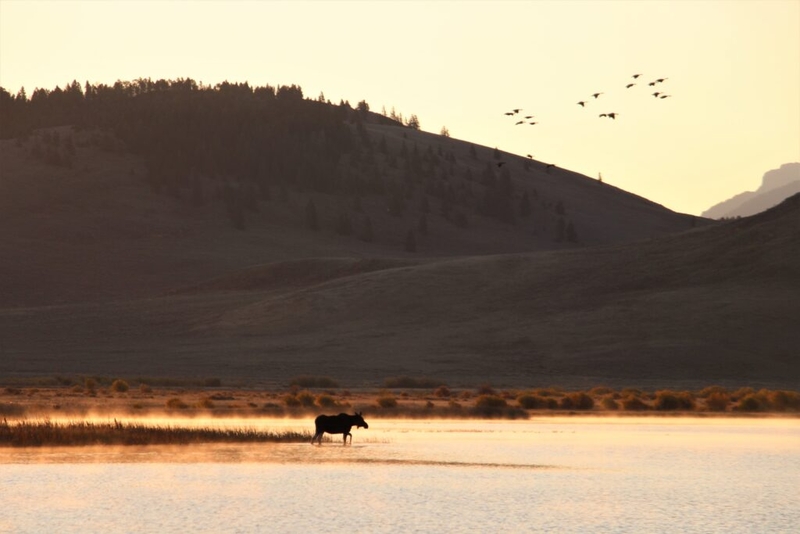
At Red Rock Lakes National Wildlife Refuge, cow moose comes to the edge of Widgeon pond at sunrise as the landscape is bathed in early morning yellow light and steam rises from the early morning chill with geese flying overhead. Photo by Cortez Rohr/USFWS
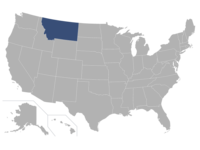
A federal judge has said the U.S. Fish and Wildlife Service may reconsider its decision to allow cattle grazing at Red Rock Lakes National Wildlife Refuge in southwestern Montana after the agency said it would reexamine assumptions it made more than 30 years ago to allow commercial grazing.
Federal District Court Judge Donald Molloy denied WildEarth Guardians and Western Watersheds Project’s motion to vacate — or completely stop — the grazing permits, saying the agency has made a good-faith effort to reconsider its plans, especially since the originally analysis done in 1994 was based on the idea that USFWS staff would monitor the effects of grazing at the refuge, something the agency admitted hasn’t ever happened because of inadequate staffing.
Meanwhile, the two conservation organizations argued continuing to allow grazing could be doing environmental damage, especially since there was no oversight.
The Red Rock Lakes Refuge is the largest wetland system in the Greater Yellowstone Ecosystem and includes habitat for trumpeter swans, sage grouse, Arctic grayling and grizzly bears. However, cattle grazing has taken place intermittently since 1876, but was stopped for a period because of overgrazing.
In 2009, the U.S. Fish and Wildlife Service affirmed that commercial livestock grazing was a compatible use for the refuge, but the “key issue” was whether there was adequate monitoring of the grazing programs, something the service admits it has never had enough staff to properly carry out.
That was, in part, why the groups challenged the cattle grazing permits, and the agency’s decision to continue it. And, it was why they urged the court to set aside the decision to allow grazing.
However, the U.S. Fish and Wildlife Service also asked Molloy to allow it to voluntarily re-examine the decision, including a promise to consider the grazing program, understanding that the federal agency will likely not have staff to monitor the grazing. In court documents, the agency then said after it evaluates grazing under that criteria, it will determine whether grazing is still compatible.
“(The service) has never been able to fully implement (the grazing plan) as a result of staffing resources and shortages,” the court record said. “These shortages, the service said, ‘have prevented its ability to monitor the impact of grazing on vegetation, wildlife, or nutrient level to the degree anticipated by (the plan).
“Thus, on remand, the service will review the plan as actually administered since 1994 in consideration of the funding and staffing resource limitations.”
Indeed, earlier this week, the Oregon Capital Chronicle reported that since President Donald J. Trump took office in January, the U.S. Fish and Wildlife Service has seen a 20% reduction in staff.
Service Regional Director Matthew Hogan said it will implement a new improved grazing monitoring protocol at Red Rock Lakes, and gather data points from around the refuge. He told the court that it would prepare and share the data publicly.
From there, the service also committed to performing a new environmental analysis, as required under the National Environmental Policy Act, and a new compatibility determination.
“Essentially, the service seeks remand to implement new techniques and obtain new data that will allow it to address ‘potential deficiencies with the challenged decision,’” Molloy wrote.
The conservation groups also raised concerns that the USFWS was acting in bad faith, pledging work while allowing more degradation from grazing. However, Molloy rejected that argument.
“The service has provided a multi-part process that consists of new data collection and analyses that it plans to implement upon remand, which will culminate in a new environmental assessment and compatibility determination, and which may result in the termination or modification of the permits. Such a process demonstrates that the outcome is not predetermined.”
Even though the conservation groups contend that cattle grazing continues to degrade the refuge, they cheered the decision because they said it forced the federal agency to admit that it hasn’t followed its own plans for decades.
“It’s unfortunate that it took a lawsuit from conservation organizations to get the service to acknowledge that it’s been derelict in its duty,” said Chris Krupp, public lands attorney with WildEarth Guardians. “Now, the service must honor its commitment to the court to reevaluate whether cattle belong on this wildlife refuge and remove them if they don’t.”
Helena, MT