Judge Rules State Must Pay $1.1M In Oʻahu Jail Suicide
Oct 13, 2026 | 6:01 am ET
Description
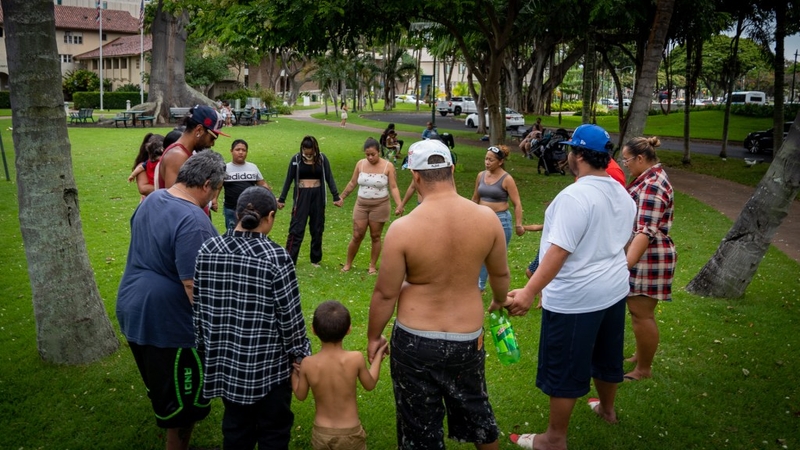
Photo courtesy of Honolulu Civil Beat
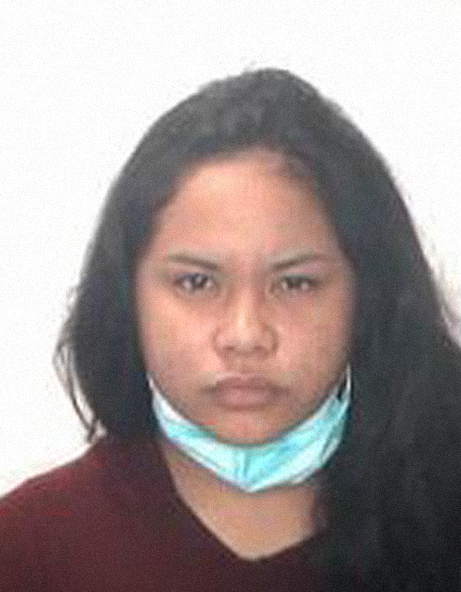
A Honolulu judge has awarded $1.1 million to the family of a woman who died after hanging herself in a disciplinary segregation cell at the Oʻahu Community Correctional Center in 2022. It is the latest in a series of costly lawsuits triggered by suicides in Hawaiʻi's prisons and jails.
Diamond Simeona-Agoo, 21, had repeatedly threatened to kill herself, and previously tried to hang herself with a bedsheet while in custody at OCCC. She also had a long, well-documented history of mental illness that included post-traumatic stress disorder, methamphetamine-induced psychosis and audio hallucinations.
In his decision earlier this month, Oʻahu Circuit Judge Jordon Kimura declared that placing Simeona-Agoo in solitary disciplinary segregation with inadequate precautions were substantial factors in her death. Her act of self-harm "does not sever causation," the judge wrote.
"They left her alone with the previously used means of hanging and an opportunity to complete the act before intervention," Kimura wrote in his 33-page decision in the case. "It was the foreseeable risk to which the omitted precautions should have been responsive."
Toni Schwartz, spokeswoman for the Attorney General’s Office, said they reviewing the judgeʻs order. The state Department of Corrections and Rehabilitation did not respond to a request for comment.
The decision in the Simeona-Agoo case is the latest in a series of expensive court judgments and settlements involving inmate suicides that have cost state taxpayers millions of dollars in recent years.
Some of the more expensive cases include a $550,000 settlement in 2022 in connection with a suicide by inmate Daisy Kasitati at Maui Community Correctional Center; an $800,000 settlement of a lawsuit over the death of Jimuel Gatioan at OCCC in 2023; and $1.375 million in the suicide of Joseph O’Malley at Hālawa Correctional Facility in 2017.
"Basically what it says is there is a longstanding problem about the inability to take care of people who have severe mental health issues in prisons, and they shouldn't be there," said Honolulu lawyer Eric Seitz, who sued on behalf of Simeona-Agoo's estate and her mother, Joycelyn Simeona. "They should be in medical facilities."
Searching For Solutions
Department of Corrections and Rehabilitation Director Tommy Johnson testified in the Simeona-Agoo case the prison system has tried to transfer seriously mentally ill inmates to the Hawaiʻi State Hospital for the mentally ill. However, Johnson said those transfers are approved in only about one out of every 10 cases.
Last year Seitz agreed to an out-of-court settlement with the state that required outside experts to inspect and assess the mental health services provided in Hawaiʻi's prisons and jails. Those nationally known experts -- Dr. Jeffrey Metzner and Dr. Bhushan Agharkar -- produced a report that concluded mental health services at OCCC and Hālawa were inadequate and "very problematic."
Data on deaths in custody compiled by Honolulu Civil Beat this year showed that suicides or suspected suicides amounted to one-third of all deaths in the statewide Hawaiʻi correctional system during 2024 and 2025. By comparison, U.S. Department of Justice data shows suicides accounted for only 8% of all deaths in state and federal prisons across the country in 2019, which is the most recent data available on suicides in prisons.
Seitz said he is representing other clients in yet another inmate suicide case as well as an attempted suicide at OCCC. Those cases are scheduled to go to trial later this year, he said.
He said the state needs to reform the mental health care systems in Hawaiʻi to provide adequate facilities for the mentally ill rather than putting them in prison. Such facilities, he said, would function similar to the Hawaiʻi State Hospital, where people accused of crimes can receive appropriate care.
"We need them for adults, and even more importantly, we need something for kids," Seitz said. "We have no secure mental health facility in the state of Hawaiʻi for kids."
Earlier this year DCR requested and received additional funding to try to upgrade mental health services. Johnson has estimated it may cost $4 million to $8 million a year to hire the additional professional staff needed in state prisons and jails, including psychiatrists, psychologists, psychiatric social workers and case managers.
Johnson also announced a plan last summer to move several dozen minimum security inmates from Hālawa to the more open Waiawa Correctional Facility in Central Oʻahu, which he said would provide the prisoners with a "more therapeutic environment."
A Short, Troubled Life
According to Kimura's decision, Simeona-Agoo never finished high school, and began using methamphetamine at about age 17. Her records show a history of meth-induced psychosis as well as PTSD, hallucinations, paranoia, poor impulse control and "difficulty regulating her mood and conduct."
She served time at both OCCC and the Women's Community Correctional Center, and when she died she was awaiting trial on a robbery charge. Records show she underwent multiple evaluations for suicide risk as well as a series of placements on suicide watch while she was in custody, according to the Kimura decision.
She told jail staff on Feb. 7, 2022 she wanted to kill herself and wrapped a sheet around her neck, prompting staff to intervene and place her on suicide watch. She was later released back into general population, but on March 11, 2022 she tried unsuccessfully to hang herself with a sheet tied to a vent in her cell.
On June 15, 2022, Simeona-Agoo was approved for release from the mental health module of the jail, but she was then moved to disciplinary segregation to punish her for a series of misconduct penalties. Those included slapping a slice of bread covered with an "unknown liquid" on a correctional lieutenant's back, threatening a correctional worker and punching a nurse in the face.
Simeona-Agoo hanged herself with a sheet tied to a vent in her cell shortly before 7:30 p.m. that same day, and was pronounced dead at The Queen's Medical Center five days later. Kimura's decision found that the jail staff "failed to exercise reasonable care" in leaving her alone in disciplinary segregation with access to the means to hang herself.
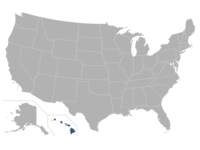
Honolulu, HI