Hawaiʻi Supreme Court Rebukes DOE: Pay $14M To McKinley High Sex Abuse Victim
Oct 13, 2026 | 6:01 am ET
Description
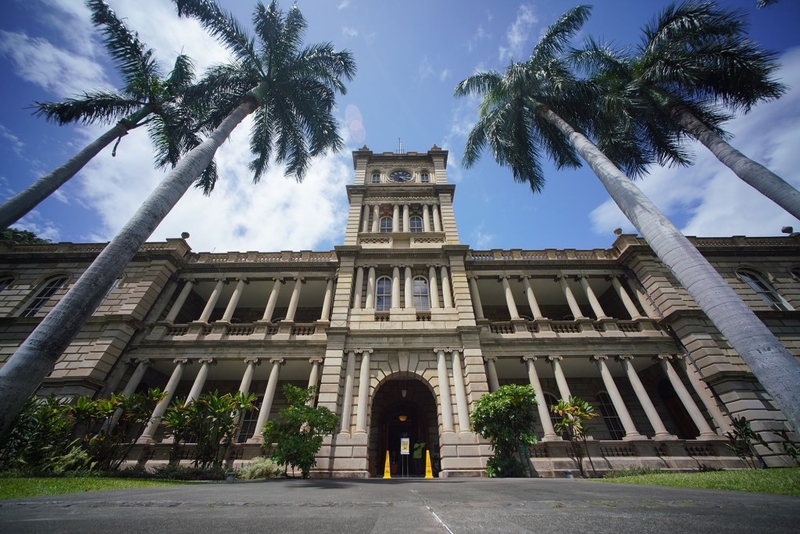
Photo courtesy of Honolulu Civil Beat
In a stunning rebuke of the Hawaiʻi Department of Education, the Attorney General and a lower court judge, the Hawaiʻi Supreme Court has upheld a $14.2 million verdict in favor of a developmentally disabled girl who a civil case found had suffered years of sexual abuse at President William McKinley High School.
The unanimous decision last week means the victim, identified only as “Amy” to protect her identity, will receive funding for therapy, nearly 20 years after teachers became aware that she was being sexually exploited by other students and four years after Honolulu Circuit Court Judge Jeffrey Crabtree determined the education department had shirked its responsibility to protect her.
Amy was 14 years old when the abuse began and 17 when she and her mother filed their lawsuit. She is now 32.
“It's outrageous,” said the plaintiffs’ lawyer, Eric Ferrer. ”The case should have been over within one or two years after we filed a complaint” in 2013. It was clear by then, he said, who was at fault.
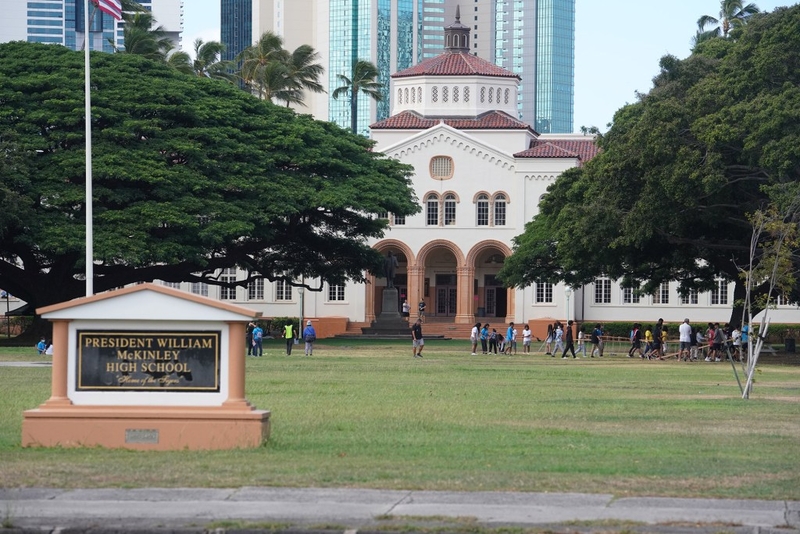
“We knew from depositions, from interrogatories, that liability in this case was clear: multiple teachers and administrators were aware of what happened, and they did nothing about it,” Ferrer said. “Worse still, they didn't tell mom what was going on with her daughter.”
Toni Schwartz, a spokeswoman for the Attorney General's Office, said they are reviewing the opinion and its implications.
"Because this matter involves sensitive circumstances and ongoing legal proceedings, we have no further comment at this time," she said.
At issue before the high court was whether a lower court judge had properly carved out $4.3 million of the $14.2 million verdict, saying the boys who had abused Amy would have to pay it, even though the boys — now grown men — hadn’t testified during the 66-day bench trial over which the judge presided. The judge’s move had the practical effect of making it impossible for the victim to recover about 30% of the judgment, most of which was awarded for her future medical expenses.
It’s not just that the boys and their families didn’t have the money to compensate Amy, Ferrer said, but also the fact that the Department of Education was responsible for overseeing the boys’ behavior.
“The DOE has the responsibility to supervise, not just our client, not just Amy, but all of these boys,” he said. “So all roads lead back to the DOE in terms of responsibility for supervision.”
The court in its ruling on Friday found it had been wrong to make the boys responsible for part of the damage Amy suffered.
In addition, Attorney General Anne Lopez and her deputies, Skyler Cruz and Jennifer Crum, had appealed Crabtree’s decision to limit Amy’s depositions to two, 90-minute sessions. The education department and attorney general wanted to keep questioning her even though Crabtree’s court-appointed expert said the two depositions she had already participated in were exacerbating her trauma symptoms.
The Supreme Court ruled it had been OK for Crabtree to limit the depositions.
Opinion Recounts Years Of Abuse
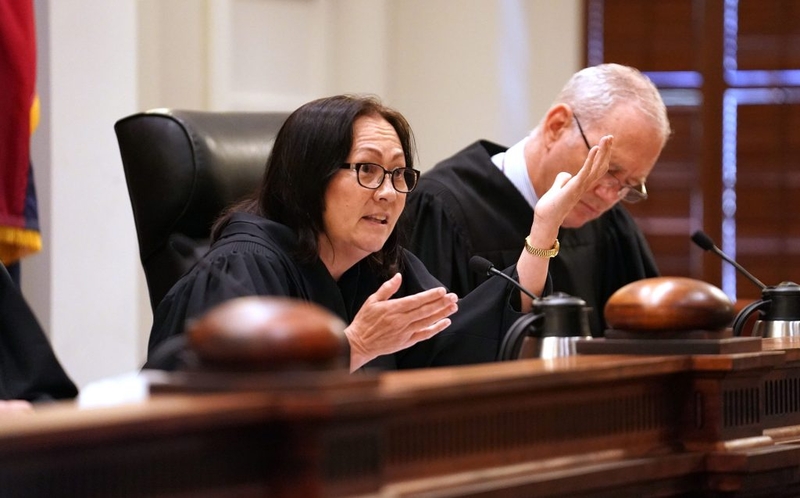
In the court’s 74-page opinion, Associate Justice Sabrina McKenna recounted the facts that came to light in the lower court civil trial, which found several boys at McKinley sexually preyed on Amy, who had the cognitive capacity of a 5-year-old and was unable to consent to having sex.
Soon after Amy enrolled as a freshman in 2008, reports began surfacing that she was performing oral sex on higher-functioning male classmates, the opinion says. Also during this time, the opinion said, a senior student took Amy to Ala Moana Beach Park where he raped her orally, vaginally and anally in a restroom.
By February 2009, multiple teachers became aware of reports that Amy was engaging in oral sex at school. In 2010, teachers reported that she was caught in a closet with the same senior student.
The next year, her art teacher, who had already been told that Amy had performed oral sex at school, let her and a male classmate go to the bathroom at the same time.
Along the way, the opinion says, Amy’s teachers and McKinley administrators failed to follow policies and procedures designed to protect vulnerable students like Amy.
The incidents led to no criminal charges, but Amy and her mother filed a civil suit against the education department in 2013. After years of litigation and a two-month trial, Crabtree awarded the plaintiffs the $14.2 million in November 2022. On his own accord the judge said the boys had to pay $4.3 million of it, even though they hadn’t been named as defendants and were never called to testify.
The Supreme Court rejected Crabtree’s move to shift damages to the boys, saying the Department of Education and attorney general had never tried to place responsibility on the boys. In fact, the court noted, the only person the attorney general tried to shift blame to was Amy’s mother, alleging that she had failed to disclose information to the school. The judge rejected that argument, but said the boys, not the mother, bore some of the liability.
Friday’s ruling by the Supreme Court puts the education department on the hook for the full amount. It includes approximately $200,000 for Amy’s past medical expenses, $7.9 million for future care and treatment and $4 million in general non-economic damages.
The verdict also includes approximately $190,000 for past medical expenses for Amy’s mother, $80,000 for future medical expenses and $2 million for general damages.
In affirming the $2 million for Amy’s mother, the supreme court said, “Given what happened to [Amy], the court cannot think of anything more distressing to a parent generally or [Mother] in particular, short of a child’s death.”
AG Wanted To Keep Questioning Victim
The Supreme Court also rejected the attorney general’s argument that Crabtree should have let them continue to depose Amy beyond the two 90-minute depositions they conducted.
At the time, the court — citing the trial record — said Amy was suffering from severe post-traumatic stress disorder. Complicating the problem, the opinion said, was that the standard treatment, cognitive behavioral therapy, didn’t work for Amy because of her limited cognitive abilities.
Amy had already suffered a psychotic breakdown for which she had been admitted to a psychiatric hospital in 2011 and was under a number of medications to stabilize her at the time of the 2016 depositions. Her therapist saw signs that the depositions were triggering another psychotic episode that could require hospitalization.
In addition, there was concern about the reliability of her deposition testimony.
During her first deposition, the supreme court noted, “Amy gave inaccurate responses regarding basic aspects of her personal history, including testifying (1) that she rode a Roberts Hawaiʻi school bus during her freshman year, even though that did not happen until she began attending Variety School, and (2) that she owned a ‘German Shepherd,’ despite not having one.”
Amy’s condition further deteriorated after a second deposition focused largely on the sexual abuse she had suffered. Her lawyers asked Crabtree to stop the depositions. The judge granted the attorney general’s request to depose Amy a third time.
In the meantime, the judge retained an expert for the court, who agreed with Amy’s therapist: The risk of harm to Amy outweighed any benefit the education department could get from continuing to grill her. After that, the judge said the state couldn’t keep deposing Amy.
The attorney general argued that Crabtree was wrong not to allow a third 90-minute deposition and an eight-hour examination by the Department of Education’s mental health expert. The court said Crabtree had acted within the law in stopping the third deposition and denying the education department’s request for the mental examination.
“The circuit court denied a third and final deposition session only because of consistent medical evidence from multiple treating professionals, a court-appointed neutral evaluator, and the State’s own retained expert expressing serious concerns regarding Amy’s ability to safely participate in a further examination,” the Supreme Court said.
Amy’s lawyer said the attorney general’s push to continue deposing Amy was one of the most offensive aspects of the state’s litigation strategy.
“That was probably the most cruel thing,” Ferrer said.
It’s hard on any sexual abuse victim to have to retell their stories, he said; it’s particularly hard on someone with a cognitive disability suffering from a diagnosed stress disorder.
In upholding the verdict, the justice, McKenna, made a point of identifying numerous McKinley High School teachers and administrators who she said failed to protect Amy. Two teachers minimized the reports of abuse, the opinion said, by characterizing Amy as “boy crazy.”
“School personnel knew of Amy’s significant cognitive disabilities, recognized her extraordinary vulnerability to sexual exploitation, were repeatedly confronted with warning signs that she was being sexually abused,” the court said, “but failed to take reasonable measures to prevent it."
Ferrer said he is glad about the outcome but not the time it’s taken to reach it.
“The bottom line is you can't get these years back,” he said. “The therapy that she's going to receive today would have been more, far more effective if she was getting it five, 10 years ago, as she ought to have.”

Honolulu, HI