Judge disciplined for speaking about harmful CPS staffing shortage takes case to WV Supreme Court
Oct 15, 2026 | 6:00 am ET
Description
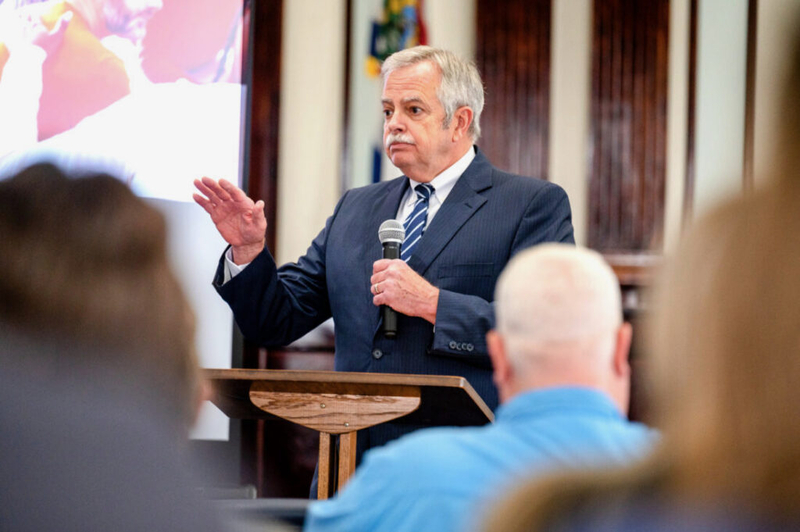
Third Judiciary Circuit Court Judge Tim Sweeney asked the West Virginia Supreme Court of Appeals to throw out his admonishment after raising issues about Child Protective Services shortages in his judicial district. (Photo courtesy of the West Virginia Supreme Court of Appeals)
West Virginia Supreme Court justices heard arguments Wednesday about a judge who pushed back on his discipline for speaking out about critical Child Protective Services shortages in his judicial district.
Third Circuit Judge Tim Sweeney was admonished by the West Virginia Judicial Investigation Commission in June 2025 after drawing attention in the media to CPS shortages impacting children’s care.
Last February, Sweeney learned through cases on his docket that local CPS workers were overworked and understaffed, leading to missed deadlines and treatment for children. In response, the judge ordered state health officials, including the former Human Services secretary, to report to the Ritchie County Courthouse and receive assignments as CPS workers.
“Judges have to make difficult decisions on the bench, the ends do justify the means,” J.H. Mahaney, an attorney representing Sweeney, said in court. “Sometimes when it comes to the welfare and safety of children, the ends are what really matters.”
Sweeney contacted Ogden Newspapers reporter Steven Allen Adams about the issue, and Adams was the first to report on the order.
“I think the bus stops with me. I think somebody needs to stand up for the public, particularly the most vulnerable members of our community — the children,” Sweeney told Adams in an interview in February 2025. “From a legal point of view, abuse and neglect cases are of the highest priority, and they should be, in my opinion, for the department and the government in Charleston as well.”
Human Services officials contacted Sweeney within hours of receiving the order and addressed staffing issues, according to a filing from Sweeney.
“Staffing was increased within a matter of days. Before the Feb. 20 hearing ever got here … their safety was being improved. The caseworkers were improved. That has to count for something,” Mahaney said, adding that the department didn’t object to Sweeney’s order.
The Judicial Investigation Commission said Sweeney violated five rules of the Code of Judicial Conduct including releasing judicial statements on pending and impending cases.
“All of this arose from a confidential abuse neglect proceeding, we have to remember, where the information contained in that hearing is confidential,” said Teresa Tarr, attorney for the Judicial Disciplinary Council. “My reading of the rule is: if you’re going to release confidential information from an abuse neglect hearing, a judge has to do it, and it has to be done with findings of fact and conclusions of law, and that was not done in this case.”
Mahaney noted that Sweeney had talked about systemic issues, not a pending child welfare case.
No formal disciplinary action was taken due to Sweeney’s reputation as a good judge, according to the WV Record.
Sweeney objected to the commission’s admonishment. He asked the state Supreme Court to toss the disciplinary admonishment, arguing that he had an ethical duty to bring attention to the state’s CPS staffing crisis.
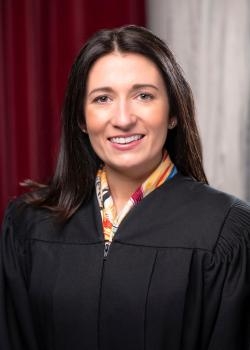
Supreme Court Chief Justice Haley Bunn questioned Mahaney on whether a lack of discipline in Sweeney’s case would result in other judges contacting the media about systemic issues.
“What’s to stop any judicial officer from seeing a systematic problem, which there are systematic problems, and using his or her position to step outside the role of the judiciary’s branch and wielding the media and wielding the robe to improperly force an adversary proceed one side or the other in an adversary proceeding?” Bunn asked.
Mahaney said that’s “the tough call” in this case.
“Sweeney acted for the sole purpose of helping children, and that he did help children, and that at some point in time, that that has to be enough,” he said.
The West Virginia Supreme Court of Appeals recently dismissed ethics charges against Kanawha County Circuit Court Judge Maryclaire Akers stemming from a radio interview where she spoke about the state’s foster care system and children living in hotels.
Like Sweeney, Akers had asked the Supreme Court to intervene and force the dismissal of judicial ethics charges. Akers contended that she tried to stay within what she understood were her ethical limits while commenting on the hotel monitoring arrangement. She has faced no prior discipline as a lawyer or judge.
Sweeney was also admonished by the Judicial Investigation Commission for participation in charitable, fraternal or civic activities regarding some social posts that were unrelated to the CPS staffing issue. One of the social media posts shared by Sweeney was about a local volunteer fire department’s ice cream social and $10 raffle for a bike. The commission said this violated solicitation rules for judges.
“I think the fact that he posted, and the public can construe those as solicitations, indicate that he violated the code of judicial conduct with respect to solicitations,” Tarr said.
The West Virginia Supreme Court will issue a decision in the case at a later date.
Charleston, WV