Gov. Tony Evers tours new Milwaukee juvenile facility for 32 boys
Oct 15, 2026 | 4:30 am ET
Description
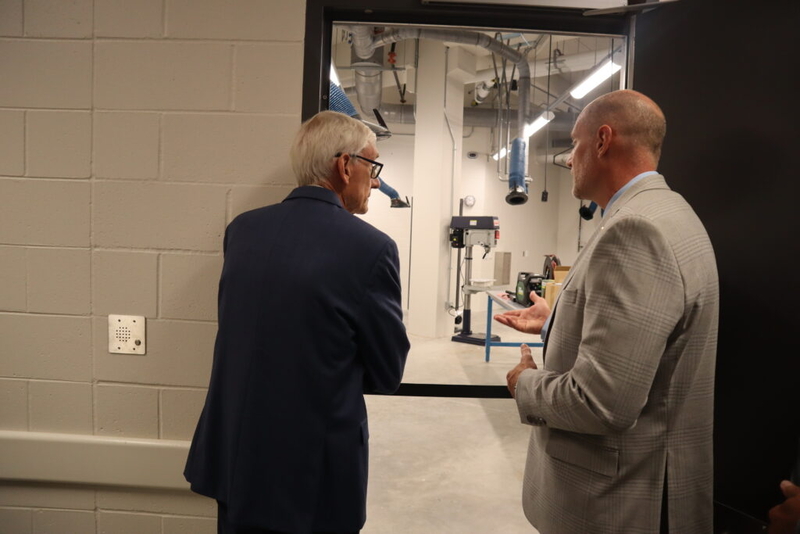
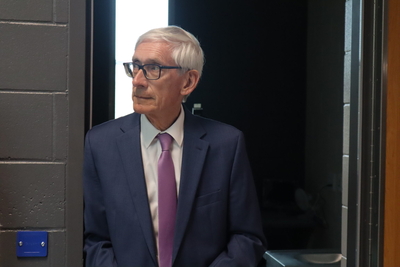
Gov. Tony Evers looks at different rooms inside the Southeast Regional Care Center for Youth. (Photo by Isiah Holmes/Wisconsin Examiner)
Gov. Tony Evers toured a new Milwaukee juvenile facility on Wednesday along with Department of Corrections leaders, closing another chapter in the troubled history of the Lincoln Hills and Copper Lake youth prisons. The sleek, colorful new facility looked like a well-resourced though highly secure school. The Southeast Regional Care Center for Youth, or SERC, will house 32 boys who are in the DOC’s custody.
While serving their sentences the boys will have access to educational programs, a gym, a greenhouse and other opportunities to help prepare them to return to their communities. Since many of the boys will be from the Milwaukee area, the new $65.6 million facility will make it easier for their families to visit compared to Lincoln Hills, hours away in Irma, Wisconsin.
“This new facility marks a historic milestone for our state and is the beginning of what I hope is a real, meaningful transformation of not only juvenile corrections in our state but of corrections in Wisconsin,” Evers said. “Not only will this new facility allow us to safely move our kids closer to their homes, their families, and their support systems, but it will give kids and families hope for a brighter future. With evidence-based strategies, this new facility will provide young people the role models, educational opportunities, and support needed so they can grow, be better, and do better, all while helping to reduce crime, prevent violence, and keep our kids, families and communities safe.”
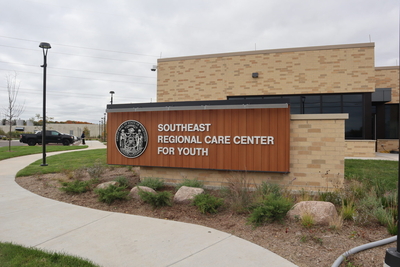
SERC is located on Milwaukee’s North Side, tucked away a few blocks from a busy roadway just north of Good Hope Road. At first glance the tan brick building resembles a small school, but a closer look reveals large tinted windows and a few State Patrol vehicles parked outside. Walking through the front door, visitors come to a metal detector station in a front lobby with light colored walls, tiled floor and chairs.
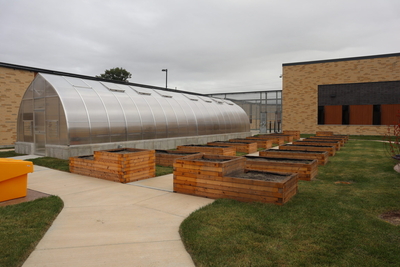
Wednesday’s official tour of the new facility began with a visit to the SERC’s chapel. Next, Evers was guided by DOC Sec. Jared Hoy and DOC juvenile corrections administrator Lance Horozewski to an outside area surrounded by a high brick wall and security gate, where Evers viewed a basketball court and a large greenhouse next to raised garden beds — one for each boy which the facility will house.
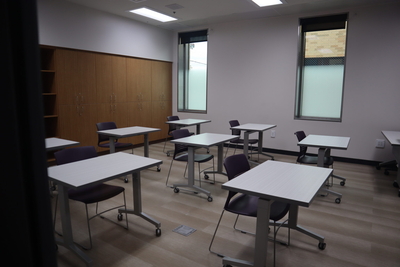
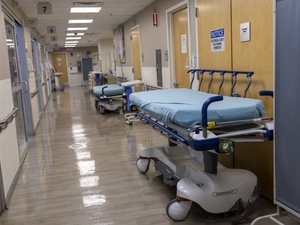
Heading back inside, Hoy and Horozewski showcased medical facilities with individual exam rooms and areas where youth can access needed dental care. There was also a large kitchen, and spaces where youth could learn welding and woodworking. Evers also looked over visiting areas complete with games and kiosks for video visits, a large indoor gym and basketball court and classrooms. Evers also checked out a creative room where the boys will be able to make and record music, and even make videos using a large green screen.
The area where the boys will be housed was behind a door, which will be controlled by staff monitoring from an adjacent room. A common space contained couches, tables, a couple of phones and games. Down the hall were dorm rooms with wood floors and gray metal furniture, with one bed per room, a toilet, desk, and a window with a view of the outdoors, with a blind the boys can open or close.
The design of SERC is intended to forge a new direction for juvenile incarceration in Wisconsin. For years, the Lincoln Hills and Copper Lake schools were notorious for reports of abuse and suffering for both youth housed there and the staff responsible for their care. Earlier this year, a federal judge ended mandatory oversight of Lincoln Hills and Copper Lake after the DOC had been found to be in “substantial compliance” with reforms mandated after a 2018 class action settlement.
Lincoln Hills’ troubled history led the Legislature to spend years planning to close the 500-bed facility, convert it to an adult prison, and open up smaller and safer juvenile facilities which would also be closer to home for the youth housed there.
Evers appeared to approve of SERC as he walked through its halls. “But our work is not over — far from it, ” he said in a statement. “Our state is decades behind in how we think about corrections, and this new facility is the first step, but it is only a step. We must continue our work to modernize our corrections system into the 21st century and close Lincoln Hills and Copper Lake schools for good.”
Hoy said that looking around SERC “you see a school, not a prison.” He went on to say in a statement that “that’s because it is a school and even more. It’s a place to learn and to heal. There’s no barbed wire. No towers. There are big windows, color, space. And it’s all secure both for the youth and for the neighborhood. The design supports what we now know about adolescent development, and the programming offered here will follow suit with staff using evidence-based techniques to help youth make better choices and support rehabilitation.”
Hoy said at the beginning of November the first group of youth will be moved into SERC, with more to come over the following months into the holidays. “We’ve been recruiting for staff starting back in the summer,” said Hoy. “And so we’ve had two graduating classes already. We’ll have more than adequate staff. Not just safety staff — so your youth counselors that are here — but education, treatment, all of those different functions are already on board…And then we will continue to staff up. We have another class graduating, I think at the beginning of November.”
Staffing shortages had long plagued Lincoln Hills and other DOC facilities. Hoy told the Wisconsin Examiner that the DOC has paid particular attention to staff-to-youth ratios for the SERC to help prevent burnout among staff, and has established staff wellness spaces. Hoy also said that “the space itself lends to a sort of feeling of wellness and calmness.”
Another Type 1 facility is being constructed in Dane County which is designed to hold 32 boys and eight girls. The DOC is also pushing for a third facility to be opened in northern Wisconsin in order to serve youth from that region of the state. Hoy told the Examiner that having multiple facilities would allow the DOC to cross-train and pull staff from one facility to another in order to help fill any gaps and prevent burnout.
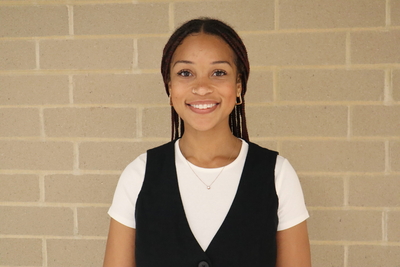
Many of the staff who will work at the new facility are from the Milwaukee area, and theoretically might have an advantage in relating with the youth there. Kashunda Brown, 37, one of SERC’s youth counselors, explained that she grew up on the North Side of Milwaukee where she learned what it’s like to experience poverty and living in a single parent home. Brown also has two boys of her own which “resonates with the youth that we encounter here,” she told the Examiner.
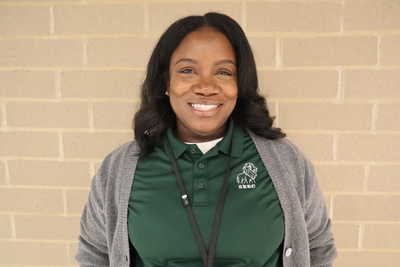
Keana Berkhalter, 32, a licensed counselor who will be working with the facility’s Psychological Services Unit, is also from Milwaukee. “I’ve seen the complex issues and challenges that we have here, as well as the strengths that Milwaukee has,” Berkhalter told the Examiner. Berkhalter said that it’s important that youth know that the staff understand them because it helps them feel safe. “As human beings, it’s easier to connect to people that look like us, or at least that we have some sort of similar commonality.”
The experiences the counselors share with the youth help them to connect. “I think that gives me leverage to connect to the youth, as well as help them feel safe and to talk to me and to want to trust and confide in me, to talk about things that maybe they don’t want to talk to anybody about.”
Brown said the greenhouse, raised beds, and creative spaces are especially important for the boys SERC will house. To anyone who questions whether the facility should feel more punitive, Brown says, “I think the punitive is them being away from their family.”
She continued, “this should be, and is, a space where they can have different things that they don’t experience on the outside. A lot of people don’t have access to a basketball court at home. A lot of people don’t have access to gardening.” These translate into coping skills the boys can take home with them to avoid getting in trouble.
Youth who learn that they enjoy woodworking, cooking, growing food in the garden or other activities available at SERC could take that with them and become more productive members of society, Brown said. “I think all the skills that they will get here, they can use on the outside. The punitive is them being in here.”
Madison, WI