Judge denies former KY Gov. Matt Bevin’s request to bar adopted son from divorce case
Feb 27, 2026 | 2:48 pm ET
Description
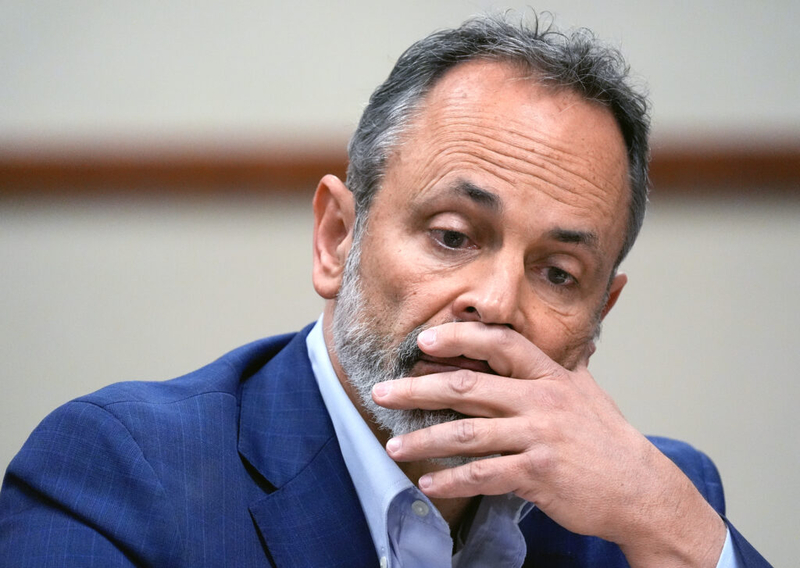
Matt Bevin listens during a court hearing in Louisville on March 21, 2025. (Photo by Michael Clevenger, Courier Journal, via press pool)
A Court of Appeals judge has denied Matt Bevin’s request to keep his adopted son, Jonah, out of the former Kentucky governor’s divorce settlement case.
Matt and Glenna Bevin’s divorce was finalized in March 2025, but a proposed settlement is pending while Jonah seeks to be a party, arguing he was neglected, deprived of an education and sent to an abusive child residential center in Jamaica at 17, the Lantern has reported.
In January, the former governor asked the Court of Appeals to vacate Jefferson Family Court Judge Angela Johnson’s decision to let Jonah, 19, intervene in any settlement the Bevins’ reached.
For the appeals court to grant Matt Bevin’s request for emergency relief, he would have to have experienced “something of a ruinous nature,” according to the Friday ruling. Court of Appeals Judge Christopher McNeill wrote that “this high burden has not been met.”
“Matthew asserts that he, and the Bevin family, will be irreparably harmed if the March 27, 2026, hearing is allowed to proceed because it will unduly delay the conclusion of his divorce, it ‘will cause unwarranted public attention and scrutiny regarding private family issues,’ and any order awarding Jonah attorney’s fees is not supported by Kentucky law,” the latest ruling says.
Bevin also “asserts that Jonah’s requests for his and Glenna’s financial disclosures and to schedule their depositions are nothing more than a fishing expedition,” according to court documents. He is also concerned about depositions opening the door for interviews “with no guardrails.”
‘I don’t have anybody’: Adoptive teen son of a KY governor talks about life on his own
“These allegations concern Jonah’s ability to conduct discovery, and at this juncture, are pure speculation,” McNeill’s order says. “The family court has not ruled on whether Matthew and Glenna must produce their unredacted financial disclosures, or whether they are required to sit for a deposition.” Being concerned about “danger,” the ruling says, “does not meet the legal definition of irreparable harm.”
“As for Matthew’s concerns about the family’s privacy, the records in all divorce actions are open and available to the public unless a family court determines there is a reason to seal the record. Thus, this injury would be no different than that of every married couple who files for divorce,” McNeill’s order states.
In a footnote, he added: “Matthew did not cite to, nor is this Court aware of, an exception because Matthew is a public figure.”

Frankfort