Iowa Board of Regents proposes changes to UI intellectual freedom center bylaws
Nov 12, 2025 | 3:55 pm ET
Description
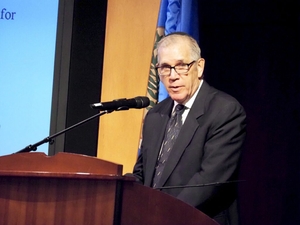
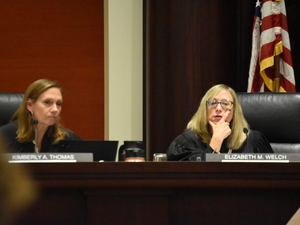
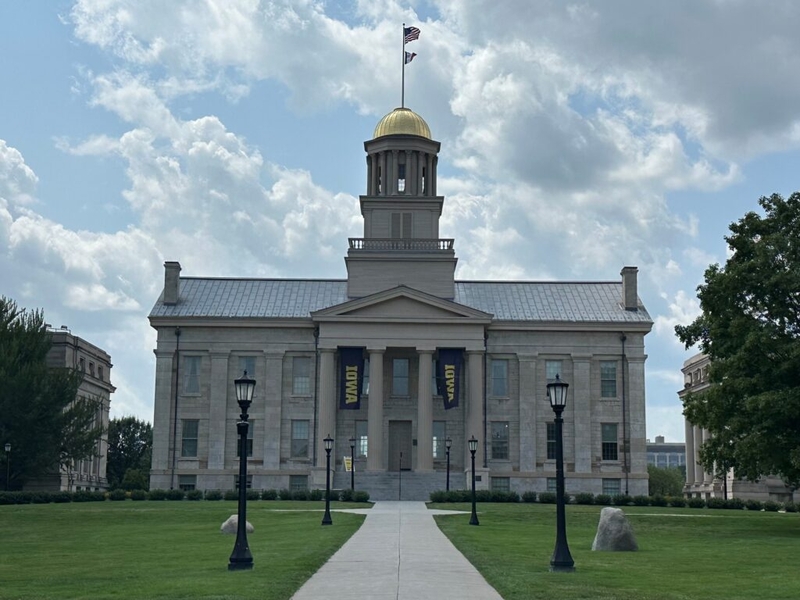
Members of the Iowa Board of Regents discussed proposed bylaws for the University of Iowa Center for Intellectual Freedom Wednesday. (Photo by Brooklyn Draisey/Iowa Capital Dispatch)
The Iowa Board of Regents tossed around potential bylaws and metrics for measuring success of the University of Iowa’s new Center for Intellectual Freedom during its Wednesday meeting as the center’s overseers prepare for the program’s launch.
Multiple regents suggested changes to bylaws presented to the board for the first time Wednesday by interim center director Luciano de Castro. Among the top concerns was staving off potential out-of-state control, prompted by proposed rules as to the tenure status of the center’s committee members.
Regent and advisory council chair Christine Hensley said the legislation requiring the center’s formation is “vague” in some areas.
“We, after having conversations with legal counsel and staff, determined that the best approach for the bylaws would be to keep them simple, and maybe understanding also that we would maybe miss or not address every single thing,” Hensley said. “So this is the start.”
Included in the bylaws in their current form are the center’s purpose and mission and rules for committee membership, duties, course and certification offerings and more. The center “shall educate students by means of free, open, and rigorous intellectual inquiry to seek the truth,” according to the bylaws, and it “affirms the value of intellectual diversity in higher education and aspires to enhance the intellectual diversity of the University.”
De Castro also recognized in the bylaws the center’s responsibilities to instill in students necessary mental skills and habits to “reach their own informed conclusions on matters and political importance” and to facilitate a community that respects intellectual freedom, differences of opinion and people’s individual abilities to work and grow.
The center’s advisory council will oversee the nationwide search for a director, according to the bylaws, in addition to advising the director and board of regents on topics impacting the center and overseeing center operations. No council members are eligible for the director job.
Meetings of the advisory council must occur at least once every semester, the bylaws stated, and it is bound by state open records laws.
Two committees will be formed from the council membership, split between executive and scholarly duties. A majority of executive committee members must be current or former tenured professors from an R1 research institution, according to the bylaws, and every scholar committee member must meet those criteria.
Regent Nancy Dunkel’s concerns about out-of-state control of the center lingered Wednesday, with her asking Hensley who on the advisory council would be excluded from committee appointments and how many of them are Iowans.
Regent Robert Cramer proposed striking the language in the bylaws referring to executive committee membership requirements for tenure, which Dunkel agreed with and said similar language relating to the scholar committee should also be struck.
“I’m hoping that we have, and can maintain, Iowa control,” Dunkel said.
The executive committee will manage the search for a director and handle materials and minutes for the full advisory council, as well as advise the council chair on the center and its activities. The scholar committee will advise the center director on hiring, promotion and tenure of faculty involved in the center and other academic matters.
Ad hoc committees can be created by the advisory council, according to the bylaws, or by the center director for the purpose of reviewing faculty for tenure. The director has “sole and exclusive authority” to hire support staff and faculty, from temporary or part-time to tenured professors, as well as bring in visiting teachers and speakers. He also sets “the responsibilities and compensation” for center employees.
The advisory council’s first meeting is scheduled for Nov. 18, Hensley said, and an inaugural center event is being planned for early December.
Dunkel also wanted to know how success was going to be measured at the center. Hensley indicated state lawmakers, who ordered the creation of the program, would be a key part of judging its value.
“We are required to give an annual report to the Legislature outlining what has all transpired, and to be perfectly honest, I think that annual report will be really key,” Hensley said. “And if you continue to receive state appropriations for the center, I think that would be a concurrence, if they agree with the work moving forward.”
Dunkel asked if Hensley was saying that the center making money would be a measure of success. Hensley disagreed but reiterated that they’ll measure success “based on the annual report.”
Cramer said he thinks the center’s goal is “to raise the level of civic, both knowledge and engagement, by our students, by bringing in speakers and by offering these classes, but then also with the long-term intent of … adding more debate to our campus, where people of different sides can view different opinions, and we can let the students grapple with those things.”
De Castro and others have been working hard over the past month or so, Hensley said, getting bylaws ready and contracting with a firm to conduct a market study. He has also started contacting potential speakers to visit the center and is developing two courses to be offered in the spring semester.
“To be perfectly honest, we are way beyond what was outlined in the legislation,” Hensley said.
Des Moines, IA