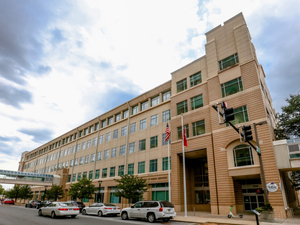
Inside the lab at the heart of Louisiana’s mosquito-borne disease prevention network
Jul 09, 2026 | 1:00 pm ET
Description
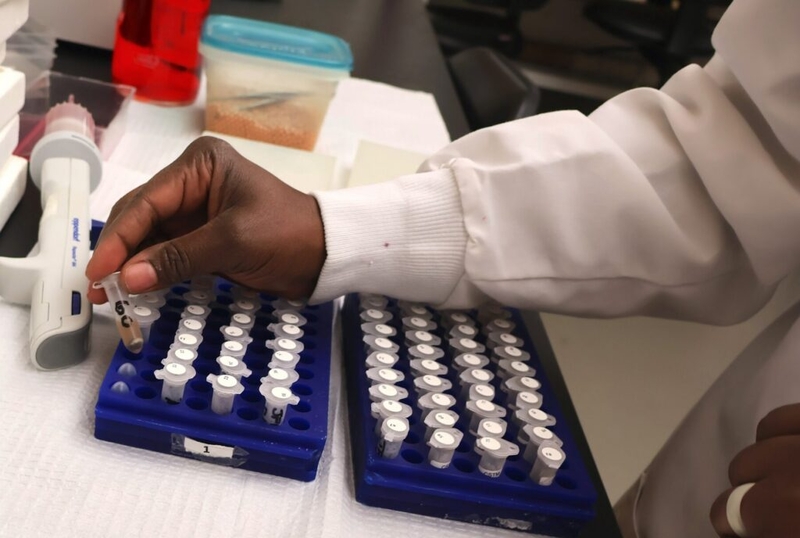
Lab technician Tarra Hardy arranges vials filled with mosquitoes from across Louisiana. (Elise Plunk/Louisiana Illuminator)
Hundreds of meticulously labeled vials filled with mosquitos line colorful plastic trays inside a freezer at the Louisiana Animal Disease Diagnostic Laboratory in Baton Rouge.
Each vial sitting atop the frosty shelves, aligned in rows like egg cartons on a grocery store shelf, contains up to a hundred mosquitoes sent to the lab from across the state. Scientists can extract information hidden within the mosquitos’ DNA to help stop the spread of diseases to humans and keep infections at bay.
“Look at your electric bill,” said Alma Roy, director of the lab housed at Louisiana State University school of Veterinary Medicine. When it costs more to keep your home comfortably cool, that’s when the airborne pests — and the viruses they carry — flourish and circulate.
“When it’s wet and hot, the mosquito is out there reproducing and biting,” Roy said.
The spindly black bugs aren’t picky about what they bite, picking up diseases like West Nile virus from animals like birds and passing them on to humans.
The Louisiana Arbovirus Surveillance Program helps health professionals, entomologists and local mosquito control districts stay apprised on where a disease crops up.
Mosquito control organizations at the parish level across the state capture mosquitoes and pack them into vials. The vials are stuffed into small white boxes and shipped weekly to the lab in Baton Rouge. Around 30 of Louisiana’s 64 parishes participate in the voluntary surveillance program every year, according to the Louisiana Department of Health.
Each year the lab tests 25,000 vials of mosquitos, which are called pools in the lab. In total, the tests involve up to 2.5 million individual insects, but it can’t be done one mosquito at a time.
“We take the whole pool and puree them,” Roy said.
Lab technician Tarra Hardy adds a mixing solution and a copper ball to mash up the pool before a machine blends the sample.
The result resembles a small mosquito smoothie, which is placed into a machine that analyzes the contents and shows its findings on a computer screen. Colorful spikes on a graph show when a sample tests positive for West Nile, eastern equine encephalitis or St. Louis encephalitis — the most common diseases the lab detects.
Hardy said it only takes around 48 hours for the lab to test a sample, so mosquito control personnel can get information on where a disease is spreading fast enough to contain it.

Sarah Michaels, a clinical associate professor with Tulane University’s Department of Tropical Medicine and Infectious Disease, works as a medical entomologist who focuses on insects that carry diseases passed by arthropods, known by scientists as arboviruses. This includes mosquitos, ticks and flies that can be vectors for disease.
The ability of the testing lab in Baton Rouge to turn around its test results quickly allows local mosquito abatement efforts to get out in front of mosquito-borne diseases before they spread, Michaels said. With the geographic location of a positive test result pinpointed, abatement crews can go on the offensive, and the public can take preventative measures.
“That’s kind of why it’s important for us to know if the virus is circulating locally, so we can give people information so they can take precautions to protect themselves against mosquito bites,” she said.
Spraying insecticide by truck, plane or helicopter kills the adult mosquitoes, and Michaels said larvicide is applied in areas with standing water, to halt their development. This typically uses naturally occurring bacteria only harmful to developing mosquito eggs.
The majority of West Nile cases reported to the U.S. Centers for Disease Control are between June and October, with steep drop offs when cooler temperatures curb mosquito breeding.
But Michaels described how, with summertime temperatures starting sooner and lasting later in the year and frequent storms bringing in standing water perfect for mosquitoes to live and reproduce in, keeping a watchful eye is more important than ever.
“Mosquito season, which is getting longer and longer here, is kind of near the peak of it right now, June through September,” she said. “Surveillance really zeroes in on where and when it’s happening, and then hopefully can suppress those mosquito populations before that becomes widespread and puts more people at risk.”
West Nile was first detected in the United States in Queens, New York, in the late 1990s and spread around the country. The virus was first detected in Louisiana in August 2001 when an infected crow in Kenner tested positive. That fall, it showed up in horses from three coastal parishes, along with Louisiana’s first human West Nile case.
Case numbers climbed to their highest point nationally in 2003 with about 9,800, and the count has remained relatively stable below 3,000 cases over the past 10 years.
“It can be mild and transient, but it can be really severe as well,” Michaels said
West Nile virus is relatively uncommon, affecting less than 5,000 people in the United States in a typical year, according to the U.S. Centers for Disease Control. By comparison, the most prominent flu strain in 2024-25 infected more than 51 million people, the CDC reported.
While most cases of West Nile don’t produce any symptoms, those that do usually cause mild, flu-like reactions like fever and muscle aches. Symptoms can last anywhere from days to weeks.
If the virus enters the central nervous system, it can result in complications such as brain swelling and paralysis. Less than 1% of people infected develop symptoms this severe, according to the U.S. Centers for Disease Control, but some cases can require hospitalization or even result in death.
Louisiana recorded four West Nile-related deaths last year and three in 2024. No human infections have been reported this year as of early July.
Baton Rouge, LA