Inside Alan Wilson’s historic GOP primary victory over Pamela Evette
Jun 29, 2026 | 7:30 am ET
Description
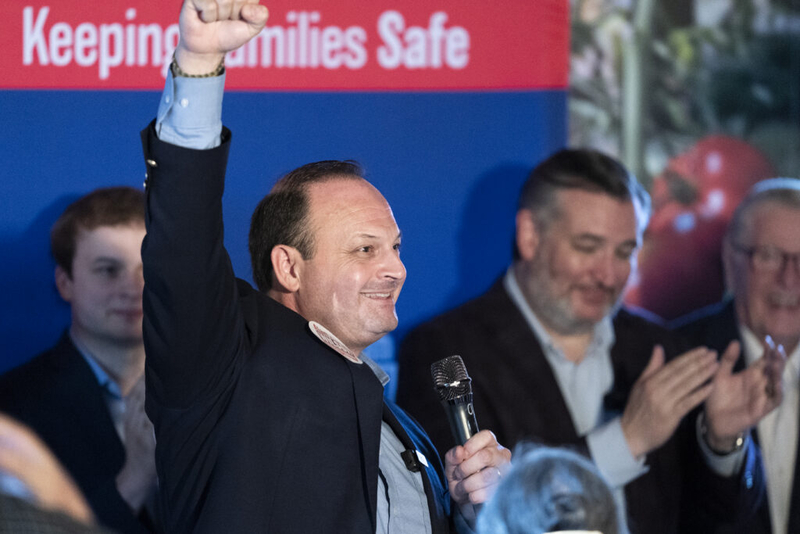
South Carolina Attorney General Alan Wilson, with support from U.S. Sen. Ted Cruz (R-Texas), raises his fist after speaking to a crowd at Doc's Barbeque on Monday, June 22, 2026 in Columbia, South Carolina. Wilson won the GOP nomination for governor the next day. (Photo by Sean Rayford/Getty Images).
When Steve Osborne sat down in front of the TV on May 26 to watch the state GOP’s last gubernatorial debate before the primaries, he was “on the fence” about his pick in the wide-open contest.
The 57-year-old retail worker from Kershaw County liked Attorney General Alan Wilson. He was “genuine” and “personable,” Osborne said. One candidate wasn’t on stage: Lt. Gov. Pamela Evette.
“She didn’t show up to that last one when it was all of them there, and so therefore that’s why we went with Alan Wilson, and I think he solidified it at the (runoff) debate,” said Osborne, of Elgin. “She almost seemed detached, almost seemed like she was a little above it.”
So, in the June 23 primary runoff for the GOP nomination for governor, like the overwhelming majority of GOP voters, Osborne picked Wilson.
The historic win
Wilson started the campaign as a well-known attorney general and converted that strong base into a dominant victory thanks to a campaign that, while not groundbreaking, avoided any major mistakes, keen observers of South Carolina GOP politics told the SC Daily Gazette.
The 52-year-old Army national guardsman, first elected attorney general in 2010, managed to convince many South Carolinians who voted in the June 9 primary for candidates pledging to upend the status quo — U.S. Reps. Ralph Norman and Nancy Mace and businessman Rom Reddy — that despite his long career in state politics, he would still be a changemaker in the governor’s office.
And Wilson’s win was overwhelming.
His 68.6% share of the 320,000 votes cast was higher than GOP primary runoff wins by Govs. Henry McMaster, Nikki Haley, Mark Sanford and David Beasley. His margin was even higher than Sanford’s 2006 primary victory over a poorly funded Midlands physician challenging the governor’s re-election.
Wilson pulled about three-fourths of the vote in the GOP strongholds of Greenville, Spartanburg, Anderson and Lexington counties and lost only three of South Carolina’s 46 counties.
Evette won the prize of Horry County, where she took 55% of the votes. She was counting on a win there. Her heavy campaigning in the fast-growing county full of retirees included a rally she held in North Myrtle Beach on May 26, the first day of early voting, instead of participating in the GOP debate.
In 2018, McMaster’s domination in Horry County made up for primary and runoff losses in the Upstate. But a single county can’t counteract losses everywhere else. Evette’s two other wins came in rural Pee Dee counties, which together provided a difference of 224 votes.
“They gave their best shot, and we landed where we landed,” said state Rep. Tim McGinnis of Horry County, one of many legislators who endorsed Evette.
Wilson’s been in statewide office for much longer than Evette, and his campaign “played to his strengths,” said the Myrtle Beach Republican.
Campaign introductions
Republican insiders said the Evette campaign’s flaws and missteps are just as important in explaining Wilson’s cake-walk runoff win, which The Associated Press called less than a half
hour after polls closed.

Though in office since 2018, Evette remained an unknown to most voters in her first solo run for office.
The lieutenant governor’s campaign bound her bid so tightly to President Donald Trump and McMaster’s popularity, it neglected to properly introduce the 58-year-old businesswoman from Traveler’s Rest to voters or tell them how she would break from the past.
“The one word to describe the 2026 election was going to be reform. I think I got the sense that voters were unhappy about a number of issues,” said Kevin Hennelly, the chair of the Beaufort
County Republican Party. “That might have been a little bit of miscalculation by thinking that because (Evette) had the Trump endorsement that that label of reform carried along with it. I don’t think it did.”
Wilson publicly launched his campaign in June 2025 in a strong position after serving 15 years as attorney general. As the state’s top prosecutor, he sued the Obama and Biden administration repeatedly, defended Trump in court, and was a constant presence at GOP events around the state.
“In terms of name recognition, in terms of understanding what he’s done in politics, his role in politics, he had an advantage over most of the rest of them,” said Danielle Vinson, a political science professor at Furman University.
“Half the state doesn’t know what the lieutenant governor does.”
From the get-go, Wilson ran a very traditional campaign and — after early attacks from Mace — largely didn’t make headlines.
He focused on cutting taxes, his public safety record as attorney general and government reforms like reducing the Legislature’s sway over the selection of judges, which he’s long advocated, said GOP consultant Rob Godfrey, who was neutral in the primary.
Wilson’s first TV advertisement, which Rob Godfrey called “the best of the campaign,” featured soldiers Wilson led in Iraq praising the attorney general’s leadership.
“Alan was slow and steady in this race, raising money, doing what you’re supposed to be doing,” said Katon Dawson, a veteran Republican operative and a former state party chair. “It got a little gloves off but not as nasty as I’ve seen in the past.”
Evette took a different path. From her campaign launch speech in July 2025, she staked her campaign on her ties to Trump and McMaster even though neither had endorsed her yet.
In fall of 2025, her campaign spent $1 million on the first TV ads of the campaign that played during college football games.
The ad started with video of Trump calling Evette “fantastic” and ended with the president saying she was “going places,” but gave voters little information about her biography or achievements.
GOP gubernatorial candidates differ on calls to defund SC State, allow a casino
The rest of the field accused her of falsely claiming Trump’s endorsement. Mace even demanded Evette and all TV stations take it down immediately.
Criticism also grew over the private sector diversity work done by Evette’s human resources company, and her opponents called her just another establishment politician.
“She got painted early on because she ran partially as a credentialed McMaster lieutenant governor,” said Nate Leupp, head of the 4th District Republican Club in the Upstate. “You can’t run on that but also run from it.”
By the spring, Evette took on a more combative, Trumpian tone as Norman gained momentum with the party’s hard right and Reddy entered the race with millions to float his campaign.
In March, she released a TV spot generated by artificial intelligence featuring fictitious scenes of Wilson repeatedly ignoring calls from Trump. It also falsely implied he supported Haley in the presidential race. It was part of Evette’s attempt to paint Wilson as insufficiently loyal to Trump, as he noted being the only candidate to defend the president in court.
In April, South Carolina State University disinvited her from commencement after she tangled with students there on social media. In response, she supported efforts to defund the state’s only public historically Black university.
In May, while testifying before a state House panel, she acknowledged not knowing how many legislators are in the House. She guessed 140 representatives. The correct answer is 124. Critics circulating the video on social media questioned how a lieutenant governor of almost eight years, who wants to be governor, didn’t know that.

She skipped two of the state GOP’s three pre-primary TV debates, citing a dispute with the state party over tickets and scheduling conflicts. She also backed out of the one debate hosted by South Carolina Educational TV.
“That started a spin (that) she can’t handle the job,” said Dawson, the former state party chair. “I think Pam probably could’ve handled the debates. I just think her team made a really bad call.”
For viewers tuning in to the GOP primary runoff debate in Conway, Wilson highlighted Evette’s debate absences. Asked about legislation allowing casino gambling, Wilson noted she wasn’t on stage the last time the question was asked.
The Trump endorsements
However, Evette was the best fundraiser in the race. By May 20, she’d collected $4.3 million in cash and in-kind donations, according to the latest campaign filing disclosures.
She quickly locked up endorsements from members of the state House of Representatives and could call on strong links to grassroots activists built during her time as lieutenant governor, said Tyson Grinstead, chair of the Richland County GOP and one of the state party’s national committeemen who was neutral in the primary.

And then on May 29, Evette finally received the Truth Social post she seemed to have been waiting for the whole campaign.
“Pam has my Complete and Total Endorsement,” Trump wrote on his social media platform.
Eleven days later, after an election-eve tele-rally with Trump, Evette won the June 9 primary with 29% of the vote by virtue of a commanding victory in Horry County and first-place finishes in 24 other counties. Wilson came second with 26%.
The night of the primary, Evette’s and Wilson’s remarks were a study in contrasts that set the tone for the two-week sprint to the runoff.
Evette spent a third of her six-minute speech unleashing a withering broadside against Wilson.
“If you want a finger-in-the-wind career politician who does the political thing and not the right thing, then you should excitedly vote for Alan Wilson,” she said.
Wilson appealed to the 45% of voters who had picked someone else in the primary.
“I’m willing to be your second choice tomorrow morning,” he said. “Give us the chance to fight for you. Give us the chance to fight for the ideals you found so valuable in those other candidates.”

That night, Mace endorsed Wilson. A week later, Norman did too.
“Ultimately, the attorney general, throughout the entire process, ran a campaign focused on winning the most votes rather than on a single headline endorsement, and ended up winning the most votes and most endorsements,” said Godfrey, who worked for Haley’s and McMaster’s gubernatorial campaigns and was Haley’s chief spokesman in the governor’s office.
In the runoff, Wilson also reaped the benefits of a more traditional campaign and extensive field operation, with more offices, staff and volunteers across the state, Grinstead said.
“In a race where there are several different candidates and you’ve got months, that may be a few points,” he said. “But you talk about a two-week runoff where you don’t have much time and you’ve got to execute quickly, that becomes way more important.”
A crucial challenge for Evette and Wilson, both long-time officeholders cut more from the traditional GOP grain, was convincing Norman, Reddy and Mace voters that they better embodied the renegade messages of those candidates.
Wilson argued he had already helped achieve change on several issues the eliminated candidates had campaigned on, like his advocacy for revising judicial selection and revamping human
trafficking laws, said Mark Knoop, who ran a pro-Wilson outside group during the primary.
And though both candidates attacked each other in the runoff campaign, Evette’s tone and advertising were distinctly more negative than Wilson’s in the final two weeks, deepening a contrast that developed in the spring.
“Alan Wilson gave voters a tangible plan, a positive one,” said Knoop, who also ran Wilson’s 2018 attorney general campaign. “What South Carolinian believes that an Eagle Scout, decorated combat veteran and career prosecutor was all the things Pam Evette said he was?”
Trump backs Alan Wilson too in SC governor’s race: ‘You can’t go wrong’
The campaign’s final twist came on Friday night before election day. Without warning Evette, Trump posted on social media that voters “can’t go wrong” with either Wilson or Evette,
whom he had endorsed exclusively three weeks earlier.
The Trump endorsement, “put her in the runoff, but it would not have put her in the governor’s mansion,” Leupp said. Since Trump “wanted to save face, he did that co-endorsement and that
was the final, final blow.”
Overall, the Trump endorsement likely did not play a major role in the crowded, state-level race, especially without evidence of Wilson opposing Trump, said Vinson, the Furman professor.
The dual endorsement ended Evette’s arguments that Wilson had abandoned the president.
And when runoff night finally arrived, Wilson romped to victory.
Though turnout dropped by a third in the runoff compared to the primary, Wilson dramatically increased the number of votes he received in most counties, appearing to sweep up the overwhelming majority of those who backed a different candidate in the first round.
In Norman’s home of York County, where the Rock Hill native won 10,000 votes in the primary, Wilson gained nearly 6,000 votes in the runoff. Evette dropped 1,500 votes in York County.
In Charleston County, where Mace did best June 9 with 4,400 votes, Wilson picked up 5,400 on June 23. Evette fell back nearly 2,000 votes.
And she got trounced in her home county of Greenville, the state’s most populous county, where Norman held a small lead over Evette two weeks earlier.
Hennelly, the Beaufort County GOP chair, recalled offering all the GOP gubernatorial campaigns the opportunity for their candidate to do a 30-minute Zoom call with members of the executive committee this spring.
Only one responded, he said: Alan Wilson.
“He answered every question. He stayed on a little bit longer. He offered to come back on the weekend if anybody had any more questions,” Hennelly said. “What it showed is that the people
that actually met, spoke to, questioned, listened to Alan, ended up liking him.”

Columbia