As industry faces rising costs, there’s hope new Pa. Farm Bureau leadership brings positive change
Aug 06, 2026 | 1:16 pm ET

Description
New leadership at the Pennsylvania Farm Bureau could be a fresh start for an industry grappling with surging bankruptcies, rising costs and stifling tariffs. (Photo by Jessica Kourkounis for the Pennsylvania Capital-Star)
Ethan Young is a summer intern for the Pennsylvania Legislative Correspondents Association, and a rising senior at the University of Pennsylvania.
It’s been a difficult time for many Pennsylvania farmers. And it’s been a tumultuous stretch for leadership at the Pennsylvania Farm Bureau.
Last month, Chris Hoffman resigned as president of the state’s largest farm organization to take a position at the U.S Department of Agriculture (USDA). Hoffman’s position had been modified in April as the board considered removing him in response to an “internal investigation about staff turnover.”
Across the industry, bankruptcies have surged, costs have increased due to tariffs as well as the war with Iran. The conflict has led to rising prices for diesel fuel and fertilizer.
In light of those headwinds, Pennsylvania Farm Bureau members are hoping for a fresh start, optimistic that new leadership could help infuse energy into the organization’s members and bring about policy changes they say have traditionally received less focus.
Tommy Nagle, who oversees a diversified farming operation in Cambria County and a former Farm Bureau vice president, has since assumed the duties of president. A formal election for a new leader will take place in November.
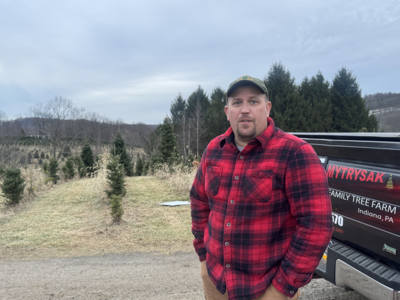
A third-generation Christmas tree farmer from Indiana County, Brandon Mytrysak hopes Nagle, or whoever ultimately leads the organization, pushes legislation and policy changes that benefit traditional agriculture operations.
“When it comes to research and funding and all that kind of stuff, we kind of get left out of a lot of the different programs because we are specialty crops,” Mytrysak said. “I would hope, or would love, to see the Farm Bureau continue to help push legislation or policy change to include the special crop growers, to help us succeed as well as everybody else.”
Mytrysak, who is also a board member of the Indiana County Farm Bureau, wants to look at the changes as a positive thing. New people in positions of power, he said, may bring fresh ideas and a “different wavelength” that could elevate the organization.
A changing industry
Amanda Butterfield, who has been a dairy farmer in Somerset County for 16 years, hopes the next generation of leaders can be diversified, especially regarding age. She also hopes they will work to bring more young people into the ranks of the organization and the industry.
“Looking at Pennsylvania Farm Bureau’s leadership, it’s been basically white, male, older. We do need to have some diversity in there. We need to have youth represented in there,” said Butterfield, who runs a cow-calf operation. “There’s potential there for opportunity to look at what will attract younger people to farming and get them involved.”
Nagle, in a statement, said there are “absolutely” efforts to bring younger people into Farm Bureau leadership.
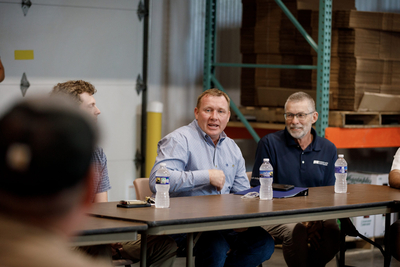
He said the Young Ag Professionals program, for members ages 18 to 35 offers “various leadership development opportunities for young people that are involved in agriculture, or want to be involved in agriculture.” A member from the initiative also holds a seat on the state board of directors.
Butterfield would also like the Farm Bureau to start asking tougher questions of the Trump administration and its policies which she said have cost farmers “quite a bit of money.”
The organization “is supposed to be our voice,” she said. “I’m not seeing that voice showing up in Washington and asking questions.”
Ahead of the November election — where Nagle plans to run for a full term — he said there have been no disruptions to organization’s advocacy efforts at the state or federal level.
“Pennsylvania Farm Bureau is structured that if there is a change in leadership, our grassroots members and our staff is prepared to do what it has always done,” he said in a statement. “Nothing changes as far as our lobbying efforts are concerned.”
Nagle said he’s working to launch new initiatives that help offer relief for the rising costs.
That rising cost of production is the biggest challenge the industry currently faces, according to Tom Croner, whose family has been farming land in Somerset County since 1773.
At age 82, Croner would like to see a mix of both younger and older farmers involved in decision-making at the Farm Bureau, an organization he estimates he has been involved with since the 1960s.
“There is wisdom that can be offered by older generations again because of perspectives and historic knowledge,” Corner, who is currently in the grain industry, said. “But we’re always facing a new set of dynamics, so we have to be prepared and able to change course if needed.”
William Thiele, a sixth-generation dairy farmer from Butler County and Farm Bureau board member, has practically been a farmer since he was born.
His grandfather was farming during World War II. In the 1980s, his dad witnessed widespread consolidation of the industry. Now, Thiele faces weather extremes, inflation, and other challenges as he operates Thiele Dairy Farm.
“There’s always going to be unique challenges to each generation,” Thiele said. But, like the obstacles his dad and grandfather overcame, he is confident his generation will persevere.
“That’s how I view agriculture as a whole,” he said. “It’s going to move forward through all these challenges. You just got to roll with the punches and adapt to what is the biggest challenge in our current era.”
While it may take time to adjust to new leadership, “ultimately it’s going to make a stronger Farm Bureau because we’ll look past this and say ‘okay, we need to get stuff done,’” he said.
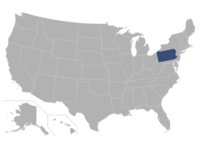
Harrisburg, PA