Incumbent higher ed regent challenged by UNR public health professor
Sep 18, 2026 | 7:50 am ET

Description
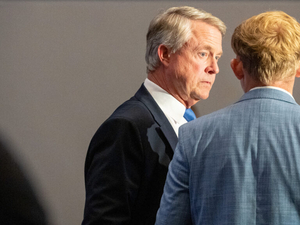
Joseph Arrascada and Peter Reed (Candidate photos)
Peter Reed, a long-time UNR professor, is challenging Nevada System of Higher Education regent Joseph Arrascada, who is seeking a second term, in the upcoming election for District 10.
Arrascada, who was first elected in 2020, said he wants another term representing Northern Nevada constituents in order to provide continuity and build on the work he has done in his first term. He said that consistent representation would benefit constituents and prevent
“Right now, the system is flourishing, and it’s doing well with the leadership in place,” Arrascada said.
Peter Reed, a professor in the school of public health, said he is running because he believes the board, and the future of higher education, would benefit from having insight from a faculty member.
“I believe that there should be faculty perspectives fully represented in the governing decisions that affect the lives of the people that learn and work within Nevada’s colleges and universities,” Reed said.
Faculty members and professors for Nevada universities have run, and been elected to serve, as regents in previous years. The question surrounding the ethics was posed in 1996 when UNR professor Howard Rosenberg was elected to serve as regent. The ethics commission ruled in Rosenberg’s favor, allowing him to continue to serve as regent and keep his faculty positions.
If elected to the Board of Regents, officials serve six-year terms.
In addition to managing a biennium budget of more than $2 billion, NSHE oversees two research universities, four community colleges, a research institute, and a state college that combined has more than 100,000 students.
Arrascada, who previously worked in the homelessness nonprofit sector, earned both undergraduate and graduate degrees from UNR.
Arrascada has relied on a wheelchair after a spinal injury nearly 40 years ago. He began considering a run for regent after he clashed over 2016 renovations to Mackay Stadium at UNR that excluded the perspectives of those with disabilities.
“I called them out on it,” he said, adding that originally overlooking disability access ended up costing more money for revisions to ensure the building was in compliance with the Americans with Disabilities Act.
“That really fueled my fire in wanting to make a difference not just with accessibility for people,” he said, but also making sure there were strong diversity and equity protections so that all students could access higher education.
Reed has worked as a professor at UNR for 13 years and is also the director of the Sanford Center for Aging at the university.
He has chaired the faculty senate at the university and NSHE’s Council of Senate Chairs, positions which have afforded him interaction with the regents.
Those experiences, he said, helped convince him that the board should have the perspective of a faculty member.
“I work with students every day, and so I won’t merely be bringing the voice of faculty into those conversations, but will also be bringing the voice of the learner. I think that’s really important,” he said.
Tuition increase
Last year the regents approved a measure to increase tuition over the next three years by 12% for universities and upper-division courses at community colleges.
Arrascada, who voted in favor of the increase, said at the time of the vote that the proposed increase posed a choice between “planned investment now or reactive cuts later.”
“It was just an extremely difficult vote,” he said during an interview, adding that he backed the tuition increase at the time “to help Nevada colleges and universities because we had to retain high quality educators and staff.”
He said he opposed other fee increases that he felt were too burdensome.
Reed said the reason regents raised tuition on students was because it was one of the few options available that regents could use.
“If the state did a better job of investing in higher education at levels that would ensure that we’re able to make it accessible to students,” he said, adding that if elected he would want “to proactively advocate for increased resources for the system.”
Diversity and equity
Since returning to office in 2025, President Donald Trump has attacked diversity, equity, and inclusion programs within higher education systems.
NSHE considered eliminating its Inclusion, Diversity, Equity and Access (IDEA) Committee this summer, but postponed the vote.
Arrascada is against efforts to sunset the IDEA committee and argued diversity programs were needed to ensure a competition of ideas on campuses.
“At the core of post-secondary education, it’s the competition of ideas, which I think flourishes on each campus,” he said.
Reed agreed, looking at it also from a public health perspective.
“I see health disparities and health inequality as something that we can address by creating resources that enable people to have equal access,” Reed said. “There are people who need support in ways that are different than other people to be able to succeed. I certainly hope to have an opportunity to promote that.”
Las Vegas, NV