Public Utility Commission approves gas plants to power data centers
Sep 18, 2026 | 7:54 am ET
Description
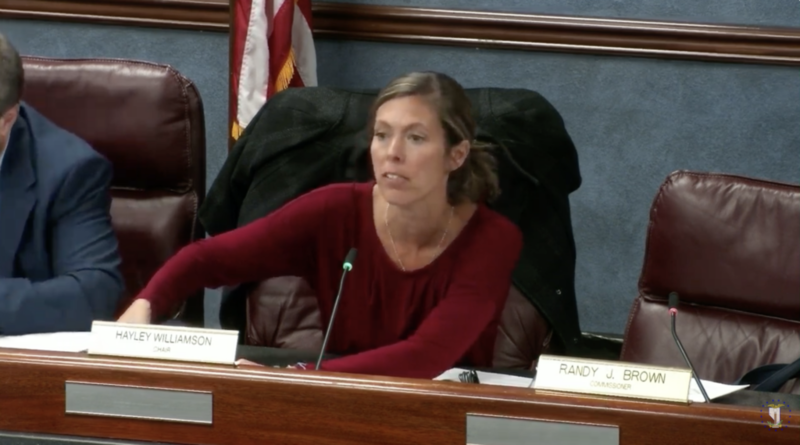
Public Utilities Commission of Nevada Chair Hayley Williamson. (Legislative/PUCN screengrab)
Nevada regulators on Thursday approved the construction of two private methane gas power plants proposed by a major data center developer, which says its power needs have outpaced NV Energy’s ability to supply electricity for a surge of new developments.
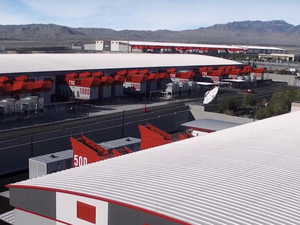
During a special meeting in Carson City, the Public Utilities Commission of Nevada (PUNC) approved a request by Tract Capital Management and its subsidiary Fleet Data Centers to build two massive methane gas power plants to power projects at and near the Tahoe Reno Industrial Center (TRIC) in Storey County.
Fleet’s Peru Ridge and South Valley gas power plants are the first methane gas-powered electricity supply approved specifically for data center use in Nevada. Once constructed, the gas power plants will generate more than 360-megawatts of electricity, or enough power to serve the equivalent of 396,000 homes.
In filings, Fleet said that it expects the gas plants to operate between two and three years, “until NV Energy can deliver permanent utility service to the site.”
Regulators said the approval is conditioned on environmental and local permits, including review by the Nevada Division of Environmental Protection and approvals from Storey County.
“No permit will be issued without proper state agency oversight, and I think that’s important to reiterate,” said PUCN Commissioner Randy Brown.
The vote to approve Fleet’s two massive methane gas power plants came after nearly three hours of heated public comment, where Nevadan’s voiced strong opposition to the gas power plants. Opponents urged the commission to deny the proposals, citing health risks from air pollution, climate impacts, and potential harm to Nevada’s air, water, and quality of life.
Nevadans who spoke during heated public comment after the vote said they felt their concerns were being ignored by public utility commissioners.
“I thought you were supposed to represent the people and the utilities, and it feels like everyone here is trying to tell you that we aren’t being heard,” said Elizabeth Bree Kasper, a frequent participant in PUNC hearings. “My follow-up public comment is trying to ask how we can follow up, and the response from everyone here is that there is no follow-up; that we need to just take it.”
PUCN Chair Hayley Williamson said utility commissioners have statutory constraints on what evidence they can consider when evaluating whether a project will serve the public interest.
PUCN Commissioner Tammy Cordova echoed Williamson’s comments, adding that she did “appreciate the comments of everyone who came out today and has taken an interest in our proceedings.”
“It does show something that the community is very interested in, but I think I would be failing in my responsibility if I somehow held this applicant to a different standard or a different set of laws than all of those other applications that the commission has prosecuted over the years,” Cordova said.
PUCN general counsel Garrett Weir told the crowd that utility commissioners can’t consider public comments as evidence when determining their vote. Weir advised the public to contact the Nevada Attorney General’s Bureau of Consumer Protections, who he said “have an obligation to advocate for the public interest” when it comes to utility cases of public concern.
“It is tragic that folks show up with expectations that aren’t realistic about what the public comment can actually achieve,” Weir said.
“The representation in Nevada before the Public Utilities Commission is generally through intervention by the Bureau of Consumer Protection,” said Weir. “In the case that most of the public comments were made on today, the Bureau of Consumer Protection didn’t participate.”
John Sadler, the communications director for the Nevada Office of the Attorney General, said that while the BCP occasionally intervenes in utility proceedings they were confident that Nevadans for Clean Affordable Reliable Energy (NCARE) — the only organization that intervened in opposition on the case — could represent the community’s concerns effectively.
The PUCN “failed to account for evidence that was placed directly before them. The commissioners’ disregard for that evidence, while issuing a ruling that favored the applicants, represents a genuine failure of their public duty,” Sadler said.
Western Resource Advocates, representing Nevadans for Clean Affordable Reliable Energy (NCARE), intervened before the Commission in a hearing on July 30 to challenge Fleet’s proposal to build two private methane gas power plants. The organization has the right to appeal the PUCN’s decision as an intervening party.
Private gas plants to power data centers would skirt state’s renewable energy law
“We’re disappointed in today’s outcome and will be exploring next steps,” said George Cavros, senior attorney at WRA. “Western Resource Advocates represented Nevadans for Clean Affordable Reliable Energy in these cases to give everyday Nevadans a voice as a party to these proceedings, and to ensure the Commission applied transparent and meaningful analysis under the Utility Environmental Protection Act.”
The coalition argued approval of Fleet’s proposal would bypass Nevada’s renewable energy portfolio standard, which mandates power providers utilize 50% renewable energy by 2030.
Fleet maintains that its methane gas power plants are not subject to the state’s renewable energy portfolio standard because it is not technically an energy provider like NV Energy.
In PUCN filings, NCARE said the size and capacity of the private gas power plants would nearly rival utility scale methane gas plants across the U.S., where about 80% of gas power plants average about 500 megawatts or less.
An analysis by NCARE found that the new gas-burning plants, if built to specifications, would burn about three times as much methane gas as NV Energy’s entire Northern Nevada residential and commercial customer base in 2025, or enough gas to supply about 652,000 homes.
If the new gas-burning plants were operating in 2025, Nevada’s emissions would have increased by nearly 12%, according to NCARE’s analysis.
Sadler criticized the PUCN for giving “no apparent weight” to NCARE’s testimony when evaluating whether the gas power plants would serve the public interest.
“The PUCN’s current attempt at damage control is disingenuous. Telling today’s public commenters that their concerns weren’t part of the evidentiary record is simply false — NCARE introduced that same evidence, and in fact amplified those very issues during the due process hearing,” Sadler said.
Las Vegas, NV