If Haiti is too dangerous for American travelers, why is it safe enough for forced return?
Jul 29, 2026 | 9:17 am ET
Description
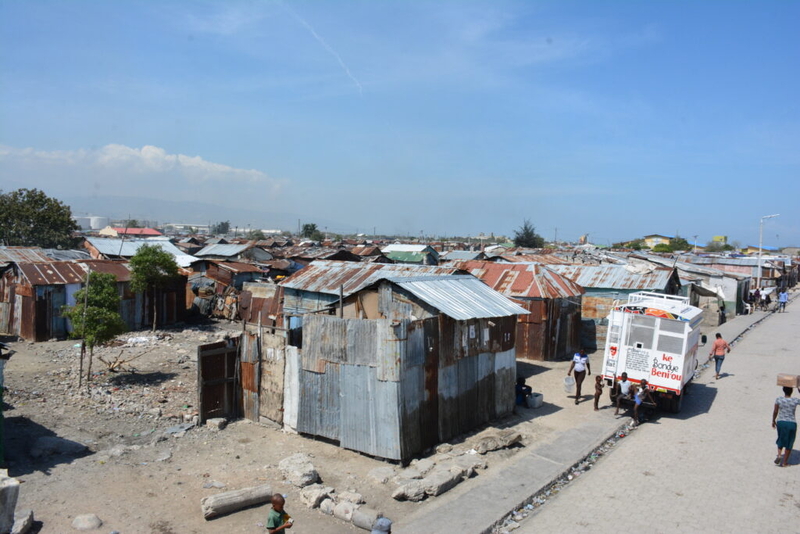
Just half of Haiti had access to electricity as of 2022, according to the World Bank. (Photo by Josh Thoreson)
I have traveled to Haiti three times on service projects, but my story is not unusual among Minnesotans.
Across Minnesota, churches and mission teams, nonprofits and medical volunteers have spent decades supporting Haiti through youth-group fundraisers, medical teams, sponsored schools, clean-water projects and prayer cards pinned to refrigerators. Minnesotans have raised money, supported clinics, delivered food, taught children and told Haitian families, in word and deed, that they are not forgotten.
That history should matter now. So should the longer history.
Haiti is not just another poor country. It is the only nation in history born from a successful revolt of enslaved people. After Haitians defeated slavery and won independence, France forced the new nation to pay former enslavers for the loss of plantations and people they had claimed as property. The Monroe Doctrine declared that the Americas were no longer open to European domination, but when France coerced Haiti, the United States did not defend Haitian sovereignty. Haiti’s Black independence was too politically inconvenient and too threatening to America’s slaveholding order.
This forced wealth transfer drained Haiti’s young economy for generations; the New York Times has estimated the lost growth at tens of billions of dollars. A century later, U.S. Marines removed Haiti’s gold reserves, and the United States occupied Haiti for nearly two decades. Haiti’s poverty has many causes, including corrupt Haitian leaders. But Americans should be honest about this much: Haiti was made poorer by both the actions and the inactions of the United States.
The Supreme Court’s recent decision allows the Trump administration to end Temporary Protected Status for more than 350,000 Haitians and 6,100 Syrians, according to Reuters. TPS is not citizenship. It is not permanent residency. It is temporary humanitarian protection that allows people from countries facing war, disaster or extraordinary danger to live and work legally in the United States while return remains unsafe.
The legal question may now be partly settled. The moral question is not.
The U.S. State Department currently lists Haiti as Level 4: Do not travel. Its April 2026 advisory warns Americans not to travel there because of crime, terrorism, kidnapping, unrest and limited health care. It describes violent crime, carjackings, sexual assault, kidnappings for ransom, stray-bullet risk and hospitals lacking basic resources.
That raises a question Minnesota should ask plainly: If Haiti is too dangerous for American travelers, why is it safe enough for forced return?
This is not abstract. Reuters reports, citing the International Organization for Migration, that a record 1.3 million people have been displaced by violence in Haiti. Armed gangs control much of Port-au-Prince. Families are fleeing neighborhoods, schools are closing and many displaced people lack reliable access to health care, clean water or safe shelter.
In Haiti, poverty is visible, most especially in the daily vulnerability of children and families living with far fewer protections than most Minnesotans can imagine. Forced return would expose many people to foreseeable grave danger. Some may die as a result.
Minnesota’s direct Haitian population is smaller than Ohio’s or Florida’s, and we should be careful with numbers. Sahan Journal reports that about 4,000 Haitians live in Minnesota, while the number here under TPS is unclear. That uncertainty matters. But it does not erase the impact.
Sahan has reported on Haitian Minnesotans facing lost work authorization, lost contracts and fear of going underground. It also reports that roughly 80 Haitian workers were laid off from a Long Prairie meatpacking plant after losing work permits. That is not just an immigration story. It is a Minnesota workforce story.
Minnesota already depends on foreign-born workers in care work, food production, manufacturing and other hard-to-fill jobs. Minnesota DEED reports that direct-care occupations account for 12% of statewide job vacancies, and foreign-born workers make up 18% of Minnesota’s direct-care workforce. Removing legal work authorization from people already working, paying taxes and supporting families does not make Minnesota stronger.
Ending TPS is often defended by saying the “T” stands for temporary. That is true. Immigration law matters. Executive authority matters. No one has to pretend TPS was designed to be a permanent substitute for a functioning immigration system. But temporary does not mean disposable. And rule of law does not require pretending Haiti is safe when our own government says Americans should not go there.
The faith question may be even more direct.
Many Minnesotans most connected to Haiti are Christians, including evangelicals. One example is Minnesota-based Healing Haiti, which describes years of mission work, school support, feeding programs, medical care and job creation. Its own timeline says 65 people traveled with Healing Haiti after the 2010 earthquake, followed by 200 short-term missionaries in 2011, 600 in 2012 and 900 in 2013.
That record of compassion should become a call to consistency. White evangelicals remain one of the strongest bases of support for President Trump, according to Pew Research Center. That does not require evangelical Christians to abandon their politics. It does require them to ask whether sending legally working Haitian families back into danger reflects the faith they carried with them on those mission trips.
Minnesota’s congressional delegation, faith leaders, health care employers, civic organizations and business leaders should speak clearly. Haitian TPS holders should retain protection and work authorization while Haiti remains unsafe, and Congress should create a durable legal path for people who have spent years building lives, paying taxes and strengthening communities here.
The Supreme Court can decide what an administration is allowed to do.
Minnesotans must still decide what is wise, humane and consistent with the values we claim.

Saint Paul, MN