Idaho statewide audit finds significant errors in financial reporting driven by Luma system
Sep 25, 2025 | 1:10 pm ET
Description
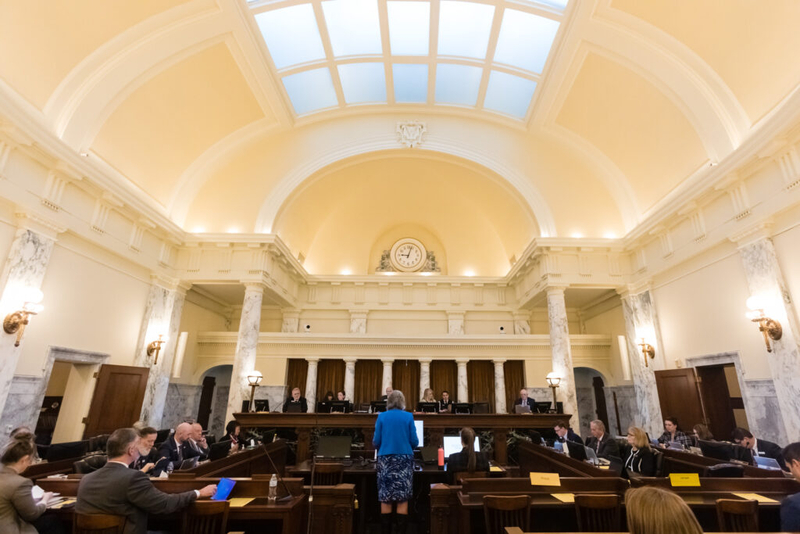
The Idaho Joint Finance and Appropriations Committee meets at the state Capitol in this Jan. 23, 2024, file photo. (Otto Kitsinger for Idaho Capital Sun)
The state of Idaho’s massive overhaul of its business and accounting software in 2023 led to a number of errors on financial statements and weaknesses in processes for ensuring accuracy of those statements, a legislative audit found.
The findings included reported financial misstatements of hundreds of millions of dollars for some agencies, duplicated payments, and a lack of processes to verify accuracy of statements between the State Controller’s Office, Idaho State Treasure’s Office, and the bank — many of these issues have been reported previously by the Idaho Capital Sun.
The financial reporting errors don’t necessarily mean agencies spent more or less than they had, but problems could arise in the state budgeting process or potentially affect the state’s credit rating, Idaho lawmakers told the Sun.
The state is required to submit an Annual Comprehensive Financial Report and audit of the entire state budget each year. This year’s report detailed fiscal year 2024 — which ran July 1, 2023, to June 30, 2024 — and thus included some of the results of a bumpy implementation of the software, called Luma.
The report is scheduled to be discussed at a Legislative Council meeting at 8:30 a.m. Friday at the state Capitol in Boise.
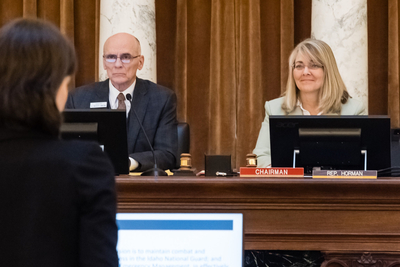
The co-chairs of Idaho’s budget-writing committee, the Joint Finance and Appropriations Committee, or JFAC, both said the report was concerning, but noted there are efforts underway to fix issues identified in it.
“It’s problems like that that make the budgeting process difficult,” said co-chair Rep. Wendy Horman, R-Idaho Falls. “If we can’t rely on these numbers to be accurate, the budgeting process gets complicated real quick.”
Co-chair Sen. Scott Grow, R-Eagle, who is also a retired certified public accountant, said he was most concerned about the lack of process for reconciliation — ensuring the accounting system’s cash numbers matched the bank’s records. According to the report, amid the implementation of Luma, this process was no longer being completed for some categories of cash.
“When there’s an uncertainty in cash, it puts a level of uncertainty about the overall financial statements,” Grow said.
The State Controller’s Office pays the state’s bills and the Idaho Treasurer’s Office holds cash for the state. The system changeover caused hurdles in verifying agency fund balances for the Treasure’s Office, the Sun reported in 2024.
“As with any change in financial systems, there’s always a challenge in the first year, but also recognizing that, for the state of Idaho, each year that these audits are conducted, there’s always a series of findings, so it’s not abnormal,” Scott Smith, chief deputy controller and Luma Division administrator, told the Sun in an interview. “And certainly from the Controller’s Office perspective, we appreciate the due diligence from the Legislative Services Office to make sure that we’re following the appropriate rules and have the right controls in place, and anything they do find is really an opportunity for us to continue to improve and do better.”
The Idaho State Treasurer’s Office could not immediately be reached for comment.
What made this Luma report so significant?
The Annual Comprehensive Financial Report is more than 200 pages long, and this year’s audit includes what are called “qualified opinions,” which means the finding was significant enough that there could be a material error in reporting, largely because the documentation wasn’t adequate for auditors to verify accuracy.
Legislative Services Office Audit Division Manager April Renfro told the Sun that in her 13 years in the position, she had never issued a qualified opinion before. There were eight qualified opinions in this report.
Renfro’s follow-up report on internal controls, which detailed errors found by auditors, had 18 findings, including 11 “material weaknesses,” which are failures in internal processes that make it possible staff would be unable to prevent financial misstatements.
State of Idaho Internal Control ReportThe discontinuation of the reconciliation process for cash balances by fund amid the launch of Luma on July 1, 2023, was one of the findings; this resulted in reports of unverified cash amounts in statements and errors going undetected.
“That’s the biggest problem, in my mind,” Grow said.
Grow said it’s important for an organization to not rely on the bank to know how much money it has, which is what happens without internal reconciliation.
Horman echoed Grow’s concerns.
“It’s troubling that (the State Controller’s Office) thought that we could get by without a reconciliation process,” she said. “That, to me, is the most disappointing part of this.”
Because of challenges in having the needed reports available, the Controller’s Office has implemented a manual process for reconciliation, Smith said, and is in the process of creating a more streamlined automated process.
“As we become more familiar, and our process has become more mature, on getting that knowledge across all of our agencies then that helps frame, ‘what does that automation look like?’ And ‘what should it be?’” Smith said.
What were some of the errors found in the Luma audit?
One of the financial statements provided by the Controller’s Office did not include the value of federal money received and spent for the food benefits in the Supplemental Nutrition Assistance Program, known as SNAP, resulting in a misstatement of $280.9 million.
Grow noted that misstatements in financial reporting don’t necessarily mean agencies thought they had more or less money to spend, but the errors call into question the reliability of financial statements.
Auditors identified more than $30 million in duplicate payments made to Medicaid providers in November 2023, an issue that was reported by the Idaho Freedom Foundation at the time; the error wasn’t discovered until providers called the state to ask about the extra payment, the report said.
Auditors found other incidents of duplicate, sometimes triple, payments in fiscal year 2025, the report said, but those payments were not recorded in Luma so there was “no way to track them through the accounting system.” The Treasurer’s Office tracked the payments through a manual process using a spreadsheet, the report said.
“Additionally, when the (Controller’s) Office was questioned about instances beyond the two incidents, we were aware of, it stated that only ‘one or two, here and there’ were seen,” the report said. “This did not instill confidence that additional errors had been detected or prevented.”
The Controller’s Office in its response agreed with the findings, and said the office had implemented automatic checks to prevent duplicate payments in the future. The auditor in her response to the proposed corrective action noted that errors from the report “would not have been detected” by the process described in the controller’s corrective action.
The report found that the State Department of Education didn’t adequately monitor data supporting about a quarter of payments going to districts. Meaning that in a quarter of the total payments made to schools — or of $545 million — that were sent out, there could be errors, but it’s unclear from the provided information. This issue came up the prior fiscal year too, the report said, which was driven by difficulty in hiring a position that audits the payments.
The Department of Environmental Quality recorded federal pandemic-era American Rescue Plan Act, or ARPA, funds twice, overstating its revenue in the ARPA fund by $83.7 million. The Division of Financial Management also misstated ARPA funds, understating it by $175 million.
A coding error resulted in a misstatement of accrued liabilities and cash in the Department of Health and Welfare of $359 million, and another coding error resulted in $132 million overstated in cash in the annual statewide financial report.
What does this mean for the state of Idaho?
All of the errors identified in the report were fixed. However, the auditors don’t verify every single financial statement in the state budget, but often finds errors through testing a sampling of statements or interviewing staff to determine if internal controls were used, Renfro said.
Horman said because of this, she’s concerned that there are errors going undetected.
“I’ll definitely be looking for some reassurance that those have been fixed immediately,” Horman said.
Smith said that the Controller’s Office is working through the corrective action plan and has additionally revamped its training on the system for employees — who overwhelmingly bemoaned the transition at first.
Whether those corrective actions are adequate may not be determined until Renfro and other legislative auditors follow-up on the office’s plan to see if the report’s findings were sufficiently addressed.
ACFR-2024-Final
Boise, ID