ICE detentions should not be a profit center for Kentucky’s jails
May 26, 2026 | 2:26 pm ET
Description
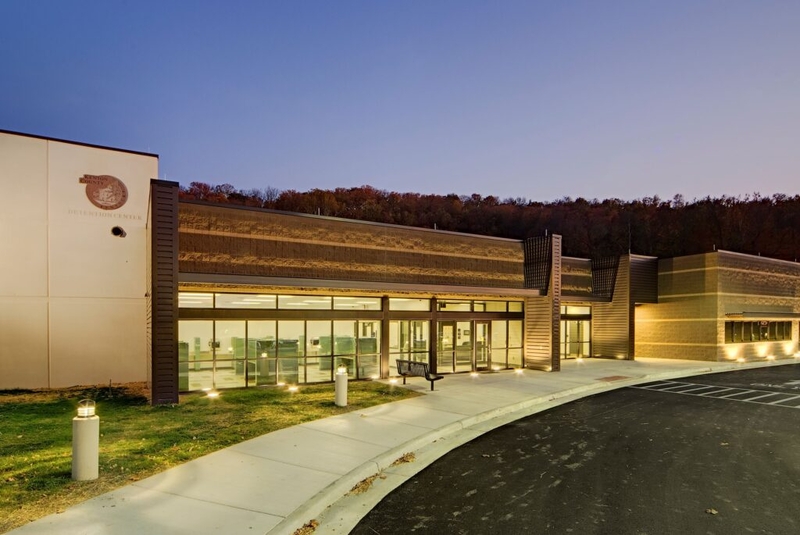
The Kenton County Detention Center is one of the Kentucky jails housing detainees for U.S. Immigration and Customs Enforcement. (Kenton County sheriff)
In 1860, Dr. William Sneed, who had been the chief surgeon at Kentucky’s penitentiary, warned of any “effort to make the inmates a source of revenue for the State.”
Flash forward 166 years to a story in the Louisville Courier-Journal reporting that eight Kentucky county jails were holding 1,100 immigrants on behalf of the federal Department of Homeland Security and ICE. For this service, the jails in Boone, Campbell, Christian, Daviess, Grayson, Hopkins, Kenton and Oldham counties receive payments of as much as $88 per day for each federal prisoner.
Let’s do the math. At the $88 a day rate, those eight counties could pull in over $35 million dollars a year. No wonder more immigrants are detained in Kentucky than in any state on its borders.
These eight jails are among the largest and newest of Kentucky’s 74 county jails. They were designed and built to hold prisoners from outside the county. Big jails require more staff and higher bond payments, so counties have incentive to bus in high-profit federal prisoners from out-of-state.
These jails don’t serve local demand. Sixty percent of the total 4,300 prisoners in these jails are federal or state prisoners. The prisoners are there because they bring income.
Meanwhile, county jails are run with little oversight or regulation. Six of the eight jails are overcrowded. There’s no penalty for running an overcrowded jail, so the more prisoners the better.
Consider the Grayson County jail. That jail has 563 federal inmates in a 536-bed jail. (One hundred and fifty of those federal inmates are immigrants on hold by ICE.) Including local and state prisoners, Grayson was operating at 124 percent of capacity at the end of April.
This isn’t an unusual occurrence. It was, in a way, the plan from the beginning. The Grayson County jail was designed and built to pay for itself by holding prisoners from other agencies. Only 66 of a total 665 prisoners there at the end of April were held on county charges. Many of the prisoners have been held there for months.
It is a system without much meaningful oversight. None of our county jails, except Louisville Metro jail, issue any kind of annual report. Without news media or others filing requests under the state open records law and citizens who talk with inquiring reporters, we would know nothing of what happens inside these walls. “Out-of-sight-out-of-mind” is standard operating procedure.
This is not just an issue with county jails holding ICE detainees. Forty-five of our 74 county jails are overcrowded. For many years Kentucky Department of Corrections Jail Inspectors have cited them for overcrowding, but the citations had few consequences.
Thirty-five percent of people serving state felony time are housed in lower cost county jails instead of a state prison. This is a grossly inhumane practice because jails were never intended for long term confinement. Jails have limited rehabilitation programs. The Grayson County jail was built with no secure outdoor area, so prisoners are never allowed outside. These jails generally lack the minimal living space options to protect sick, weak, mentally ill or non-criminal prisoners from exploitation.
Is it any surprise that 268 people have died in county jails since 2019?
The practice of building county jails as money-making propositions has created an outsized population of inmates in Kentucky. There are 20,000 people in 74 county jails and half those beds are “rented out” to state or federal agencies. Three thousand federal prisoners (including 1,100 immigrants) and 7,000 state prisoners are in county jails along with 10,000 prisoners facing county charges. Sixty thousand people are on state probation or parole. If all these people were in one place, it would be Kentucky’s third largest city.
Only five states have higher percentages of incarcerated citizens than Kentucky, according to 2024 figures.
We don’t need more county jails and we don’t need more tough-on-crime bills coming out of the legislature. Kentucky’s crime rates have fallen for the past five years and are lower than the national average.
Still the bills and the jails keep coming. An army of vested interests drives legislators to pass more “tough-on-crime” sentencing laws (such as the “Safer Kentucky Act” of 2024) without providing additional funding for humane living conditions, treatment programs or staffing.
Kentucky quickly forgot what Dr. Sneed knew so many years ago when he opposed leasing inmates to private entities for their labor. It is immoral to run jails and prisons as profit and loss businesses. Blood should not be turned into money.
Frankfort