ICE is abandoning plans for its Salt Lake City mega-center, but it’s not slowing down in Utah
Aug 28, 2026 | 7:03 am ET
Description
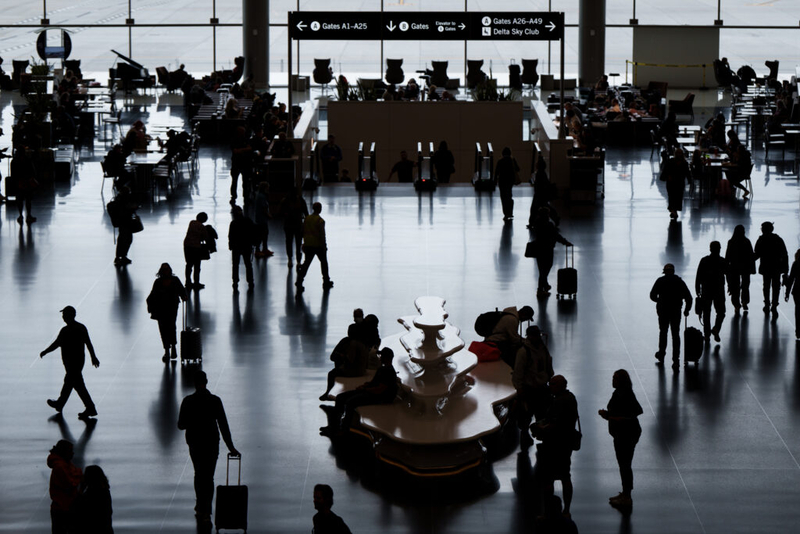
Travelers move through Salt Lake International Airport in Salt Lake City on Thursday, Oct. 16, 2025. (Photo by Spenser Heaps for Utah News Dispatch)
Federal officials have called off their plan to convert a Salt Lake City warehouse into a sprawling detention center, but that doesn’t mean immigration enforcers have less of a presence in the state.
“That could not be further from the truth,” said Utah immigration attorney Christopher Vizcardo.
Vizcardo is the lawyer who answers at a South Jordan-based law firm when someone calls about a loved one who’s been arrested and detained by immigration authorities. Last year, on a busy week, he would get five of those calls. Now he’s getting about 15, he told Utah News Dispatch.
ICE no longer intends to turn Salt Lake City warehouse into detention center, court filing says
Statewide, U.S. Immigration and Customs Enforcement arrested at least 613 people in June, more than any other month in President Donald Trump’s second term, according to data compiled by the Deportation Data Project. The number dipped slightly in July, down to 548.
Nationally, the number spiked last month. The Department of Homeland Security this week reported arresting roughly 51,000 immigrants in July, the highest monthly total to date.
As it tries to hit a goal of 2,000 arrests per day, the Trump administration is using new tactics, such as detaining more people at airports, including immigrants whose visas expired while their applications for legal status were still pending. They include one of Vizcardo’s clients, detained at the baggage claim at Salt Lake City International Airport last month after returning from a business trip, he said.
“The ICE officers gave him the chance to kind of stick his head out to the curb to let his wife know he was being detained, right?” Vizcardo said. “And then they took him in.”
He was released from detention after an immigration judge granted his request for bond, Vizcardo said.
“Again, he did nothing wrong. If that asylum application has not been adjudicated, if he has not been scheduled for an interview to make a decision for that application, that’s not his fault,” Vizcardo said. “But in the meantime, because the application has not been approved, then technically, according to the law, he’s here illegally. And therefore he’s fair game for ICE.”
On arrests at airports, DHS told Stateline this week that “this administration is working diligently to ensure that aliens in our country illegally can no longer fly, unless it is out of our country to self-deport.”
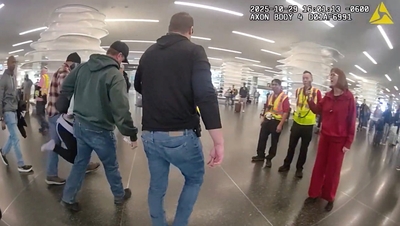
An earlier arrest at the Salt Lake City airport last year made headlines after video surfaced online of a woman originally from El Salvador crying out for help and telling officers “I have papers!” as officers carried her away.
Her immigration attorney, Andy Armstrong, said the U.S. government can compare passenger records for upcoming flights against immigration records and identify anyone who’s overstayed a visa fairly easily. The day of the flight, authorities can be almost certain to find the traveler at the airport they’re taking off from, or at their destination.
Another client of Armstrong’s was arrested in July in what’s become another high-profile case, after ICE officers attempted to stop him at a gas station, then followed him into his garage in Salt Lake City’s Rose Park neighborhood, seemingly without a warrant.
“That’s a violation of the Fourth Amendment,” Armstrong said, which prohibits the government from using force to enter a home.
What we know about how ICE arrests have increased in Utah under Trump
ICE did not respond to an emailed request for comment from Utah News Dispatch on Thursday, but told KUER that “federal law enforcement officers and those attempting to evade arrest or who assault officers under the false assumption their commands are not lawful will face serious consequences.”
In the criminal justice system, judges can decide not to consider evidence if they find the government violated a defendant’s rights to obtain it, Armstrong noted. Cases are sometimes thrown out altogether for that reason.
“And in immigration law, that just doesn’t exist,” Armstrong said. “So the checks and balances are a little different on ICE agents.”
Armstrong suspects what happened that day stems from ICE’s recent hiring push and a resulting new wave of officers with less training than senior officers.
“I don’t know which ICE agents did that, but I would suspect they’re not the veteran ICE agents, right? They’re not people who have years of training and practice and understand the limitations of their authority,” Armstrong said.

Salt Lake City, UT