Hundreds rally against taxing skill games in Pennsylvania like casino slot machines
Jun 24, 2026 | 5:24 pm ET
Description
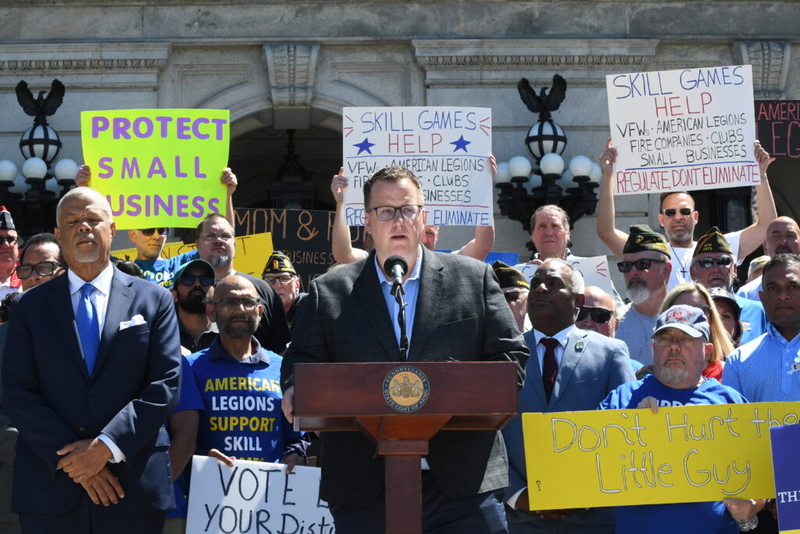
Doug Sprankle, owner of Sprankles Neighborhood Grocery and president of Pennsylvania Tavern and Players Association speaks at a rally opposing taxing skill games Wednesday, June 24, 2026. (Photo by Peter Hall/Capital-Star)
The Ephraim Slaughter American Legion Post in Harrisburg is a refuge for veterans navigating their return home after war, Commander Stephen Holmes said.
The skill game machines that entertain patrons also provide income that not only helps the post keep its doors open, but give back to men and women who are struggling after serving their country, he said.
“You can walk in and break bread with somebody that stepped on the ground that you were on, or smelled the smells that you smelled that bring back the memories of all hell,” Holmes said. “These are the guys that we are fighting for.”
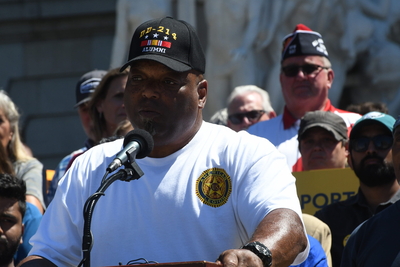
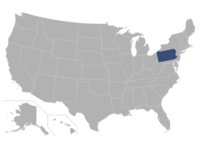
Holmes was one of several hundred veterans, volunteer firefighters and small business owners who rallied on the Pennsylvania Capitol steps in Harrisburg on Tuesday in opposition to taxing skill games like casino slot machines. Lawmakers have proposed a range of tax rates up to 52%.
Doing so would take money from the coffers of charitable organizations and the wallets of small business owners grinding to make payroll, said Douglas Sprankle, president of the Pennsylvania Taverns and Players Association that organized the rally.
“Pennsylvania Skill games have provided support for countless businesses and organizations,” said Sprankle, whose family owns a chain of independent grocery stores. “The question is not whether the games should be regulated and taxed — the question is whether lawmakers will adopt a reasonable approach or one that forces these locations to shut down.”
One lawmaker suggested the issue could drive a wedge between state budget negotiators as the June 30 deadline approaches.
Sen. Anthony Williams (D-Philadelphia) noted the crowd consisted of constituents and not corporate casino owners. He urged Democratic Gov. Josh Shapiro and leaders in the House and Senate to listen to them and nearly two dozen lawmakers who joined him at the rally.
“We have an idea or two. So, when you’re in that room, that back room, negotiating a deal, be reminded that this number of state representatives and state senators are going to block a budget,” Williams said. “There is no deal without us, because we are real.”
Opponents of a tax say they support legislation sponsored by Williams and Sen. Gen Yaw (R-Lycoming) that would establish a regulatory framework and impose a monthly $500 per machine fee that would produce roughly $300 million annually.
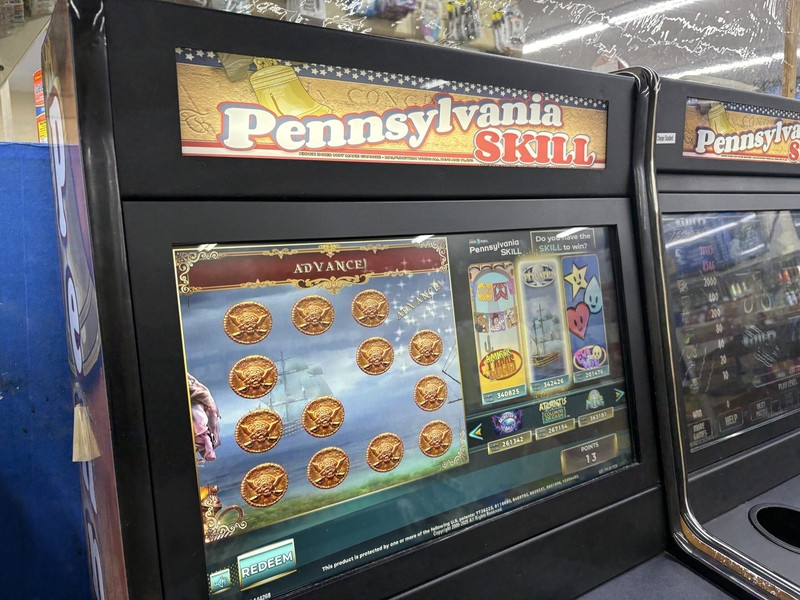
Skill Games appear similar to video slot machines found in casinos and truck stops across the commonwealth. Like casino gambling machines, they allow a player to bet money to win a jackpot.
But, the games’ developer Pace-O-Matic claimed, they also incorporate an element of skill that allows a player, theoretically, to win every time.
Unlike slot machines, they’re not regulated by the state. In recent years, they’ve filled empty corners of mom and pop stores, restaurants, gas stations and private clubs, thriving in a legal gray area.
The state Supreme Court earlier this month resolved that ambiguity, ruling that skill games are illegal unlicensed gambling devices. Recognizing the potential turmoil in declaring a statewide enterprise unlawful, the court stayed enforcement of its ruling for 120 days to give the General Assembly time to act.
For years, even before the Supreme Court took up the issue, some lawmakers have seen skill games as a source of crime and social ill in need of regulation and taxation. For the second year in a row, Shapiro proposed taxing the devices, saying the estimated 70,000 machines could generate more than $2 billion in new revenue.
If the proposed 52% tax were to go into effect, it would amount to the largest tax hike on small businesses in state history, they said. It would also devastate volunteer fire companies and fraternal organizations like the American Legion post, Holmes said.
“The money goes in the door and it goes right back out the door to homeless vets, suicide prevention for vets, small homes for vets,” he said, adding Skill Game revenue also helps the post pay for a backpack give-away, Christmas celebrations and Easter egg hunts for kids in the community.
Jack Paul, an assistant fire chief at Deer Lake and West Brunswick Fire Company in Schuylkill County, said skill games provide operational funding. With only 31 active members to cover a broad rural territory, the fire company no longer has the manpower needed to put on fundraisers.
“What they’ve done for us is we can now pay our bills on time,” Paul said. “We can put fuel in our trucks. We can equip our guys with the newest and the safest uniforms, equipment.”
Legislative efforts to regulate and tax skill games during last year’s extended budget process ended with an impasse in the Senate over the tax rate and other details. The casino industry, which has lobbied heavily against skill games, is taxed at 55% of gross terminal revenue – the total amount wagered on all authorized machines. They pushed for a similar rate on skill games.
Senate Republican leaders endorsed a plan to tax skill games at 35%. Yaw, whose district includes skill game maker Miele Manufacturing, sponsored competing legislation to tax the machines at 16%.
Mark Coolbough, a member of Cressona American Legion Post in Schuylkill County, said skill games have been “a godsend” that helped his organization stay open through the COVID-19 pandemic and the economic turmoil that followed.
“Lawmakers need to get out of Harrisburg and talk to constituents … to get a better understanding of what that revenue from these skill games means to us” Coolbough said. “They need to understand what their actions could mean if we lose this.”
Harrisburg, PA