Hundreds march in Grand Rapids to demand justice for missing and murdered Indigenous people
May 05, 2026 | 6:13 pm ET
Description
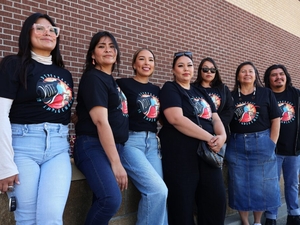
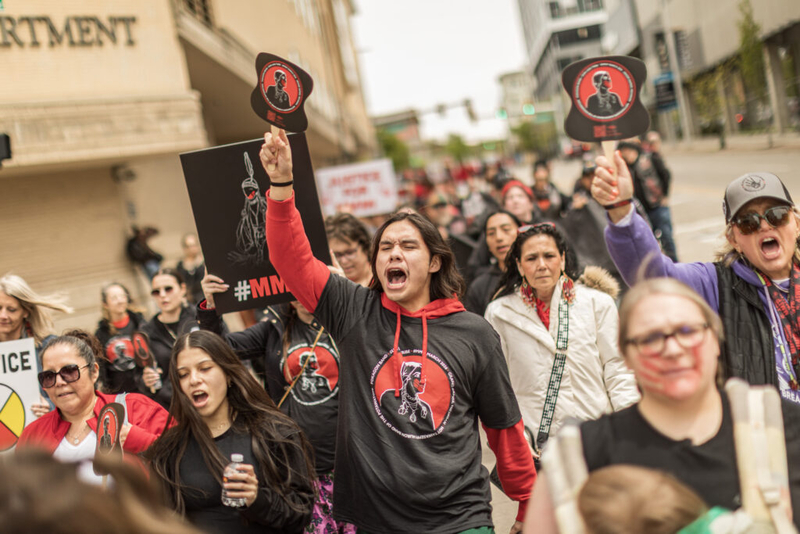
Hundreds rallied and marched in Grand Rapids to demand justice and honor victims on Missing and Murdered Indigenous Persons Day, May 5, 2026 | Photo by Erick Diaz Veliz/Michigan Advance
A sea of people in red spread out, raising signs and chanting through the streets of downtown Grand Rapids on Tuesday to demand justice and honor victims as they marked Missing and Murdered Indigenous Persons Day.
The demonstration, which included a water ceremony and Jingle Dress dancers, was led by three Tribal nations that organized the rally and march, with Rosa Parks Circle as its epicenter, including the Nottawaseppi Huron Band of the Potawatomi, the Pokagon Band of Potawatomi, and the Match-E-Be-Nash-She-Wish Band of Potawatomi.
“Our relatives are often stolen, and we never get, really, any answers,” said Sky Rodrigues, 24, who attended the rally for the third straight year. “I’ve known about this since I was little. This is something that I was taught that we have to be aware of: the fact that we are in danger, that we are susceptible to being taken, and often taught that this is going to happen, no matter what age.”
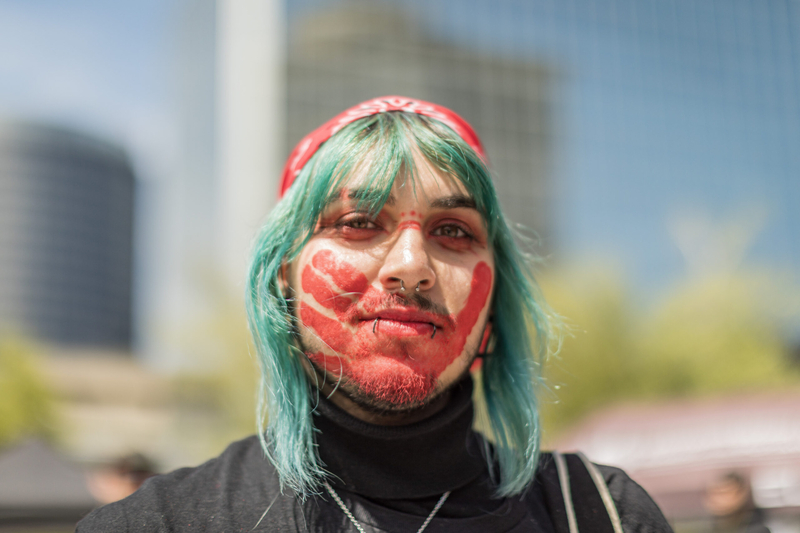
Across the United States, as cases of thousands of missing and murdered Indigenous people have been misidentified, unsolved, and unprosecuted, families are still looking for justice.
A study carried out by the National Institute of Justice in 2016 found that 84.3% of Native American women have suffered violence in their lifetime, including 56.1% who faced sexual violence.
While the Bureau of Indian Affairs estimates there are more than 4,000 known unsolved cases, the Centers for Disease Control and Prevention’s National Vital Statistics System found in 2023 that homicide was the fourth leading cause of death among Native American males and the sixth leading cause of death among females for those aged 1 to 44.
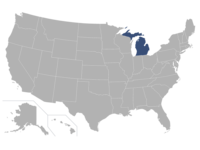
In Michigan, there are 12 federally recognized tribes, including around 240,000 people. However, there are approximately 4,000 open cases of missing and murdered Indigenous persons.
It’s a crisis that is happening not just in Michigan but all around the country, said Diop Harris, a Democratic U.S. House candidate for Michigan’s 4th Congressional District. For Harris, beyond bringing awareness “of cases of Indigenous people going missing on reservations, being found dead, or cold cases that are just going uninvestigated,” it brings attention to the lack of resources to solve these issues.
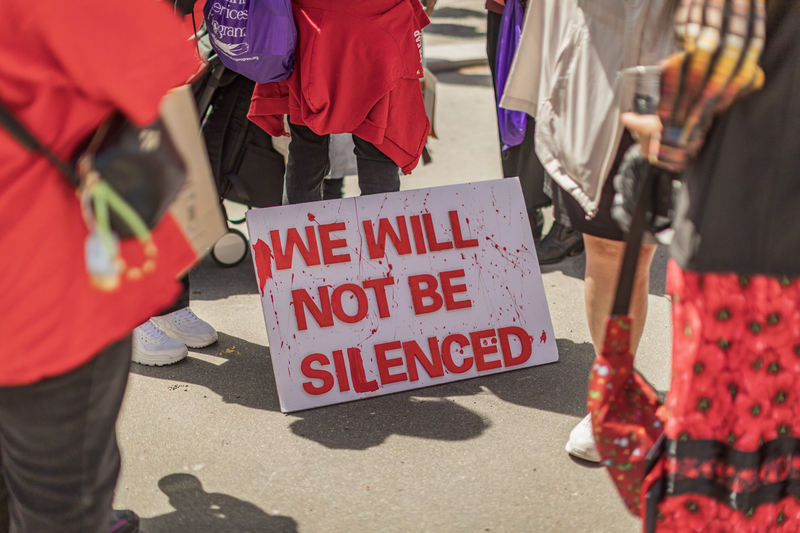
For Melissa Isaac, a member of the Michigan Saginaw Chippewa tribe, beyond resolving this problem through political channels, creating stronger community bonds could also improve this issue by supporting one another, checking in on one another, looking out for one another, and connecting with one another.
“It is a community that can help protect,” she said. “We can get involved and ask our relatives how they’re doing, check in on each other. Those are all the things that actually matter. One strong connection to somebody, and that can change the trajectory of somebody’s life.”
Just as she did last year, in a video posted on the social media platform X, Gov. Gretchen Whitmer said that there is a responsibility to protect Michigan’s Indigenous communities and to seek justice for them. Whitmer affirmed that her administration remains committed to working to prevent further acts of violence against Indigenous peoples.
“I’ve been working closely with our tribal governments to strengthen investigations, improve communication across jurisdictions, collect data, and help prevent further violence against Indigenous people,” Whitmer said. “As a part of the work, the Attorney General has dedicated an anonymous tip line to support victims and families.”
Anyone with information about a missing or murdered Indigenous person in Michigan can call the MMIP Task Force Tipline anonymously at 517-284-0008.
Lansing, MI