How A Young Challenger Defeated Hawaiʻi’s Longest-Serving Lawmaker
Aug 11, 2026 | 6:01 am ET
Description
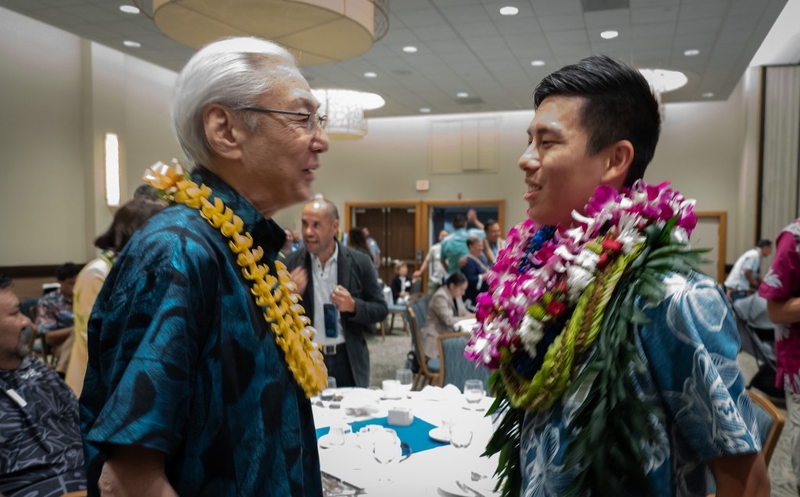
Photo courtesy of Honolulu Civil Beat
When Jackson Sayama first campaigned for office in 2020 at the tender age of 23, he brought along his mother.
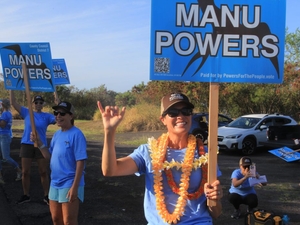
Yumiko Sayama would easily catch the eye of drivers at the busy intersection of Waiʻalae Avenue and St. Louis Drive, where Sayama was sign-waving, by bowing just slightly as each drove by.
The intersection is one of the major crossroads in House District 21, which today encompasses St. Louis Heights, Pālolo Valley, Maunalani Heights, Wilhelmina Rise and Kaimukī.
Jackson Sayama won that race by a mere 183 votes, defeating Derek Turbin and two other candidates.
On Saturday, Sayama did something more remarkable — he pulled off the biggest upset so far in this year's elections. By a margin of 2-to-1, he defeated state Sen. Les Ihara, currently Hawaiʻi's longest-serving lawmaker.
The 29-year-old did it by campaigning determinedly, including knocking on a lot of doors. He had also earned a reputation during his six years in the House for showing up regularly to neighborhood board and other community meetings.
Now, Sayama will represent Senate District 10 (Pālolo, St. Louis Heights, Maunalani Heights, Ala Wai mauka, portions of Kaimukī, Kapahulu, Mō‘ili‘ili, McCully) in the Legislature next year.
Sayama was helped by well-known area residents like Calvin Say. Back when Say, a House speaker emeritus who served in that chamber from 1976 until 2020, decided to run for the council, Sayama jumped to fill the open seat. In this election, Say, 74, was featured prominently in a Sayama mailer headlined “Generational Leadership.”
And Sayama also had his mother helping again with the sign-waving, this time twice a day by the Apostle Faith Church on Pālolo Avenue, known for its "Jesus Coming Soon" rooftop sign.
“That’s her signature,” Jackson Sayama told Civil Beat on Monday, referring to the polite bow. “It’s not the busiest intersection, but Calvin Say used to sign-wave there.”
>> Civil Beat wants to hear from voters in this race. Share your thoughts.
Ihara, 75, declined to be interviewed for this story, deferring instead to a press release he emailed Sunday after it was clear the voters of District 10 had resoundingly declined to return him to office. In it he emphasized his 40 years of service in the House and later the Senate and said he respected the voters’ decision and congratulated Sayama on his victory.
Ihara also acknowledged that he did not run a conventional campaign but instead worked toward what he described as “a larger purpose of strengthening the civic culture that allows democratic institutions to flourish.”
Unlike Sayama, Ihara did not use his campaign to talk about solutions to longstanding Hawaiʻi problems like cost of living, homelessness and infrastructure. He didn't sign-wave or go door to door. Rather, Ihara explained in his email, he wanted his campaign to be about strengthening the civic conditions “of trust, belonging, mutual respect, stewardship and the capacity to work constructively” across differences.
“I understood the political risks of conducting an unconventional campaign that emphasized ideas more than electoral competition,” he concluded.
Clearly that didn't go over well with voters. Sayama trounced Ihara, 61.5% to 29.2% — a difference of more than 3,000 votes.
Yesterday Vs. Today
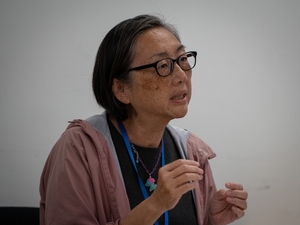
The difference between the two candidates was obvious in a one-hour candidate forum held in the Civil Beat offices on July 1.
Sayama was upbeat and smiling, full of energy. He pointed out he had worked on “countless cleanups” in area parks and other public spaces “to make sure we’re taking care of our friends and neighbors as well.”
Ihara was halting and reserved in his answers. When asked what a top priority would be should he be reelected, he paused for several long seconds and then said, slowly, “I think it is to slow down the process so that we can look at the long-term view of things. In the Legislature there's a lot of pressure to get things done fast — and we have done things fast. And we still have homelessness, an affordable housing crisis that is out of control and other affordability issues that we try to relieve pressure from people.”
He continued: “But the trend is that we don't have control of our future. And to do that, we need to look at it intergenerationally. I started 40 years ago and we have the same problems as today. And so it's important to take action to relieve the pressure to people's suffering and anxiety and we also need to look at the infrastructure — what I call a civic culture infrastructure so that we decide policies based on values versus who is the strongest and the most convincing.”
When asked why he was running for reelection, Ihara said he wanted to give voters “a chance to decide what kind of Legislature they want. I have 40 years of experience and I guess they have the choice of Rep. Sayama or myself, and I think it’s an opportunity for them to think about what kind of leader they want.”
By contrast, Sayama said he was running for the Senate because “I want to help build a Hawaiʻi where local people can stay and thrive.”
He said he had worked with community leaders to pass “amazing legislation that helps people” as well as helped to direct $35 million in state funding to his House district for schools — “working with principles, identifying those priorities.”
The full hour continued along much the same lines, with Sayama citing specific issues and current solutions and Ihara looking at the historical picture.
On the topic of lack of parking in Kaimukī, for example, Sayama suggested developing the current parking parcels into two-story structures.
Ihara answered, “It’s a county issue” and noted that he himself had suggested 35 years ago having the University of Hawaiʻi help alleviate parking. The state could help, he said but parking is a “county design issue.”
Ihara's style underwhelmed some who watched the forum.

“Ihara is out of touch,” said one online commenter. “He keeps talking about his values instead of pointing to concrete projects he has completed for the community. He may have accomplished things 20 years ago, but what has he done in the past 10 years? … We need new blood in the Senate and leaders who will actually move Hawaiʻi forward.”
Another commenter, however, said he was “firmly with Ihara, which isn’t where I usually land on a decades-long incumbent. The proudest-accomplishment answers said it all. Ihara pointed to the fight to let women get credit (cards) in their own name, a hard bill with real opposition behind it at the time. Sayama pointed to a paid family leave working group he built (with) an opt-out so the unions wouldn’t have to join."
This commenter continued: "That’s the whole race in one contrast. Ihara is late enough in his career that he can vote his conscience. Sayama is early enough that he still needs those relationships, and I don’t see him holding the line when an organized group pushes back.”
The differing approaches were also evident in campaign mailers. Ihara issued a six-page campaign brochure that opened with photos of himself in 1986, 2006 and 2026.
“After watching hundreds of legislative battles over the years, certain patterns become impossible to ignore — that lasting change depends on a civic culture in politics,” he said in the mailer.
Ihara wanted to address the “root causes of persistent problems, not just their symptoms," the mailer explained.
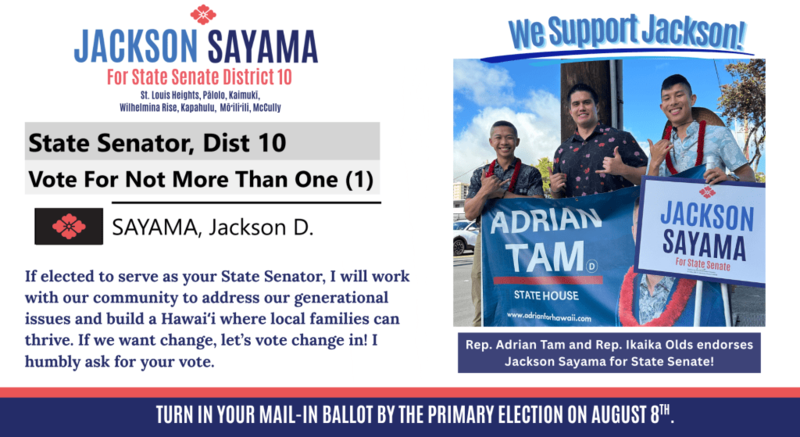
Sayama’s mailers played up supporting “kupuna and keiki caregivers” by creating a paid family leave program, expanding the HANAI Memory Network to increase access to healthcare services for dementia care and expanding enrollment and reducing costs for after-school programs.
The words "keiki" and "kupuna" are not to be found in Ihara's six-page campaign brochure.
Walk The Talk
The mailers aside, Sayama said in the interview that the campaign mostly came down to walking his district, something he credits to advice from Say, who held the House seat before him.
“I think what I learned from my predecessor was really just being available and accessible to my voters, talking story with them directly, being consistent with sign-waving, every day of the week, twice a day, and just being diligent about the campaign as a whole,” he said.
“I think people appreciated the hard work that I was putting into that, and I think that was a reflection of the work that I could do for them as a legislator or as a state senator this time around.”
Say said he was proud of his protégé.
“Jackson really worked hard, and I believe he followed the mantra that we've had in the past — that you've got to walk the district to know your residents — and that's what he tried to do.”
Turbin, who lost to Sayama six years ago only to win back the same House seat Saturday, said Sayama was “beloved by House District 21.”
"He really shows up everywhere, you know, every neighborhood board meeting, every community park cleanup, moving into the different schools,” said Turbin, a former chair of the Democratic Party of Hawaiʻi. “Which I think really makes him beloved and made him just such a strong Senate candidate … He was so present and so active and it won the day for him.”
Ihara infrequently went to neighborhood board meetings or took part in community action events, Sayama pointed out.
But Turbin, who is 42, also said Sayama is part of a younger generation that is becoming a force in local politics.
“We have such a unique district, with Wilhelmina Rise to Pālolo, where sometimes there's a little bit of a difference in priorities in those two neighborhoods,” he said. “But generally both neighborhoods, including St. Louis Heights and parts of Kaimukī, they seem pretty excited about kind of new energy and new blood.”
Going forward, Turbin said he expects to work with Sayama as a team.
A Public Servant
Over his career Ihara was a strong proponent of campaign finance reform. He was among a group of future lawmakers who would lead the 1978 Constitutional Convention that fundamentally restructured state government.
Ihara was not known for getting many bills passed. But he played an influential role as Senate majority leader. And he was sometimes moved to speak out forcefully when matters moved him — most recently, his tough questioning of Hawaiʻi Supreme Court chief justice nominee Vlad Devins.

As a still fairly new legislator, Sayama's record is less substantial. But he has notched some wins. They include legislation that cracked down on catalytic converter thefts, something he said was inspired by talking with constituents sick of getting their cars broken into. The law calls for a class C felony punishable by up to five years in prison and strengthens rules on scrap metal and recycling dealers in order to cut off the resale market for stolen metals.
Sayama may represent a new generation with new energy, but he also has deep ties to his community.
Say noted that his mother is a sensei (teacher) for Japanese tea ceremonies and his father, Mike, a retired abbot at Chozen-ji, a Zen temple and martial arts dojo in the back of Kalihi Valley described in a 2024 Hawaiʻi Business magazine article as a “sought-after place to practice the art of leadership.”
Attendees have included Say, the late U.S. Sen. Dan Inouye, former Gov. John Waiheʻe, and business leaders such as Colbert Matsumoto.
Matsumoto was among the contributors to Sayama’s campaign this election cycle, as were a number of Sayama's House colleagues and a lot of lobbyists. He raised about $71,326 — typical for a Senate race — and spent almost all of it, including a good chunk on mailers, banners and yard signs.
Ihara took no campaign contributions, loaned himself $42,000 and finished the race $67,000 in the red. His biggest expenses were for the mailing of that campaign brochure and advertisements in the Honolulu Star-Advertiser.
When Sayama told Ihara in December that he would run against him, Ihara welcomed the challenge, said Mike McCartney, a close friend of Ihara.
“I think they ran a model race,” said McCartney, who served with Ihara in the Senate and has held a number of prominent positions in government. “As Les would say, the voters decided, and that's how we move on and how democracy works and that's what's going to make the system we have strong — not just more reforms, but reflecting on how you operate, learning how to heal and move the community forward.”
Civil Beat wants to hear from voters in this race. Share your thoughts below. (Can't see the form? Find it here.)
Honolulu, HI