How Gloria Steinem and bell hooks created the feminism that shaped my life
Sep 08, 2026 | 10:52 am ET
Description
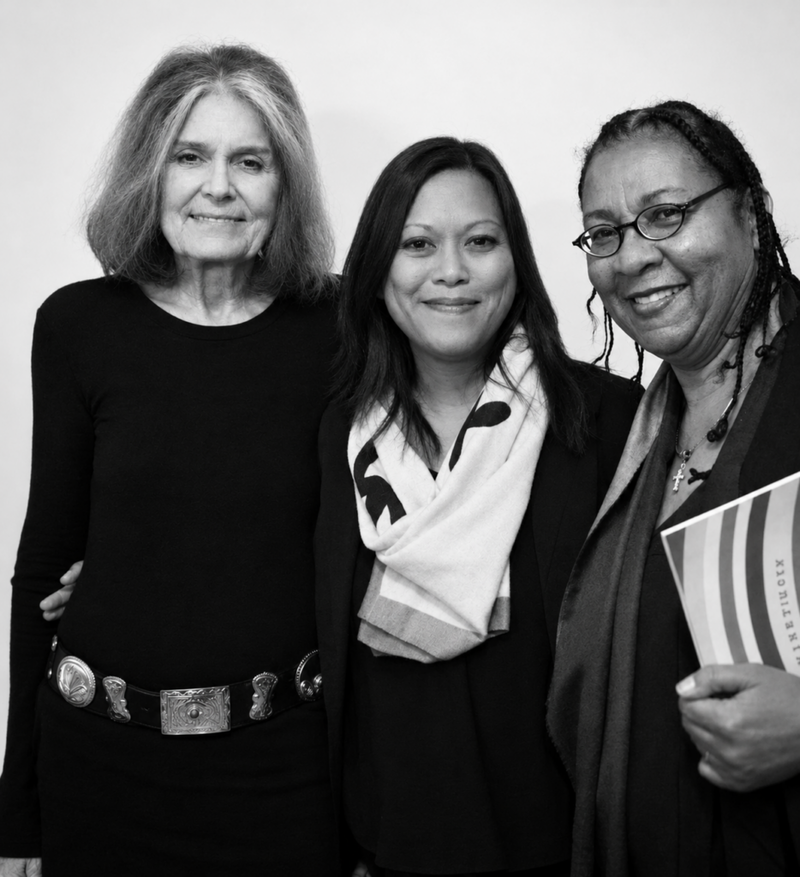
Gloria Steinem, Mae Suramek, and bell hooks during one of Steinem's visits to Berea. Steinem and hooks were friends and collaborators. (Photo provided)
I can’t really remember the exact moment I began identifying as a feminist. I know it was early on – before I even knew what the word meant, before my first date, before someone told me I had to wear a bra, before the first time a man made me feel inferior. Somewhere between Claire Huxtable practicing law while simultaneously raising five children, Diana Prince wielding her magic lasso, and me rolling up my Barbie’s sleeves to rescue entire fictional villages from deadly quick sand, an undeniable forbidden power began to bubble deep down inside me. And yes, it felt forbidden during the latter part of the 80’s when nurses still wore crisp white uniformed dresses and flight attendants were called air hostesses. I felt, even as a 13-year-old girl, the quiet but deadly suffocation of societal norms and expectations crushing down on me.
And this is how I found myself with my first copy of Ms. magazine 40 years ago. Gloria Steinem’s glorious brainchild to bring feminism to the masses and to provide more than anything – validation that the forbidden power bubbling inside of me, wasn’t forbidden at all. In fact women all over the world possessed it too – even if they didn’t know it yet. Ms. magazine was like a secret little members-only club I could retreat to monthly where I didn’t have to smile on demand or get out of the way for men.
Gloria, who died last week, and Ms. would carry me well through high school and college, into young adulthood when that bubbling forbidden power, like a tea kettle that had been slowly percolating for years, grew from a soft whistle into a loud unrelenting siren of second wave feminism. There was nothing forbidden about my power in my early 20s – it became unapologetic, fearless, and defiant. I saw so clearly the inequities women faced in the workplace, the systemic discrimination against women in housing, and good Lord – the violence, the sanctioned and systemic violence in every magazine ad, every college campus, every dark alleyway, and every board room. It was so overpowering, so devastating I would spend the bulk of my professional life trying my darndest to dismantle it by working in domestic violence shelters, rape crisis centers, and human rights organizations.
And if Gloria’s second wave feminism rose to a screeching teapot crescendo in my young adulthood, the feminism of her good friend, bell hooks exploded and blew the entire pot off the stove in my 30s. It became undeniable, indisputable that sexism and racism were so deeply connected and had to be dismantled together. And that voices and perspectives of women of color were often missing in the very movement that I thought I was a part of all along.
The late bell hooks joined the faculty of my alma mater, Berea College the same year I returned to work at Berea as alumni director and to have her voice so close, her presence surrounding me daily, was a gift that was life-changing in a way that I don’t think I recognized at the time. bell imparted so much wisdom on me during the 15 or so years that I knew her, but the funny thing is that I had no idea she was doing it at the time.
When she first met my white husband and embraced him fully, trusting my judgment in choosing him as a partner, seeing him as someone who “divested of male privilege, embraced feminist politics, and is a worthy comrade in struggle.” It didn’t occur to me why she was so accepting of him until I read these words she wrote in her book “Feminism is for Everybody” many years later.
Three months after I gave birth, when she showed up at my door with a bag of baby clothes she had hand selected from our local Goodwill, honoring my role as a mother of a boy and my responsibility to raise him not to seek domination. When I became executive director of our regional rape crisis center, and she invited herself to join our staff retreat and spent six hours grounding 17 women, pouring gratitude and love into the therapists and advocates, acknowledging the impact of secondary trauma, and helping us understand the systemic reality of how white supremacist capitalist patriarchy fuels violence against women.
When she invited me back as a speaker at the bell hooks Institute at a time in my life I no longer worked in “the movement” and had left the advocacy world to open a restaurant. I tried to decline, but she wouldn’t let me, firmly insisting that love and community were essential in dismantling systems of oppression. bell’s combination of radical love, community, intersectionality, and revolutionary feminism finally gave me – a brown daughter of immigrants living in Kentucky – a place in feminism. And she somehow managed to offer this priceless gift to me without a single lecture or book.
To the rest of the world, Gloria Steinem and bell hooks were feminist icons who will be documented and studied in history books, and whose unwavering legacies will continue to challenge systems of domination and oppression. To me, Gloria and bell made feminism accessible. Beyond feminist theory, academic publications, and public discourse, they gave 13-year old me permission to finally own my power, and 30-year old me the courage to to do something worthwhile with it.
Frankfort