How a data center proposal ignited opposition in Nottingham and surrounding communities
May 29, 2026 | 5:00 am ET
Description
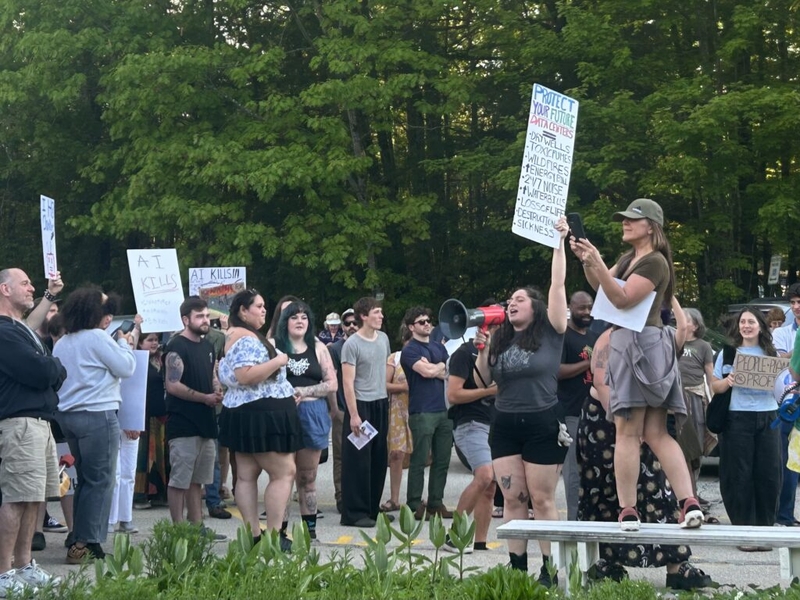
Protesters decry artificial intelligence and data centers in Nottingham on May 27. (Photo by Molly Rains/New Hampshire Bulletin)
Discussion on a proposed data center in Nottingham began to flow in earnest a little over a week ago.
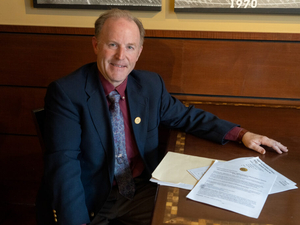
By Wednesday, May 27, an online petition had accumulated thousands of signatures, and protesters were preparing signs decrying the proposal. Some reached out directly to the applicant, Hampton businessman Tom Moulton, who said he was taken aback by the response. Ultimately, the outcry led him, that afternoon — through a “recently” retained lawyer — to send a letter to the town announcing he would withdraw the application, at least for now.
“I kind of didn’t expect this at all, to be honest with you,” Moulton said in a phone call Wednesday. “It’s kind of taken on a life of its own. I’m very surprised, a little disappointed.” He withdrew the application without prejudice, meaning he may reintroduce the proposal at a later date.
In the wake of the whirlwind, data center protesters, Nottingham area elected officials, and Moulton himself discussed the backlash and their expectations for the future of data centers in New Hampshire.
A tide of backlash
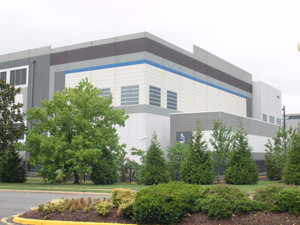
Moulton envisioned the data center for the Nottingham Business Park, a property he owns on Route 4. His preliminary application with the town was signed on April 29, and an article published in InDepthNH on May 20 brought public attention to the proposal.
At the time, Moulton told InDepthNH, the application was intended to explore the possibility of future development. He said in a Wednesday phone call that he had no client in mind to run or utilize the center.
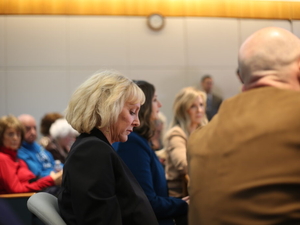
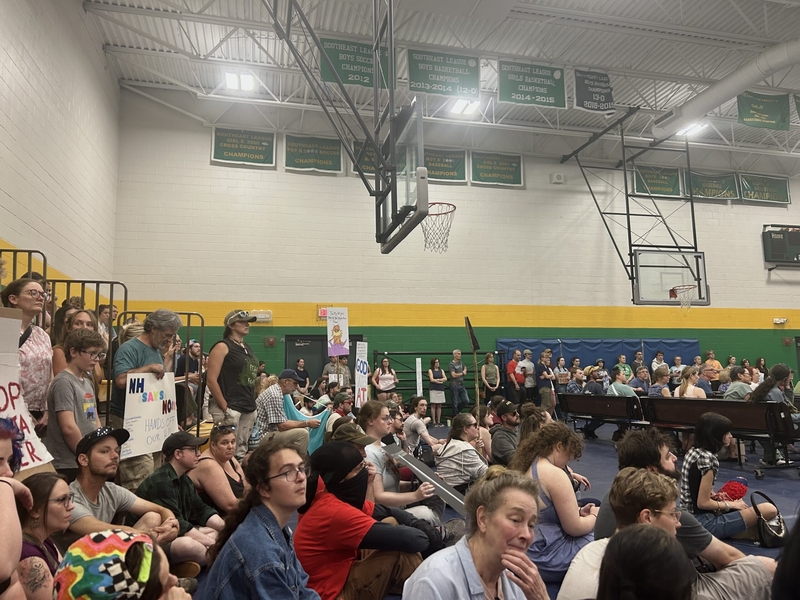
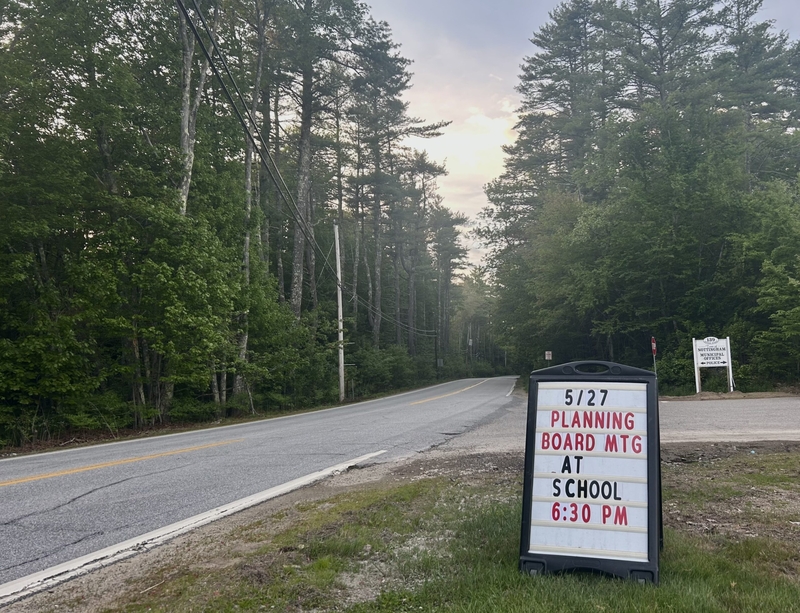
Despite the Wednesday announcement that Moulton would withdraw the application, a crowd of protesters still gathered at the local school where the planning board meeting was scheduled. Those in attendance said they found out about the plans through neighbors, church communities, and social media. Some said they came despite the application’s withdrawal because they felt the potential for a future data center hadn’t yet been decisively averted.
Rudy Pavlesich, of Nottingham, said he is concerned about the impacts of data centers on water supplies, electricity costs, and health.
Almost all residents of Nottingham get their water from private wells, and Pavlesich said he and his neighbors already face constraints. Because data centers use water to cool their systems, he worried the problem would grow worse.
“My neighbors, specifically, had to actually drill deeper, just to get water,” Pavlesich said. An additional draw on the area’s aquifer, Pavlesich said, would “soak up all this water that we actually need.”
For Adam Whittier, of Manchester, the protest was important to elevate residents’ concerns about a data center’s potential effects on the environment and electricity prices. But like multiple other protesters, he also said he was apprehensive about what he saw as the unregulated expansion of artificial intelligence nationally and worldwide. Whittier said the data center proposal represented a larger issue that is developing too quickly to be safe.
“There is no situation in which I want a data center in this state,” he said. “Aside from the very real physical resource issues … I think we need to have more frank discussions about AI before we start building these things. I think there are only reasons not to do this right now.”
Christine Dellas, of Raymond, said she has yet to figure out the benefits of data centers.
“I mean, I get that we all use social media, we all use, you know, (data) storage and everything else,” she said. “But I think this is primarily to support AI, which I’m not sure why we need.”
Legislators respond to outcry
Two members of the New Hampshire House who represent Nottingham and surrounding communities said they interpreted the pushback as a clear statement from their constituents that data centers are unwelcome.
“That’s what I left with,” said Rep. Scott Bryer, a Northwood Republican who attended the planning board meeting after multiple constituents called and emailed him about the proposal. “This community does not want this,” he said in a phone call Thursday morning.
Rep. Paul Tudor, a Northwood Republican, said the communications he received were unanimous.
“I heard nothing good from any constituent about this,” he said. “… A lot of times I’ll get emails that are, you know, chain emails that are just being dumped to the Legislature, but these were all local people. And there wasn’t one person that was for this.”
Tudor said data centers should be regulated in New Hampshire through a future change to state law or through rulemaking by the New Hampshire Department of Environmental Services. He identified areas for potential future regulation, including data centers’ water usage and their release of potentially chemical-containing water back into the environment. He also suggested that the centers should be allowed only in areas where municipal water and sewer systems are available.
A bill attempting to establish data center-specific regulations in New Hampshire was put forward this year by Sen. Debra Altschiller, a Democrat from Stratham. But, reflecting division among lawmakers over the state’s authority to regulate industry, the House Committee on Municipal and County Government later approved a divisive amendment that would have limited towns’ abilities to regulate centers locally, such as through local zoning laws. The bill was ultimately tabled by a decisive vote in the House of Representatives earlier this month.
Sen. Howard Pearl, a Loudon Republican who represents Nottingham as part of Senate District 17, described a need to strike a balance between protecting ratepayers and regulating data centers in an email statement to the Bulletin Thursday morning.
“New Hampshire should absolutely be open to large AI and cloud computing data centers and next generation digital infrastructure, but growth must be responsible and sustainable,” he said. “Our state already faces some of the highest energy costs in the country. Granite Staters should not be forced to subsidize massive new electrical demand from large AI and cloud computing data centers.”
Pearl added that investments in data centers should be paired with private investment in energy infrastructure that could lessen the burden on ratepayers, such as “generation, storage, transmission upgrades, and innovative energy partnerships.”
‘Homework’ to do
In a written statement sent to the town of Nottingham through his lawyer, Moulton indicated he was withdrawing the application to conduct “additional research, further evaluate the property and the proposed use, and determine whether this is an appropriate use for the site.”
Asked on Wednesday whether he believed residents’ concerns were warranted, Moulton said, “I really don’t know.”
“I think all those concerns are valid: Noise, water, air, and the impact on the environment, and that’s why we’re taking the time to evaluate with facts, not opinions, what we need to do to address those concerns for the public,” he said.
Of residents’ environmental concerns, data centers’ high water usage was among the most often cited by protesters and commenters at the planning board meeting.
Bryer cited a consultant’s report from 2004, when a bottling facility was planned for the same location, that concluded the withdrawal proposed at the time for that facility — more than 300,000 gallons per day — would be unsustainable.
Tudor, a former General Electric engineer who worked on cooling systems, said he believed any water used to cool such a facility would have chemicals added to it to prevent corrosion and bacterial growth.
Even in a purportedly closed-loop system, some of that water would be released, he said. And water must continually be added, too, because no system is immune to evaporation, he said. Tudor said he would want to see more information about the specific engineering of the data center Moulton is proposing if such a plan comes before the planning board again.
Moulton said he would now do more research to address those and other concerns that arose from his proposal.
“We had to stop and say, OK, what are they concerned about, and let’s try to get some answers to some of these concerns,” he said. “Frankly, if we can’t satisfactorily address them in a reasonable fashion, then we’ll go and do something else.”
But protesters outside the Nottingham School on Wednesday evening said there was little that would change their minds.
“I don’t want it built, period,” Dellas said. “I don’t know if there’s really much to discuss.”

Concord, NH