How about a moratorium on the SNAP soda ban?
Sep 09, 2026 | 6:00 am ET
Description
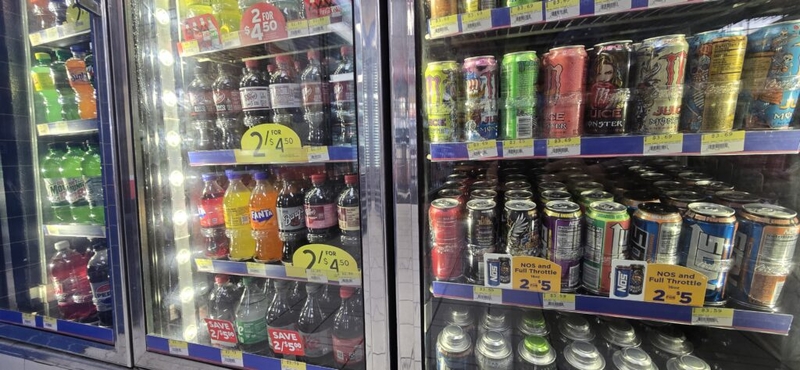
Energy drinks and soda sit in a refrigerator at a retail store in Bismarck on Aug. 27, 2026. (Photo by Michael Achterling/North Dakota Monitor)
North Dakota was set to ban people from using federal food assistance to buy candy, soda and other sugary drinks starting this month.
The federal government, which has encouraged states to adopt such policies, then abruptly asked the state to postpone until Nov. 1 just days before it was set to take effect. This delay could give North Dakota a chance to reassess whether the policy is worth its hefty price tag to implement.
The SNAP soda ban was not vetted in a legislative session. The public had no chance to comment. Grocery stores and retailers had no input. The feds now plan to take public comment, but it seems like a check-the-box exercise to fend off future court challenges, not a sincere effort to gauge the public impact. What if North Dakota pressed pause and gave the policy real consideration in January when the Legislature reconvenes?
Setting aside arguments for and against the policy, there is growing evidence that the SNAP soda ban is costing the state a lot.
Consider this:
State leaders supported the ban in part as a way to try to get more federal Rural Health Transformation Program dollars.
But the amount of funding attached to the policy is fuzzy. And whether that money gets to North Dakota depends on a ton of grant money being obligated in a short time, which is far from guaranteed.
The state Department of Health and Human Services estimates it will spend $3.5 million to $4 million to implement the SNAP restrictions. The agency conducted multiple webinars to prepare retailers. Staff made flow charts to help stores figure out how to navigate the restrictions, which aren’t always clear cut. (Marshmallows of a certain size will be allowed, for example, but others are not.) The federally imposed delay probably means even more webinars will be conducted to tell people about the flow charts.
That doesn’t include costs paid by grocery stores to upgrade their point-of-sale systems or train staff. North Dakota grocery stores already face challenges, with 47 stores closing between 2014 and 2025, according to the North Dakota Association of Rural Electric Cooperatives. Preserving rural grocery stores has been a priority for the Legislature. Keeping grocery stores with fresh produce in small towns promotes healthier communities.
North Dakota grocers prepare for new SNAP restrictions amid uncertainty
Meanwhile, the SNAP error rate has increased and could cost North Dakota nearly $13 million next year unless the state brings that error rate down. The error rate is for underpaying benefits to households as well as overpaying.
Somehow the overworked employees at HHS are expected to dramatically reduce that error rate while also implementing new expanded work restrictions for SNAP recipients and promoting and enforcing the new SNAP soda ban.
The same agency, by the way, is at the same time working to implement Medicaid work requirements and roll out more red tape for people who will soon have to prove they are too medically frail to work.
It’s no wonder the agency has a backlog. The Forum of Fargo-Moorhead recently reported that HHS staffers worked about 13,000 hours of overtime over two months this summer. The overtime was required for economic assistance employees to catch up on a backlog of applications, costing about $500,000, according to the report.
North Dakota embraced the SNAP soda ban in a year when the Legislature didn’t meet, so the costs versus the benefits were not publicly scrutinized the way they would be during a legislative session.
Lawmakers could use this delay to stop and consider whether a SNAP soda ban is really worth the expense.
Bismarck, ND