House approves quota for Iowans in UI medical, dental programs
Oct 17, 2021 | 5:55 pm ET
Description
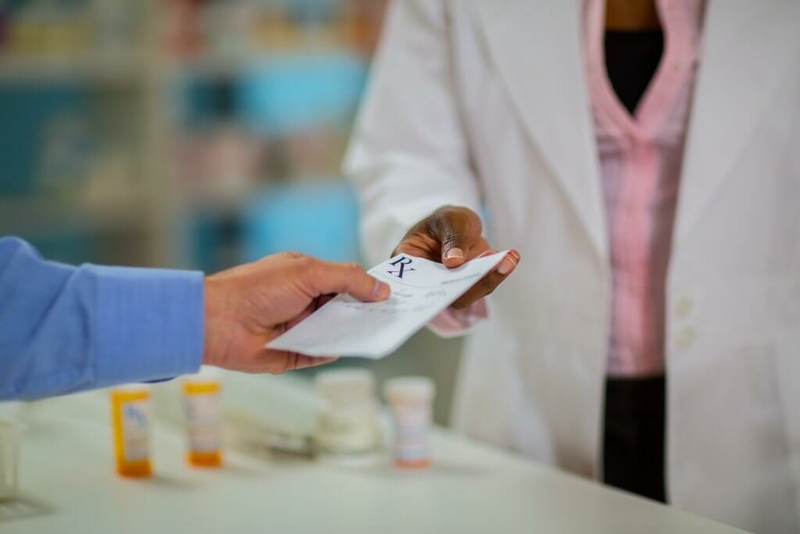
The Iowa Board of Medicine has granted a license to a physician currently on probation for his role in a criminal scheme to distribute opioids to addicts. (Photo by Getty Images)
The University of Iowa would have to ensure that 75% of students admitted to its medical and dental programs are Iowans or a graduate of an Iowa college or university under a bill passed by the Iowa House of Representatives Tuesday on a largely party line 54-44 vote.
Republicans who control the chamber said House File 2383 would help encourage doctors and dentists to stay in Iowa, and perhaps serve rural areas where there are shortages. Democrats contended the bill would make the Iowa workforce less diverse and would not help build that workforce. Iowa has one of the nation’s lowest unemployment rates, which has tested employers looking for help.

Rep. Ann Meyer, R-Fort Dodge, who managed the bill, said the legislation also would require an annual report on the makeup of the classes and where Iowans complete their medical and dental training and where they reside afterward. “The taxpayers of Iowa are not reaping the benefit of their taxpayer-supported university,” when students study out of state, Meyer said.
“There are many factors that limit access to health care in rural Iowa but one of the biggest factors is the lack of providers,” Meyer added.
The bill, which has been sent to the Senate for consideration, would give Iowans a better chance of getting into the medical and dental schools at UI, said Meyer, whose husband is a doctor. She and her family moved to Iowa 20 years ago.
“We recognize the quality of life here,” Meyer said. Her son is going to study osteopathic medicine in Missouri, but plans to return to Iowa, she added.
“We know that when our kids start in Iowa, when they go to undergraduate school in Iowa, when they attend medical school in Iowa, when they attend their residency in Iowa, they are putting down roots, and they are going to stay in Iowa,” Meyer said during the debate. In the same way, students from the coasts who study in Iowa tend to return to the coasts, Meyer said, based on what she called anecdotal evidence.
Democrats lined up to criticize the legislation.
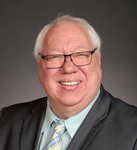
Rep. Bruce Hunter, D-Des Moines, said the Iowa Medical Society has reported that where a student does a medical residency determines where a doctor practices more than where they are from. He then suggested that the levels of funding for education and Medicaid may be in play when doctors and students decide where to live. He was ruled out of order when Rep. Shannon Lundgren, R-Peosta, objected to Hunter talking about subjects not in the bill.
“Rep. Hunter, please confine your comments to the bill,” said House Speaker Pat Grassley.
“I don’t even get to come down and…” Hunter responded.
“The chair has ruled, Rep. Hunter,” Grassley said.
“Thank you, I’ve seen the rulings this year,” Hunter responded, pursing his lips.
Hunter continued: “This bill does nothing to address the issues that we are not allowed to talk about in this chamber because of arbitrary rulings that are actually the root cause of why people leave this state, whether it be medical doctors or teachers or anybody else,” Hunter said.
The effort to get more doctors and dentists in Iowa was good, Hunter said, but the bill would not accomplish that. Instead it might lead to a tuition increase for Iowans to make up for the lost out-of-state tuition, he added.
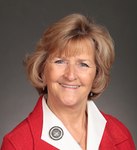
Rep. Sharon Steckman, D-Mason City, asked why the bill doesn’t cover other fields such as veterinary medicine at Iowa State University. Meyer said the shortages of doctors and dentists seemed most severe. Steckman said pharmacists, audiologists, chemical engineers, and nurses are in short supply, too.
Rep. Dave Jacoby, D-Coralville, through pointed questioning of Meyer, noted that the bill doesn’t expand enrollment at the UI colleges, or lower costs, or guarantee students would stay in Iowa when they get their degree. For Iowans who choose to study medicine or dentistry out of state, “I am not seeing anything is this bill that says, ‘move on back.’”
Rep. Karin Derry, D-Johnston, said she opposed the bill as unnecessary when Iowans already make up a majority of admissions to the two UI colleges, 66.3% in the College of Dentistry and 63.6% in the College of Medicine, based on 2018 figures.
UI could lose $800,000 to $1 million in out-of-state tuition annually, Derry said. “Further there is no evidence that this will keep doctors and dentists in the state. I understand that we have a physician and dentist shortage in Iowa and we need to address that. I’m just not sure this is the answer.”
The state Board of Regents lobbyist registered as “undecided” on the bill. Josh Lehman, senior communications director, said the Regents are monitoring the bill.

Rep. Phyllis Thede, D-Bettendorf, said the bill could hurt Iowa’s efforts to be more diverse and limit its role in the national economy. “If we limit the number of people, especially people of color, we have limited our space in the U.S. economy. Is this where you want Iowa to go? I don’t think you do.”
Rep. Heather Matson, D-Ankeny, said her husband is a doctor who did his residency on the family’s first trip to the state. They moved to Iowa so he could attend medical school here.
“But my opposition to the bill isn’t simply about my own story, because I don’t believe in governing by anecdote,” Matson said. “(The bill sets) in Iowa Code an arbitrary requirement for (the University of Iowa’s) admission policy that doesn’t reflect their own considerations for who may or may not be the best fit for their medical and dentistry school programs.
“We spend a lot of time in this Legislature taking about our workforce shortage. It is a huge problem. To my mind, this bill, while perhaps well-intentioned, will only exacerbate the problem. It actively discourages people from moving to Iowa,” Matson said.
Des Moines, IA