Hobbs lifts bill-signing moratorium after a week of budget negotiations with Republicans
May 15, 2026 | 12:15 am ET
Description
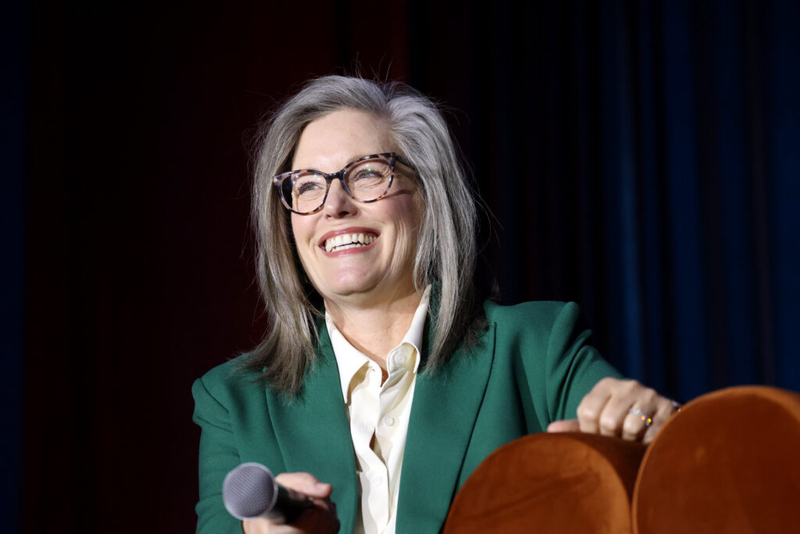
Gov. Katie Hobbs speaking with attendees at the 2026 Legislative Forecast Luncheon hosted by the Arizona Chamber of Commerce & Industry on Jan. 9, 2026. (Photo by Gage Skidmore/Flickr/CC BY-SA 2.0)
Arizona’s Democratic governor lifted her month-long bill-signing moratorium on Thursday.
Gov. Katie Hobbs implemented the moratorium April 13, promising not to sign any bills until the Republicans who control the Arizona legislature revealed their budget and engaged her in “good-faith” negotiations on the annual spending plan.
Republicans, who hold the majority in the Arizona House of Representatives and the Arizona Senate, revealed their budget on April 27, and swiftly voted along party lines to approve it.
The GOP budget fully conformed Arizona’s tax code with the changes made at the federal level through President Donald Trump’s “One Big Beautiful Bill” and paid for the tax cuts with fund sweeps and cuts to most state agencies.
Hobbs vetoed the Republican budget on May 5, and days later, Republicans in both chambers of the legislature voted to adjourn for most of the remainder of May. The Arizona House of Representatives hasn’t met since then, but the Senate met on May 11 and plans to meet again May 18.
“After a week of good-faith negotiations and productive exchanges on the best path toward a bipartisan and balanced budget, today the Governor’s Office informed Republican budget negotiators that the bill moratorium has been lifted,” Hobbs spokesman Christian Slater told the Arizona Mirror via text message.
The Democratic governor initially put pressure on Republicans to publish their spending plan, revealing how they would pay for the Trump tax cuts on March 20, when she paused budget negotiations. That move came after she said that legislative Republicans refused to negotiate on Proposition 123, a K-12 school funding measure that brought in $300 million annually and expired last year.
Republicans accused Hobbs of basing her own budget plan, released in January, on funding that wasn’t guaranteed, including Prop. 123, which would have to be put to voters in November.
Hobbs and legislative Democrats characterized the Republican budget plan as favoring corporations over people who depend on government programs like Medicaid and the Supplemental Nutrition Assistance Program, also known as SNAP.
A budget must be in place before July 1, or state government will shut down. Negotiations are always tense since the budget requires approval from both Republican-led chambers of the legislature, as well as the Democratic governor, whose priorities often do not align.
Phoenix, AZ