He’s 75. He’s in a wheelchair. He didn’t pull the trigger. But Alabama plans to execute him.
Feb 23, 2026 | 8:01 am ET
Description
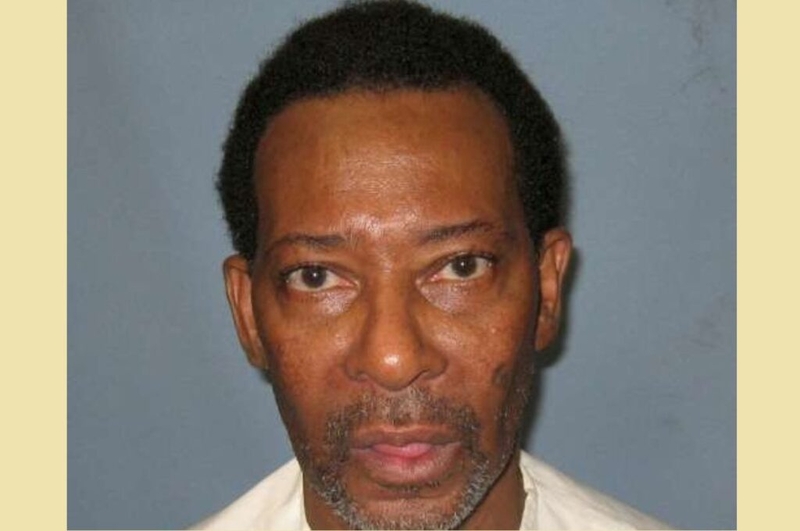
Charles Lee Burton was sentenced to death in connection with the 1991 murder of Doug Battle, even though he did not pull the trigger and was not present when the killing took place. Alabama plans to execute Burton by nitrogen gas on March 12. (Alabama Department of Corrections)
Charles “Sonny” Burton is 75 years old. Rheumatoid arthritis keeps him in a wheelchair. He did not pull the trigger that killed Doug Battle during a 1991 robbery at a Talladega AutoZone, and was not in the store when Battle was shot.
But barring a court ruling or clemency from Gov. Kay Ivey, Burton will be executed by nitrogen gas on March 12.
In a phone interview on Tuesday from Holman Correctional Facility in Atmore, where Burton is incarcerated, he urged Ivey to consider a clemency appeal that has the support of Battle’s daughter and several jurors who sentenced Burton to death. Burton also acknowledged his role in the robbery and repeatedly expressed remorse during the interview.
“All the years I have suffered with this, I suffered with the guilt, the pain, that the victim was feeling, that the victim’s family was feeling,” Burton said. “And I am so sorry. I want them to know that I am so sorry. And if I had the power to bring Mr. Battle back, I would do it.”
A message was sent to Gov. Kay Ivey’s office last week seeking comment.
According to court documents, Burton and five others entered the AutoZone on August 16, 1991. Burton entered the store, purchased some items, and asked an employee at the cash register for the location of the bathroom. Burton then pointed a gun at the cashier and told him to take him to the safe.
Court documents state that Derrick DeBruce, another one of the people who robbed the store, told others in the store to lay down on the floor. Battle, 34, entered the AutoZone store during the robbery and was told to get on the floor but had trouble complying with the order. DeBruce and Battle got into an argument. DeBruce then struck Battle who fell to the floor before DeBruce shot him. Burton and the other people involved in the robbery, according to court documents, had left the store and did not witness the shooting.
DeBruce was convicted of capital murder and sentenced to death. But his sentence was overturned in 2014 after the 11th Circuit Court of Appeals overturned the sentence because he received inadequate representation at trial. He was resentenced to life in prison, DeBruce died while incarcerated in 2020.
Felony murder
Burton was also sentenced to death under Alabama’s felony murder statute, which made him culpable for Battle’s death because of his involvement in the robbery. According to the Felony Murder Reporting Project, prosecutors may charge someone with murder without having to prove that the person intended to cause another person’s death.
They only need to prove that the defendant was an accomplice or tried to commit another crime during the incident.
A 1987 U.S. Supreme Court case, Tison v. Arizona, found that major participation in a felony combined with a reckless indifference to human life could make a person eligible for the death penalty.
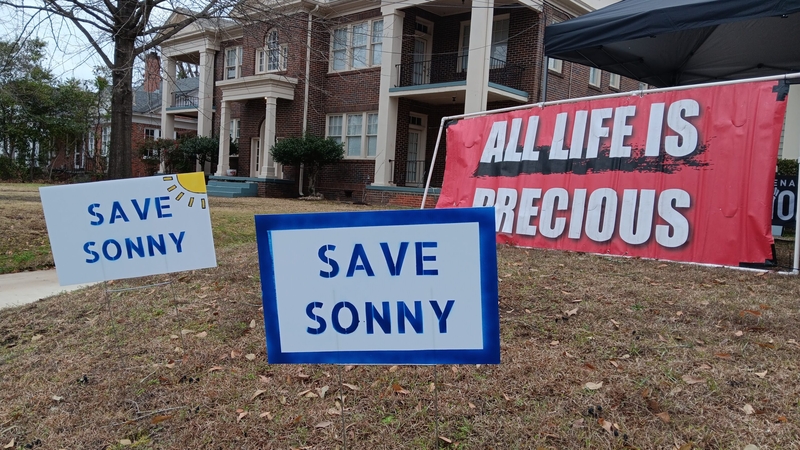
Matt Schulz, an assistant federal defender who is representing Burton in the appeals process, said in an interview that nationwide, “you have very few instances where you have a non-shooter who is convicted of the death penalty.”
“Even when that is the case, you have to have evidence that the non-shooter intended that the victim die,” he said. “Here, there was no evidence at trial showing that Mr. Burton had any intent that the victim die or that the victim be shot.”
Robin Maher, executive director of the Death Penalty Information Center, a Washington, D.C.-based nonprofit that researches the death penalty, said the fact Burton would be executed for a crime committed by DeBruce was disturbing.
“It’s difficult to accept that the person who actually killed the victim will never be executed, while Mr. Burton, who didn’t have any involvement in the killing, will be,” Maher said. “That just doesn’t make sense to even the most ardent supporters of the death penalty.”
According to the center’s website, at least 22 people convicted under felony murder statutes despite having no direct involvement in another person’s death have been executed. Of those, about 60% were either Black or Hispanic.
Half of those on the list were executed in Texas, while eight other states and the federal government have either one or two cases.
In 2020, Alabama executed Nathaniel Woods for the 2004 killings of three Birmingham police officers. Woods did not shoot the officers, and there was no evidence he had a gun at the time of the shootings, but he was sentenced to death as an accomplice.
“The concern here is that for more than 50 years, the Supreme Court has said that the death penalty is to be reserved for the very worst people who commit the most aggravated cases, or the worst of the worst,” Maher said. “And felony murder laws really turn that principle on its head, extending death penalty eligibility to people with much less culpability than those who kill or intend to kill.”
Pleas for clemency
Schulz wrote in the clemency petition that the disparate outcomes of Burton and DeBruce led to several jurors in Burton’s trial supporting his plea for clemency.
“Of the eight living jurors, we are currently aware that six now have no opposition to Mr. Burton’s sentence being commuted to life without parole,” he said. “Indeed, three jurors are specifically requesting commutation, noting, among other concerns, that they would not have voted for death in the first place had they known the shooter would be alleviated of that same sentence.”
Priscilla Townsend, one of the jurors in Burton’s trial, wrote a letter to Ivey seeking clemency.
“If I had known at the time of the trial that the man who pulled the trigger would not be facing a death sentence, I would not have thought it was fair to give Mr. Burton, who was not even in the building when Mr. Battle was shot, a harsher sentence,” Townsend wrote in her letter to Ivey.
Tori Battle, Doug Battle’s daughter, also wrote to Ivey asking for Burton to be spared.
“My father Doug Battle, was many things,” Tori Battle wrote. “He was strong, but he valued peace. He did not believe in revenge. And in that way, I am very much his daughter.”
Tori Battle then wrote, “I hope you will consider extending grace to Mr. Burton and granting him clemency.”
Schulz also argued that Burton is not the same person as the one who robbed the AutoZone store more than 30 years ago. Burton described himself as a “thug” when he committed the robbery in 1991, Schulz wrote in the petition.
“I would like the public to know that I did not intend for anyone to get killed,” Burton said Tuesday. “I want to take responsibility for the role that I played in robbing the place. And I am sorry, very remorseful for that.”
Carolyn Shavers, Burton’s daughter, said in an interview that he was “a good dad” and “takes care of everyone in the family.”
“That is my father. That is my heart, and I love him,” Shavers said. “I want him to live. He deserves to live.”
She added that Burton “is a good dad. He takes care of everyone in the family. He provided for everyone. Nobody had to be without anything.”
Supporters of Burton have also noted that he advocated for the parole of Larry Green, who was sentenced to life in prison for the 1988 murders of Carolyn Burton, his former spouse, and her partner Ozell Byrd, according to appeal documents provided by the Federal Defenders for the Middle District of Alabama.
The Alabama Bureau of Pardons and Paroles said in an email that Green was granted medical parole in 2023.
“That says a lot about his character, right there, to me,” said Imam Aswan Abdul Ad Dar, Burton’s spiritual adviser. “I know a lot of people, Muslims included, they couldn’t do it. They wouldn’t do it. That speaks volumes of his character. That is a high standard of care.”
Burton said he is grateful for Tori Battle’s forgiveness. He said that whatever decision Ivey made, he hoped she did so “out of your heart as the leader of Alabama.”
“You know, I know, and the people know, that the death penalty is for those who kill, participate, abet, or are involved in a murder,” he said. “I guarantee you, I did not participate in the murder. I ask you to grant me clemency. Grant me a platform so that I can teach others about crime, about not listening to their parents. I ask you this, governor. I ask that you be fair with me.”

Montgomery