Foster care families advocate for foster-to-college pipeline in Ohio bill
Jun 04, 2026 | 3:55 am ET
Description
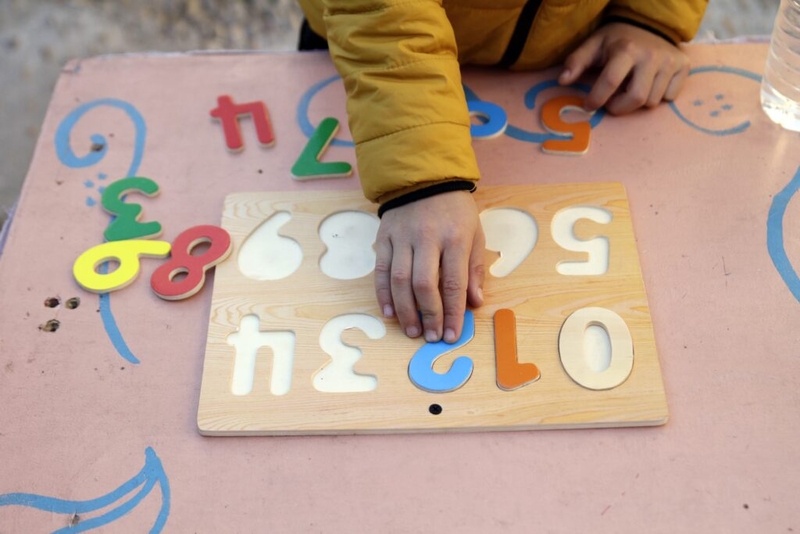
A boy plays with a wooden numbers puzzle. (Getty Images)
Foster care families and advocates urged an Ohio Senate committee to support a bill to create a foster-to-college pipeline.
The Senate Education Committee held its second hearing on Ohio House Bill 25, a bipartisan bill to bolster education resources for foster care children from public K-12 schools all the way to higher education.
Kisha Boone, a foster parent and advocacy coordinator for the Junior League of Columbus, said that school often provides stability.
“For students in foster care, school can be the one steady place left: the counselor who feels like family, the teacher who knows the child can succeed, the (Individualized Education Program) team that understands a disability, the sibling in the same building even when siblings are living apart, or the friend group that makes a child want to show up,” Boone said.
The bill, which overwhelmingly passed the Ohio House in March, would require leadership at the Ohio Department of Education and Workforce to work with other state agencies “to encourage the sharing of best practices to support students placed in foster care,” according to an analysis by the Legislative Service Commission.
Public schools in Ohio would be required to designate a staff member as a “foster family navigator” in each school building, and the state Department of Education and Workforce must develop a training for those navigators and foster care education liaisons, under the bill.
The chancellor of the state’s higher education agency would be required to post “any scholarship opportunities specifically for students placed in foster care that are available at each state institution of higher education,” if the bill passes.
For Lilly Zetting, a child who was separated from her two younger brothers when they entered the foster care system, having a system in place that helps a child have a steady education and plan for the future can create longterm success.
“I have friends who had to leave schools they loved, even when they were doing well, because of placement changes,” Zetting told the committee on June 2. “I also know adults who work closely with foster children and have seen how often young people struggle later in life because they moved homes and schools so many times.”
Sponsors of the bill say foster children experience some of the worst education outcomes in the state, struggling to get through school without guidance that other children might receive.
Bill co-sponsor state Rep. Dontavius Jarrells, D-Columbus, said more than 15,000 children are in foster care in Ohio.
“Thousands of them are school-aged youth navigating trauma, instability, and uncertainty while still being expected to learn, grow, and prepare for adulthood,” he told the Senate committee when introducing the bill in May.
The National Foster Youth Institute found that only 3% to 4% of former foster youth obtain a four-year college degree, and high school dropout rates among foster youth are higher than other low-income children.
More than 40% of foster children in America face “educational difficulties,” according to the institute.
Hearing from children in the foster care system helped bill co-sponsor state Rep. Sharon Ray, R-Wadsworth, realize “our system was broken,” and the stories “were the catalyst needed to fix our current system.”
H.B. 25 outlines the roles of Ohio’s Department of Education and Workforce, Department of Children and Youth, Department of Higher Education, and Department of Job and Family Services “to work together in an accountable fashion to ensure needed resources are made available and utilized to support our foster care youth in their education journey,” according to Ray.
Columbus, OH