Groups challenge ‘unnecessary’ data-center-fueled gas pipeline
Oct 14, 2026 | 12:36 pm ET
Description
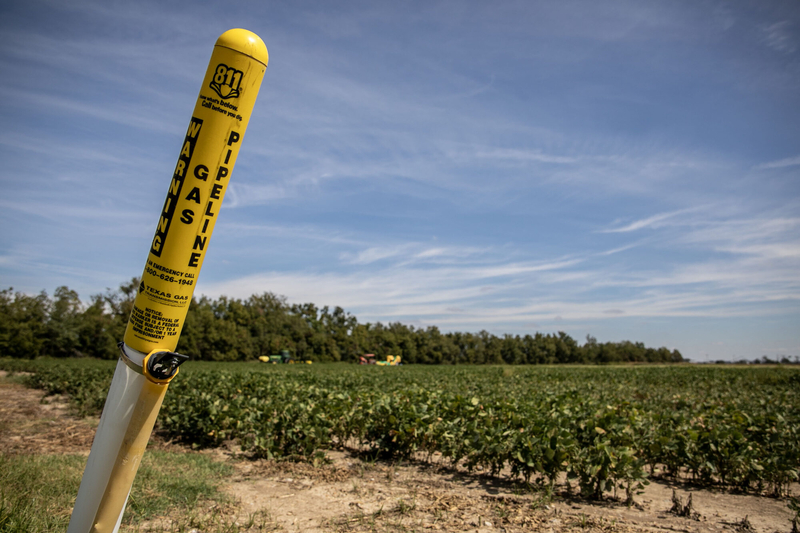
Photo courtesy of Mississippi Today
Audio articles are automated for accessibility. Humans wrote and edited the story; however, this audio has not been reviewed for accuracy and may contain errors. Read more about how we use AI to increase access to our reporting.
ISOLA – Bobbie Miller doesn’t see why she should agree to let a company bury a gas pipeline on her family’s land in Isola.
“It doesn’t have to be this way, so why settle for it?” she asked a reporter in late September.
The family purchased the land in the 1940s as part of a federal government program, said Miller, who was mayor of the town of less than a thousand people from 2013 to 2017.
“Come to find out, the government that sold it to you, they decided they want to come up with something else,” she said, discussing the Federal Energy Regulatory Commission’s recent approval of a new 42-inch-wide natural gas pipeline that would run through the property.

With FERC’s approval of the “Mississippi Crossing” project, the pipeline company, Tennessee Gas Pipeline Co., has the power of eminent domain and can dig up the land without Miller’s or her family’s consent.
Only her 110-year-old mother lives at Miller’s childhood home today, although Miller lives nearby and helps take care of the property.
She remembered her family making the most of its farmland, such as when they’d make sorghum molasses. A young Miller would watch as juices burst from the sugar cane grinder, its gears turning as the mule it was tied to circled the machine.
She’s now facing a legal battle to keep Mississippi Crossing’s pipeline off that very land. As of early October, the pipeline company had initiated 141 condemnation cases against Miller’s family and other Mississippi property owners. Meanwhile, the project faces legal challenges from groups arguing that the new gas transportation is unnecessary.
Kinder Morgan, a gas transporting giant and Tennessee Gas Pipeline Co.’s parent company, started planning the 208-mile pipeline extension years ago, the company told Mississippi Today. Mississippi Crossing stretches nearly the full width of the state, from Greenville into Alabama, and is part of a large project that extends into Georgia. It would also include three new compressor stations in Lauderdale, Attala and Humphreys counties.

Southern Natural Gas Co., a partner in the project, is half-owned by Southern Company, the parent of Mississippi Power and one of the companies slated to buy natural gas through the added capacity of this project.
In the companies’ 2025 application to FERC, which has to approve gas pipelines that cross statelines, they argued utilities in the Southeast will need new capacity to serve a rising energy demand.
That demand, the company forecasted, will come from “growing economic activity” from industries including electric vehicles, heating electrification and data centers.
But advocates in Mississippi – as well as in Alabama and Georgia where another phase of the pipeline would cross – are challenging FERC’s approval, calling the project “unnecessary, redundant and costly” and arguing it would “harm communities and landscapes” across those three states.
The advocacy groups, which include the Mississippi Rising Coalition and the Deep South Center for Environmental Justice, cite research that suggests the pipeline’s application inflates its forecasted energy demand to justify the project.

“FERC is choosing to ignore its statutory obligation to protect the public interest by rubber stamping a reckless plan that will pollute Southern communities and risk raising families’ power bills,” Megan Gibson, a senior attorney at the Southern Environmental Law Center, which is representing the project’s opposition, said in a lawsuit filed on Oct. 1. “The only true beneficiaries of these pipelines are the pipeline companies and their monopoly utility affiliates—not the public.”
In a June report by the Institute for Energy Economics and Financial Analysis, the research firm says Kinder Morgan’s forecast “hinges on an overblown, excessive forecast of data center electricity needs, coupled with the assumption that much of this need would be met by natural gas power generation.”
Another study, done by consultant London Economics International and commissioned by the SELC, found that Kinder Morgan’s projected energy transportation need was more than four times the actual need indicated in public utility records.

In an interview with Mississippi Today, the pipeline company disagreed with those characterizations.
“We don’t overbuild,” Allen Fore, Kinder Morgan’s vice president of public affairs, said, adding that FERC verifies the company’s assessment of needed pipeline growth. “ We scope projects for our customers need. It’s not a process of, ‘if you build it, will they come?’”
The SELC also pointed to the high cost of the project, which would present a burden to ratepayers if the projected demand for the pipeline isn’t realized. Kinder Morgan estimated it will cost $5.2 billion to build the project.
Recognizing she’s facing an uphill battle against the power of eminent domain, Miller stubbornly hopes to shield her family’s land from any risk a new pipeline might bring. Besides, her motto in life, she said, is “You reach for the stars and you’ll fall somewhere in between.”
While natural gas pipelines are central to the country’s energy delivery system – about 3 million miles of them snake throughout the United States – they come with a range of environmental and safety concerns, advocates point out.
From 2021 to 2025, pipeline incidents caused 48 fatalities and 151 injuries, according to federal data, although the number of injuries dropped significantly compared to prior years.
‘Can’t miss what you never had‘

Air and noise pollution also are concerns. Compressor stations, used to put pressure into pipeline systems, are loud and emit volatile organic compounds, or VOCs, into the air.
Then there’s the long-term climate impact. While carbon emissions are more often associated with climate change, methane – what natural gas is mostly made of – is more than 28 times more powerful than carbon dioxide in trapping heat in the atmosphere. In terms of the negative impacts from climate change, a 2024 Stanford University study estimated that methane emissions from the U.S.’s oil and gas industries cost the country $10 billion in damages per year.
Because of the public service gas pipelines provide, Congress gave pipeline companies the power of eminent domain in the 1940s. Eminent domain laws require landowners be paid fair compensation for the use of their property, and property owners can negotiate terms such as where the pipeline runs across their land.
But once FERC greenlights a pipeline project, a company seeking access to private land faces few obstacles. If a landowner doesn’t reach an agreement with the company, the pipeline operator can take the matter to court and forcibly gain access to the property through eminent domain.
Since getting approval in July, Tennessee Gas Pipeline Co has filed 141 lawsuits against Mississippi property owners who have yet to reach an agreement with the pipeline operators. As of Oct. 13, the company had settled 36, or just about a quarter, of those cases.
Last month, a lumber company with about 27 acres in Attala and Holmes counties countersued Tennessee Gas Pipeline Co. for offering “grossly inadequate” payment and for rushing negotiations before filing its lawsuit.
Fore, with Kinder Morgan, said the company asks for a 50-foot easement on the property to insert the pipeline segment. But once it’s buried, most landowners will never see the pipeline again, and “you can use the property as you did before,” he said. As of Oct. 7, the company had reached agreements with 80% of the Mississippi properties the pipeline would go through, Fore added.
Knowing they have little power and wanting to avoid the drama of going to court, landowners often settle for whatever compensation companies first offer. By doing so, they often leave thousands of dollars on the table, landowner advocates say.
“What the pipeline companies pay landowners, it’s seldom just,” said Rebekah Sale, executive director of the Property Rights and Pipeline Center, a group that pairs landowners with eminent domain lawyers to negotiate better payments.
Hiring a lawyer can greatly increase what pipeline companies pay landowners, a vast majority of whom take the first offer they receive, Sale said. Others, she added, don’t even fully read what they’re signing.
“It’s a terrible idea,” Sale said. “The easement can be permanent. There can be restrictions as to how you can use your own property, and you can even be held liable for damage to their pipe. And by the way, you’re still paying the property taxes on this property.”
Recently, though, Sale said there are a lack of attorneys who have been able to help landowners impacted by the Mississippi Crossing project.

In Isola, Miller said her family hasn’t received a court notice from Tennessee Gas Pipeline Co, although court records show a summons was sent to the family’s address in August. The company first reached out to the family in 2024 and has made three different offers for access to the land, Miller told Mississippi Today.
She said many in Humphreys County, where Isola is located and where the median household income is below $34,000, were happy just to get any compensation for access to their land.
“ Nobody really thought nothing about it,” she said. “It’s like (the pipeline companies) go fishing, put the right bait on, and the fish come. And when you get caught, you don’t know what you got caught in.”
Miller and her mother haven’t accepted an offer from the company and don’t plan to budge. When asked if there was an amount that would change her mind, she just shook her head.
“You can’t miss what you never had,” she said.

Jackson, MS