Grappling with staff shortages, SC’s DJJ turns to private sector
Mar 26, 2024 | 2:28 pm ET
Description
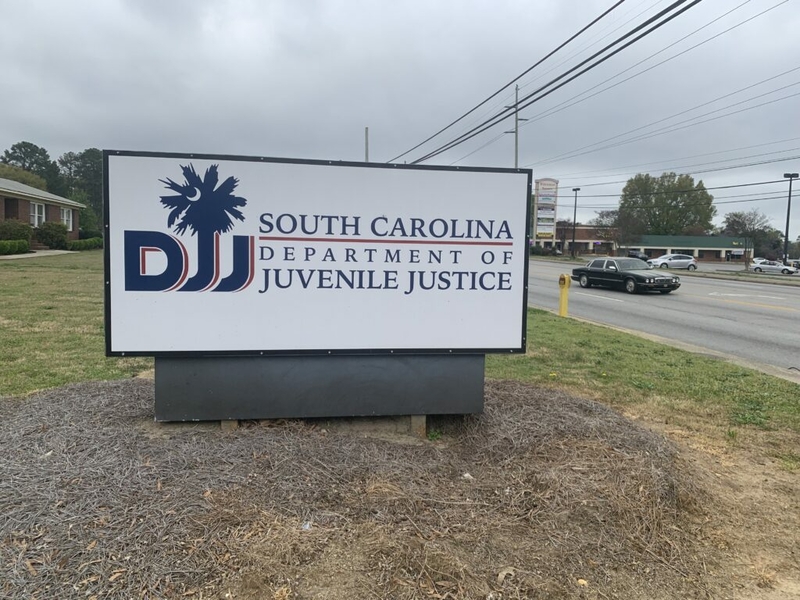
The sign outside the Department of Juvenile Justice's building on Broad River Road. The department turned to private companies to help recruit amid a staffing shortage. (Skylar Laird/SC Daily Gazette)
COLUMBIA — Amid continued shortages that jeopardize the safety of officers and locked-up youth, the Department of Juvenile Justice is contracting with private companies to recruit employees, fix decrepit buildings and send teens out of state.
The agency notified potential vendors of four no-bid contracts totaling $1.7 million earlier this month, though they were actually signed as far back as 2021. It’s unclear why public notices on the state’s procurement website didn’t post until March 15.
Those contracts include $150,000 awarded in December 2022 to Rite of Passage, a private, nonprofit juvenile rehabilitation program based in Nevada and operating in 16 states.
It wasn’t until late last year that it was put into use. The first South Carolina teen went to a facility in Texas, according to the agency, which provided no further details on where, why that teen was removed or for how long.
According to the agency’s document justifying the need for a no-bid contract, up to nine other teens could be moved out of state under the agreement. They would be 15- to 17-year-olds who have been through traumatic experiences “and who also struggle to maintain socially appropriate behaviors in a structured environment,” according to the document.
Scenes of violence and chaos in the dorms are indicated in explanations for 16 other emergency contracts awarded since January 2023, which tally an additional $6.5 million.
Three describe youth breaking through cinderblock walls to get to other juveniles and staff.
They’re “creating holes in the cell walls allowing access to other cells and youth,” reads an explanation for a no-bid contract to ML Contracting. “The inability to secure a youth in a cell creates an immediate threat of safety to other youth and staff.”
“Pods are not secure,” reads another one. The short explanations don’t say how teens are tearing out walls.
A contract awarded to Stanley Steemer describes destruction of sprinkler systems and toilets, causing flooding. Several other contracts are for immediate fence repairs due to juveniles escaping.
Such conditions are the subject of a lawsuit by the American Civil Liberties Union, which alleges, among other things, that black mold makes juveniles sick, toilets stay stopped up for weeks — leaving feces in the open where children sleep — and overcrowding forces children to sleep on hallway floors.
The agency has too few maintenance workers to keep up, according to the agency.
Matter of safety
State agencies are usually required to collect bids from different companies to find the best, low-cost option before awarding a contract. But they can skip that process for emergencies — situations threatening safety, the economy or public health.
In DJJ’s case, it’s a matter of safety, said agency spokesperson Michelle Foster.
Despite state increases to officer pay, high turnover and vacancy rates continue.
And when juveniles at the state’s detention centers outnumber staff, the risk of violence increases. The agency needed to fill vacancies as quickly as possible, Foster said.
As of Friday, DJJ was trying to hire 145 officers. That means it lacks one-third of the 427 officers it needs to be fully staffed, she said.
That suggests problems persist 2½ years after the last DJJ director resigned following months of criticism and employee protests over their safety.
In November 2021, the agency’s new administration contracted with Warren Averett for a recruitment plan that included social media posts and advertising.
When that company got rid of its recruitment division, the agency followed the campaign manager to his new advertising firm, Bateh Group, Foster said.
The partnership has helped draw in applicants, Foster said, though she could not say exactly how many people the ads recruited. The agency needed 153 officers when it hired Warren Averett, or eight more than it needs now, according to the agency documents.
Chronic staffing shortages
For years, the agency has struggled to hire and keep employees in the department’s regional evaluations centers, pre-trial detention center and long-term detention complex.
Hiring people to work in detention facilities like the one in Columbia is difficult because the work can be physically and emotionally taxing. The Broad River Road complex needs to be staffed around the clock, so officers must be OK with working odd hours, Foster said.
The agency offers a minimum starting salary of $42,700, with guaranteed pay boosts at six and 18 months, plus annual bonuses.
But people can make more money doing safer work in the private sector, particularly amid persistently low unemployment rates, so those who apply to work in Juvenile Justice tend to be people who have a passion for the work, said Senate Family Services Chairwoman Katrina Shealy, who formerly volunteered at DJJ.
The department is “always going to have a staffing crisis,” the Lexington Republican said, but it must keep doing everything possible to bring in more employees.
“You’ve got to have people out there,” said Shealy, who led the push three years ago for Freddie Pough’s ousting. “You can’t have the kids out there all alone.”
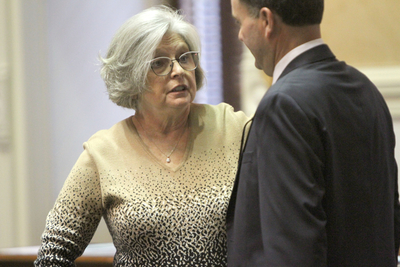
While the problem is chronic, it still classifies as an emergency, said Rep. Phil Lowe, R-Florence, chairman of the House Ways and Means criminal justice subcommittee.
“I bet if I were (the director), I’d call it an emergency, too,” Lowe said.
Under a 2022 agreement with the U.S. Department of Justice that resolved a 2017 civil rights lawsuit, DJJ is required to keep a ratio of one employee for every four teenagers. But due to vacancies, sometimes that’s met and sometimes it’s not, depending on the shift, according to the most recent report monitoring compliance.
Millions for maintenance
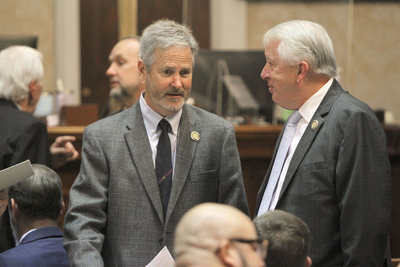
The state budget approved last summer sent DJJ $10 million for unspecified “agency operations.” That was meant to fund whatever DJJ Director Eden Hendrick felt was most important, Lowe said.
That included emergency contracts, he said.
“I said, ‘Look, we’re going to give you this. Figure out what you need to do,’” Lowe said of the money.
The state budget for 2023-24 also gave the department $65 million for maintenance and construction. That included $17 million for renovations to the Broad River Road complex and $16 million for a new detention center for juveniles awaiting trial.
The House’s budget proposal for the coming fiscal year includes $6.8 million for a new, privately operated facility in Greenville to relieve overcrowding at the Columbia complex, the state’s only long-term lockup for juveniles.
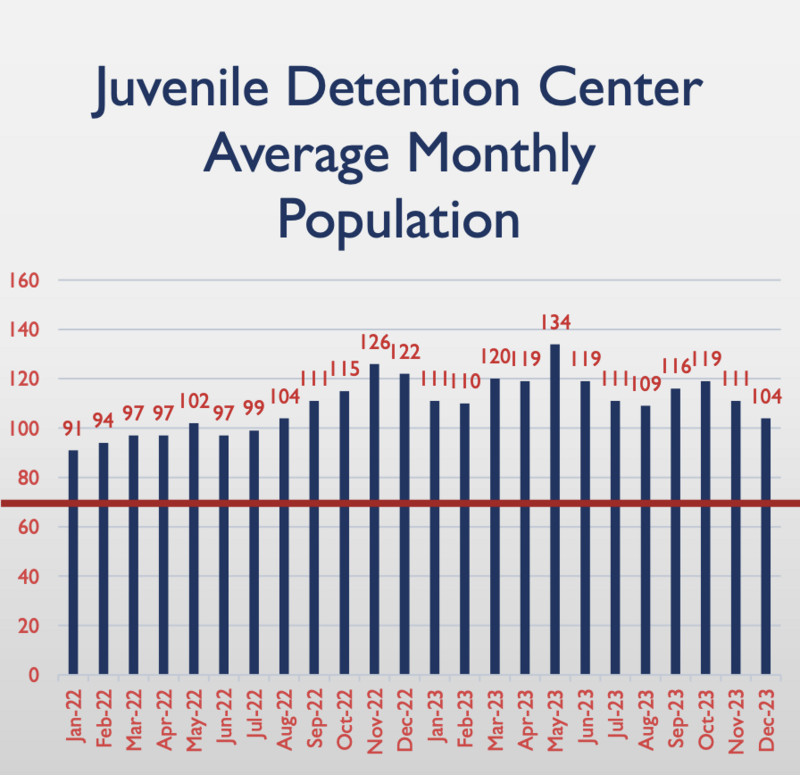
The number of teens serving time there far exceeded capacity throughout the last two years, as many as 134 in a complex meant for no more than 72, according to numbers the agency gave the House budget-writing committee. The money approved by the House earlier this month would provide enough space in Greenville for 47 juveniles.
Now it’s the Senate’s turn at the state budget. A final package is still months away.
Editor Seanna Adcox contributed to this report.
Columbia