Governor Whitmer earns an AI incomplete
Dec 22, 2025 | 6:00 am ET
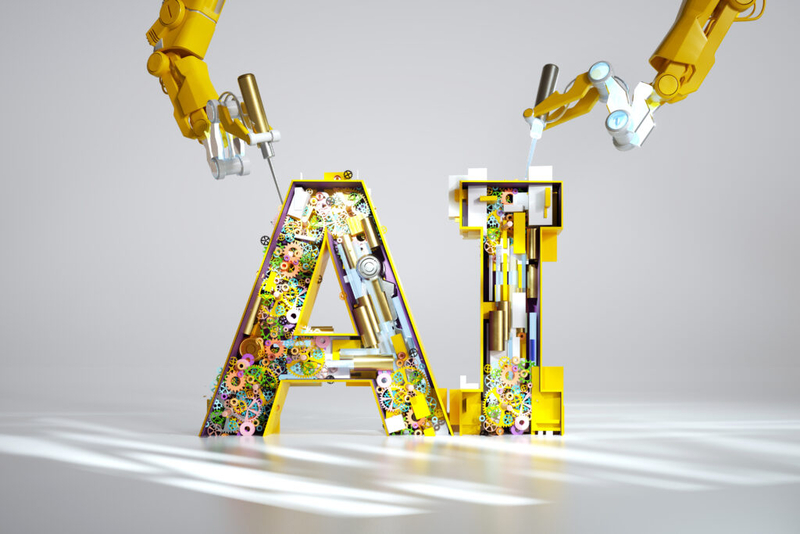
Description
Andriy Onufriyenko/Getty Images
In 2019, as Governor Whitmer was coming to power, I pointed out her responsibility to address issues she can anticipate and be prepared for the unforeseen ones in my commentary article Whitmer needs to prepare Michigan for the AI revolution.
While no one could have predicted the COVID crisis in her first term that absorbed a great deal of her and her team’s energy and bandwidth, a silent but looming issue back in 2019 that had the potential to disrupt our state, nation and the world that did not seem to be a front burner issue was Artificial Intelligence or AI.
As I wrote then, “AI promises to rock our world like the sonic boom it is: artificial intelligence or AI. Scientists predict that human-designed AI algorithms can learn human behavior, perhaps getting to know a person better than they might know themselves.”
It did not appear then that anyone in state government was addressing how AI might impact our state and government going forward. I questioned exactly what the state was doing to prepare for its ramifications, or who was thinking about how these changes would impact Michigan and how we can harness AI’s benefits while protecting citizens from its risks?

I strongly encouraged Gov. Whitmer to take the lead on the imminent technological reality that will arrive with AI — equal parts “opportunity” and “threat” to us all. Now, Michigan and every other state will be challenged by the Trump administration as the President has recently signed an executive order that aims to override state artificial intelligence laws.
The governor went on to establish an “AI Core Team” focused on creating strategies for responsible AI use within state government and a guideline, Michigan’s Artificial Intelligence Strategy, AI with Purpose: Empowering People Through Intelligent Technology. This has provided a solid foundation for moving Michigan forward.
So, as we are about to enter the governor’s last year in office and as she prepares to look at a potential presidential run, how did Gov. Whitmer stack up in preparing our state and people for this technological wonder/wrecking ball?
Michigan as a leader in AI and tech
The governor can take a bow for positioning Michigan for the AI revolution by attracting major tech investments (like the controversial OpenAI’s Stargate near Saline or Project Flex in Lyon Township that sucks lots of energy and water), focusing on attracting high-skill, high-paying tech jobs, providing new career paths for Michiganders and positioning
She can also take a curtsy for boosting the state’s overall economy, creating pathways for young people and skilled workers to stay in Michigan to fill these tech jobs of the future and working to secure our democracy by securing fair and secure elections and protecting them against deepfakes and misinformation.
Earlier this year, Gov. Gretchen Whitmer signed a law that eliminates the state’s 6% sales and use taxes on the equipment for businesses that spend at least $250 million to build or expand data centers. The law also extended data center tax exemptions for enterprise data centers on brownfield or former power plants through 2065. Since then, at least 10 data centers have been proposed across the state.
However, citizen protests continue even as the governor touts her success and the fears that these facilities demand large amounts of energy to operate and large amounts of water to cool the machinery, with environmental and consumer advocacy watchdogs warning these facilities can herald skyrocketing energy rates while harming drinking water access in nearby communities.
Democratic state Sens. Rosemary Bayer (D-West Bloomfield), Sue Shink (D-Northfield Township) and Erika Geiss (D-Taylor) have put forth legislation to address concerns of the facilities’ water and energy usage.
Republicans too are tiptoeing around these projects as well, leaving many to wonder if the foundation of these AI data centers are being built on a shaky political foundation.
The politics of Gov. Whitmer wrapping her arms around the mega data centers is puzzling as it is rubbing two longtime allies, grassroots activists groups working class and environmental activists, the wrong way. These constituents and activists have historically been in her corner. The whispers of big dollar PAC money is in the air where once again the wealthy and politically connected will get the gold mine and the citizens of Michigan will get the shaft.
As a former Michigan state superintendent of schools that offered letter grades for our then-school accreditation system, I offer an incomplete or a generous C+ grade in fully preparing Michiganders for this disruptive future.

Preparing for the future that’s here now
There is much work that remains to be done to integrate AI into our existing K-12 standards so that it covers foundational principles, ethical implications, and societal impacts (not to mention assuring more of our children receive the quality education they need and deserve to be prepared for their future and not our past).
This mirrors the failure of the state to be prepared to implement online learning as described in my 2020 opinion piece, COVID-19 has closed schools. We’re not ready for online learning, when we should have been during COVID.
We have not invested enough in local communities, libraries, and nonprofit and community organizations to help them adjust to this coming change. Further, proper oversight is needed as AI systems have been shown to perpetuate bias in hiring decisions, expose sensitive citizen data through security breaches, infringe on intellectual property rights, and undermine the fundamental principle of fair treatment that Michigan citizens should expect from our government.
We still need greater focus on issues that will be impacted by AI in Michigan, including but not limited to: regulatory affairs, privacy, workforce retraining and the social supports for retraining employees, education, strengthen consumer protections, coordination with philanthropic organizations to provide grants to community based non-profits to allow them to keep pace with the AI revolution
While there is great fear of looming mass job losses due to AI, the reality and challenge is more complex. Jobs are not simply disappearing, but rather transforming and new kinds of jobs particularly in higher-skilled occupations are appearing.
The larger question is are our educational institutions prepared to adapt to this new reality. The article, Teenagers are prepared for the jobs of 25 years ago– and schools are missing the AI revolution, points out that the future paradox is clear, young people are expected to adapt to AI systems while also offering the human qualities that machines cannot.
Teens must be data-savvy and emotionally intelligent, be digitally fluent and genuinely collaborative all within the four walls of a school and classroom and a 6-hour school day.
The governor can use her final State of the State address (usually held in late January) and her final state budget proposal (usually introduced in early February) to lay out her vision to tap AI to fuel Michigan’s future.
She could ask AI to develop a work plan to help Michiganders get ready to prosper in a hyper-competitive, disruptive, technologically driven global economy where ideas and jobs can and do move around the world effortlessly.
Greater effort is clearly needed to maximize AI’s benefit for all Michiganders. The governor can use her final year to truly prepare our government and people for this disruptive and challenging future.
Will she?
Lansing, MI