Gov. Sherrill looks to expand housing production on state land
Sep 29, 2026 | 4:59 pm ET
Description
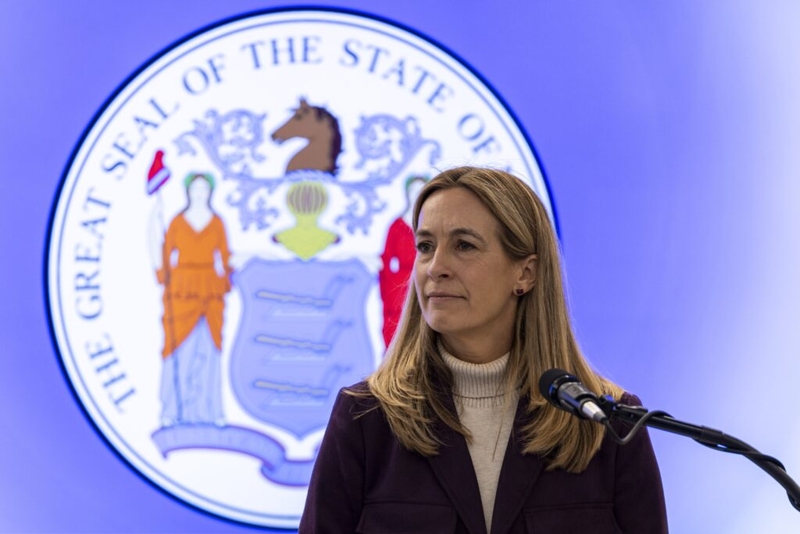
Gov. Mikie Sherrill said the state will expand a program that saw NJ Transit sell land for development, this time with the aim of keeping ownership while producing units. (Photo by Anne-Marie Caruso/New Jersey Monitor)
New Jersey will expand a program intended to leverage public land for the creation of affordable housing, raising its goals to nearly 43,000 new units over the coming decades.
The plan, announced in a report released Tuesday, calls for the state to examine 2,300 acres of state property for the creation of affordable housing.
“We’re doubling the number of new homes on state land. We’re investing tens of millions in affordable and workforce housing, and we’re getting shovels in the ground faster,” Gov. Mikie Sherrill, a Democrat, said at the Governor’s Conference on Housing and Economic Development in Atlantic City Tuesday.
The program, which the report says could see between 37,200 and 42,800 new homes developed on state property, is an expansion of a 2024 program in which the Economic Development Authority purchased NJ Transit properties for development with the goal of remitting some proceeds from their sale or lease back to the transportation agency.
NJ Transit’s program was expected to generate $1.9 billion for the agency over three decades, while roughly 800 acres of its property were expected to host up to 20,000 housing units.
An inventory of state property across New Jersey’s government found an additional 2,300 acres that might be suitable for housing development, according to the report. The program at present includes a mixed-use development near Metropark Station in Woodbridge.
“The Governor’s announcement provides a much-needed, whole-of-government approach to addressing New Jersey’s housing crisis,” said Adam Gordon, executive director of the Fair Share Housing Center, which monitors compliance with housing laws. “We look forward to working with Governor Sherrill and her administration to turn that vision into lasting results.”
New Jersey’s housing shortage is dire, and the Housing Governing Council, which drafted the report, has previously said the Garden State would need to add as many as 406,500 new units over the next decades to meet demand.
A report released Tuesday by the Pew Charitable Trusts found 28% of poverty in New Jersey could be attributed to high housing costs.
Alex Horowitz, project director of Pew’s housing policy initiative, said expanding housing supply in New Jersey could put downward pressure on rents, as expanded supply did in Austin and Minneapolis, which have seen historic housing booms and a decrease in inflation-adjusted rents.
“Housing costs can push families into poverty even when their paychecks are growing. Building more homes helps bring rents down, leaving families with more money for the basics and helping lift people out of poverty,” Horowitz said.

Trenton, NJ