Give thanks for the extraordinary natural world South Dakotans have inherited
Nov 25, 2026 | 11:39 am ET
Description
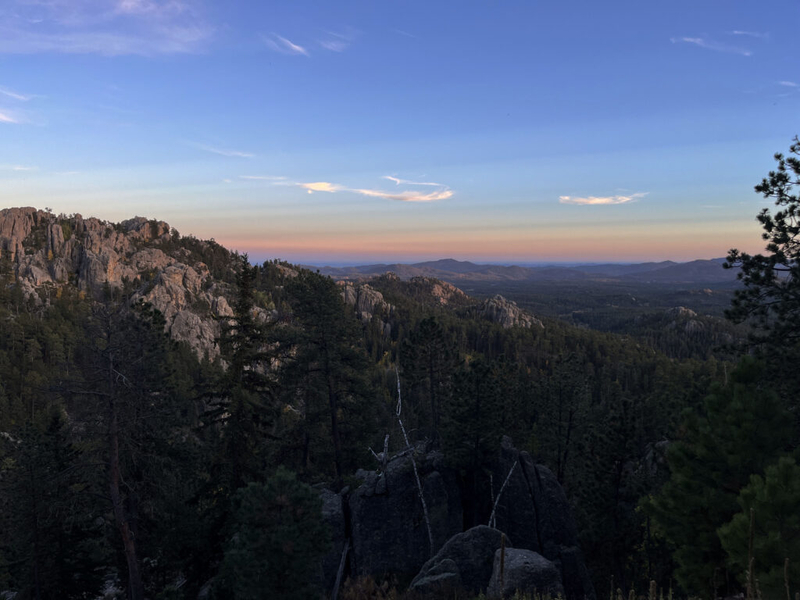
An October 2026 view of South Dakota's Black Hills. (Photo by Makenzie Huber/South Dakota Searchlight)
The South Dakota countryside never seems to be in much of a hurry.
Spend an afternoon walking a windswept prairie trail, sitting beneath an old cottonwood or wandering through a thick Black Hills forest, and before long the landscape begins to slow you down.
There is something about these places that draws us in. It may be the peacefulness of a quiet morning sunrise, the raw power of a thunderstorm, or a roaring blizzard. Nature has a way of absorbing us.
Long before homesteaders carved dugouts and built sod houses, Native people understood that the land is more than a place to live. The changing seasons, the movement of wildlife, the wind, the stars and the weather are part of a spiritual relationship with the natural world that requires respect, observation and patience.
Hope brought the homesteaders here. The prairie taught them that survival demanded hard work and a respect of nature.
Perhaps that’s why Laura Ingalls Wilder’s “The Long Winter” still speaks to so many readers. It wasn’t simply a story about surviving one of the harshest winters on the northern Plains. It was about making difficult decisions and depending on neighbors.
There is something about these places that draws us in. It may be the peacefulness of a quiet morning sunrise, the raw power of a thunderstorm, or a roaring blizzard. Nature has a way of absorbing us.
When the town’s food supplies were nearly exhausted, Almanzo Wilder and Cap Garland risked their lives traveling across the open prairie to find wheat. They recognized the signs of an approaching blizzard and took great risks to beat the storm. Their courage and judgment helped carry the community through the winter.
Harvey Dunn understood those same lessons. Growing up on a South Dakota homestead, he painted women carrying water, children helping with the harvest, a father hunting to supplement the table, and families enduring drought, wind and loneliness.
Decades later, Terry Redlin made us long for a simpler time.
A pair of deer standing at the edge of a farmyard at twilight. Warm light spilling from the kitchen windows of a farmhouse. An emerging moon illuminating the fresh tracks etched into crystalline snow.
His paintings make us think about warm childhood memories, conversations around the kitchen table and the importance of wildlife and churches to our wellbeing.
Maybe that’s why Redlin’s paintings continue to resonate.
The natural world offers those experiences every day.
Each fall, enormous flocks of snow geese move south across the Dakotas, riding cold north winds. Their great chorus draws us to something larger as they follow ancient migration routes.
The same sense of wonder can come from watching a deer emerge from the safety of a grove of trees or seeing a pheasant scratching for pebbles along a country road.
Whether it’s a prairie lake alive with whitecaps or a quiet bend in the Missouri River, or the timeless Badlands, the landscape has a way of putting our daily concerns into perspective. Nothing is as urgent as it seems.
Sit quietly long enough marveling at the landscape and the distance between generations begins to disappear. The people who broke this ground, built these farms, planted shelterbelts and watched similar sunsets stop being memories and once again walk with us down familiar paths.
They left us physical reminders of what was important in life. It might be an old wooden toolbox like the one tucked into the corner of our garage, filled with unusual tools, rusty bolts, worn hinges and bent nails that no hardware store would bother to stock anymore.
An old farmer understood the value of saving something that might someday be useful.
Perhaps wisdom works much the same way.
Every generation leaves the next a kind of toolbox. Patience. Humility. Careful observation. Respect for the land. The willingness to listen before speaking, to think before deciding and to recognize that our actions have consequences.
As Thanksgiving approaches, perhaps there’s something else the landscape offers us. Gratitude.
It is not simply gratitude for a successful harvest, another fall migration, a warm home or another year with family and friends, important as those blessings are. It is a deeper appreciation for the extraordinary natural world we’ve inherited.
Maybe that’s something worth remembering as we slow down and gather around Thanksgiving tables this week.

Pierre, SD