Gift card giveaways, Freedom Caucus bashing, promoting public land: US House hopefuls strive to stand out
Aug 13, 2026 | 7:07 pm ET
Description
Photo courtesy of WyoFile
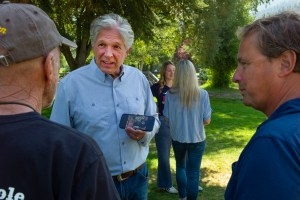
Steve Friess’ campaign staff have been promoting a clear incentive for coming to hear the U.S. House candidate’s spiel: The stop could yield money.
The campaign is giving away gift cards — they’ve slid into pockets in Gillette, Casper, Cheyenne and Rock Springs — and the value isn’t trivial. Although the Friess campaign website states that the bait is a “massive $1,000 Sportsman’s Warehouse gift certificate,” in practice four attendees at some campaign stops have been walking away with more open-ended $250 Visa gift cards, according to Elishah McAvoy, Friess’ campaign manager.
“We’re thrilled with the gift card giveaways,” McAvoy said, “and being able to provide a little extra something to people.”
Recipients of the gift cards aren’t required to vote for Friess, and their names are drawn out of a hat, she said.
“It comes with absolutely no strings attached,” McAvoy said.
For Friess, the son of late financier, GOP megadonor and philanthropist Foster Friess, the campaign tactic is perhaps fitting. The largely self-funded candidate from Teton County has loaned himself $3 million, tops among the nine Republican candidates competing in next week’s primary election to represent Wyoming in the U.S. House.
The gift card tactic is also controversial. In July, the Wisconsin Elections Commission found that Elon Musk “likely broke the law” when he gave $1 million checks to voters before the 2025 Wisconsin Supreme Court election, the Wisconsin Examiner reported.
Gift card giveaways at campaign stops might legally fly in Wyoming, said retired University of Wyoming law and political science professor Stephen Feldman.
“As far as I know, this is not illegal,” Feldman told WyoFile. “But from an ethical standpoint, it seems somewhat questionable.”
It’s unclear where the Wyoming Secretary of State’s office, which oversees statewide elections, falls on the issue. The office’s chief policy officer and general counsel, Joe Rubino, did not respond to an interview request.
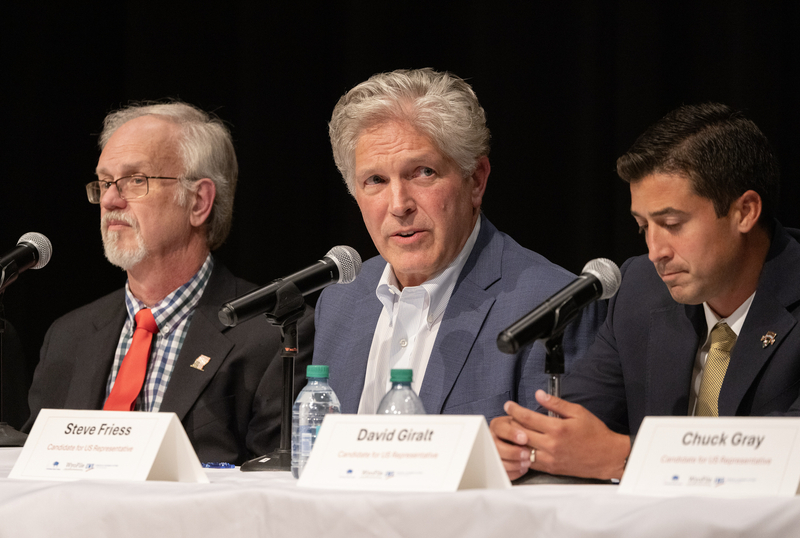
Rubino works for Secretary of State Chuck Gray, who’s one of nine GOP candidates vying for the U.S. House seat being vacated by Harriet Hageman, who’s running for Senate. Other candidates include former Superintendent of Public Instruction Jillian Balow, Wyoming Senate President Bo Biteman, retired Bureau of Land Management employee Kevin Christensen, actor and singer Richard Dodson, former Army Ranger David Giralt, Casper resident Keith Goodenough and Casper businessman Reid Rasner. (There were 10, but Jackson Hole resident Frank Chapman dropped out after he and the Fighting for Wyoming PAC spent roughly $3 million on his campaign.)
None of the candidates is the clear frontrunner. Although Donald Trump endorsed Hageman for the same seat in her high-profile contest against foe Liz Cheney in 2022, the president has not stated a preference for Wyoming’s next congressman. (He has weighed in on this year’s gubernatorial and U.S. Senate contests, endorsing Megan Degenfelder and Hageman, respectively.)

There hasn’t been independent polling data on Wyoming’s U.S. House race that has been made public, but the Friess campaign has claimed its internal polls found it’s a two-man race, between Gray and himself. Gray, meanwhile, has claimed that he’s neck and neck, but with another candidate.
“We just got some new polling numbers. This race has turned into a two-man race between myself and Christensen,” Gray said in a Facebook video following a candidate forum in Sheridan hosted by Wyoming Public Television (PBS).
Gray’s another big spender, loaning his campaign $1.38 million and securing another $519,000 in support from a super PAC that’s funded by his father, Jan Gray. He did not respond to WyoFile’s request to discuss or share the polling that he says showed him atop the field with Christensen.
With less than a week to go before Tuesday’s primary, candidates are trying to grab attention and differentiate themselves. This week, Rasner’s campaign staff sought out and succeeded in securing headlines about his distaste for the Wyoming Freedom Caucus, a faction of the GOP that’s been on the upswing in the statehouse. During the 2026 election season, the caucus seeks to win majority control of the Wyoming Senate and bolster its existing majority in the Wyoming House into a supermajority.
Rasner, who raised his national profile in a failed bid to buy TikTok, leads all candidates in soliciting individual contributions, which total over $450,000. But he’s invested much more from his own fortune, loaning his campaign $1.87 million.
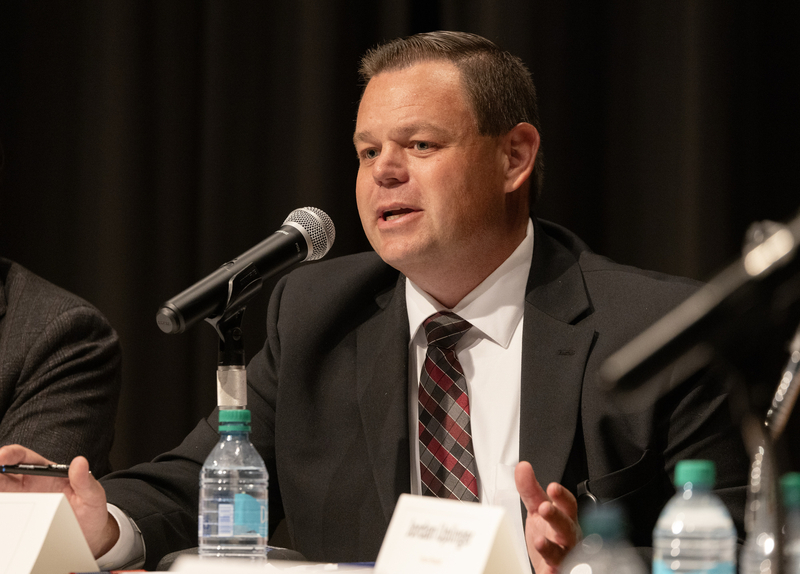
The Rasner campaign has also used that campaign war chest to buy media attention. This week the Wyoming Tribune Eagle published two sponsored stories, one touting the campaign’s grassroot contributions and another promising $1 billion for Wyoming as a result of a proposed change to the state’s share of federal mineral revenues.
Like Gray and Friess, Rasner has touted favorable internal polling. The results have his campaign feeling “comfortable,” he told WyoFile. When asked, he did not divulge any specifics.
Other candidates are campaigning in the home stretch with an altogether different strategy. Biteman, the Wyoming Senate president, has eschewed costly mailers and is running with a much tighter budget: He raised nearly $115,000 in individual contributions and didn’t loan himself anything.
“Many of the candidates are just burning through cash, pushing out mailers and text blasts attacking the rest of the field,” Joey Correnti, Biteman’s campaign associate, wrote in a text message. “As a coalition builder and fixer of problems, Bo prefers to meet people where they are at and have real conversations and make real connections, regardless of ideology.”
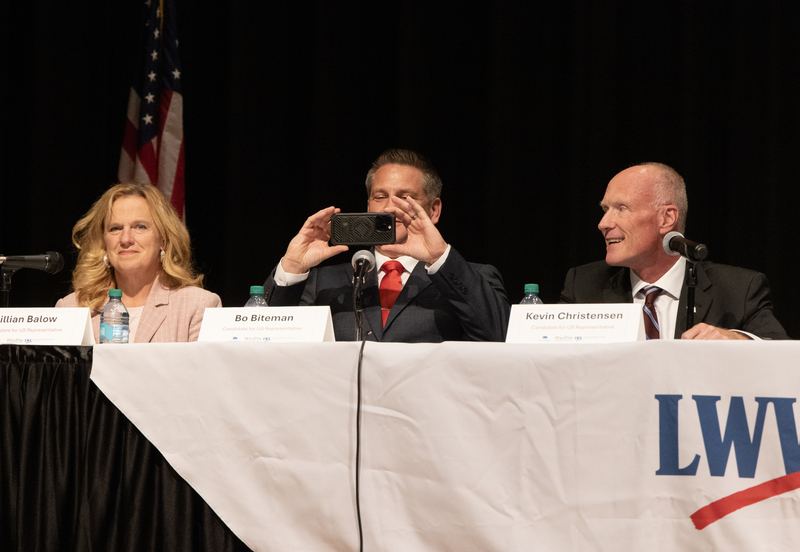
Biteman’s not the only candidate taking the more traditional approach to campaigning in Wyoming. Just this week, Gov. Mark Gordon called for a return to decorum in the state’s elections.
“This election, similar to the one two years ago, has amplified the sorts of big city, big money, nasty half-truths and flat-out lies or falsehoods that have become all too common in other states,” the governor wrote in an opinion piece. “It’s not the Wyoming I know.”
Many contenders for the House seat have refrained from attack ads and mudslinging, and their pitch to voters is instead focused on issues. In the wake of a western public lands sale being axed from the federal budget bill, political rhetoric about keeping the federal estate intact has been on the rise. During a July 23 candidate forum in Casper, the crowded pool of GOP candidates were unanimously opposed to disposing of federal lands.
Some candidates have made their public lands positions a feature of their campaigns.
Christensen, the former BLM employee, was the only candidate at the Casper forum who called for the Trump administration and Congress to retain the 2001 Roadless Rule. And he’s also called for the repeal of the Wild Free-Roaming Horses and Burros Act. In a written response he provided to WyoFile, he proclaimed that he’s “passionate about public lands in Wyoming.”
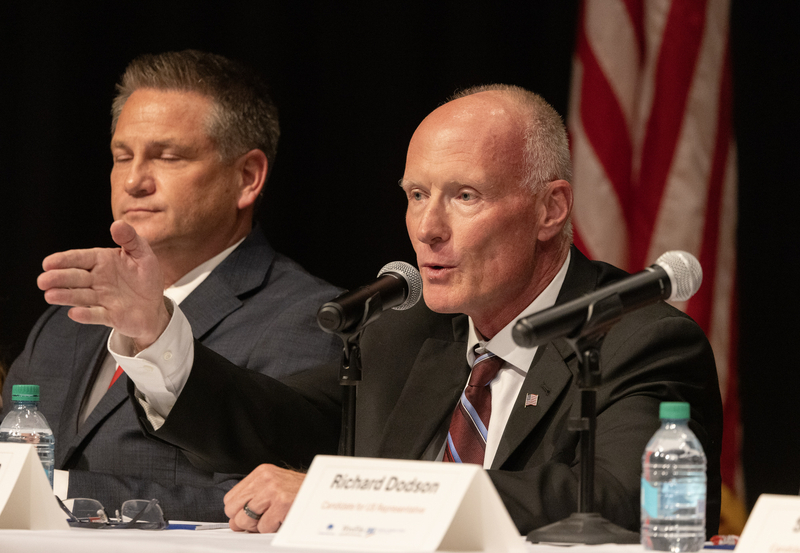
“In my time in the BLM, I expanded public land access by 80,000 acres,” Christensen wrote, “and ensured that oil and gas, coal, grazing, and recreation powered our economy while preserving the beauty and productivity of the land for future generations.”
For more information about the nine candidates vying for Wyoming’s seat in the U.S. House, see WyoFile’s 2026 election guide. Videos of candidate forums on July 23 in Casper and Aug. 4 in Sheridan are also available online.
Wyoming’s primary election is Tuesday. Early voting is underway.
For more information about candidates in Wyoming’s federal, state and legislative races, check out WyoFile’s 2026 Election Guide.
Cheyenne, WY