Geothermal industry’s groundwater ‘loophole’ scrutinized
Feb 03, 2026 | 8:00 am ET
Description
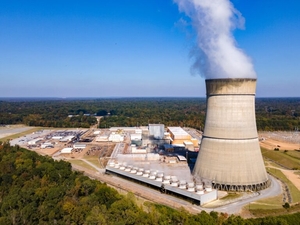
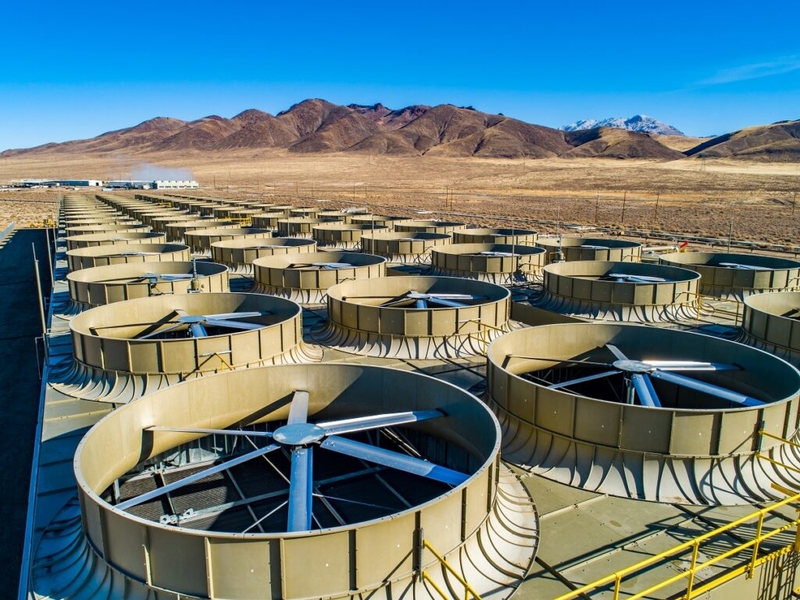
Farmers and hard-rock mining companies that pump groundwater are required to apply for permits under Nevada law, but geothermal projects are exempted. (Ormat geothermal plant at North Valley; Ormat press release photo)
Nevada lawmakers are working to revive a bill that would require state water regulators to take a closer look at how geothermal operations impact groundwater during the permitting process.
Farmers and hard-rock mining companies that pump groundwater are required to apply for permits under Nevada law, but current statutory framework exempts some industrial groundwater users from the permit process as long as they return the water they pump back into the ground.
Assembly Bill 109 would close a “loophole” that allows developers to pump water without a permit from the state engineer if the operation is considered “non-consumptive,” meaning any water withdrawn is returned to its original source with little to no net loss.
The measure – introduced by Assemblymember Selena La Rue Hatch, D-Washoe – would largely impact geothermal operations in the state, which pump large quantities of groundwater before reinjecting the water back from where it was extracted. Some emerging lithium mining techniques operate in a similar way and are also exempt under current Nevada law.
The bill was originally introduced during the 2025 general legislative session but did not receive a single hearing, despite support from several rural water users, including the Central Nevada Regional Water Authority and the Humboldt River Basin Water Authority.
The bill was also supported by the Fallon Paiute Shoshone Tribe, the Pyramid Lake Paiute Tribe, and several conservation groups.
In a letter requesting Nevada lawmakers hold a hearing on the bill, rural water users argued the bill would “guarantee that all industrial groundwater pumpers undergo the standard water permitting process” and would not “jeopardize or penalize any industry.”
Geothermal developers and interest groups have opposed the bill, arguing it would risk the state’s leadership in geothermal energy by extending project timelines and inflating project costs.
“Adding unnecessary or duplicative permits increases financial risk and can shift development to other states,” said Geothermal Rising director of policy and education Vanessa Robertson, during a hearing for the Joint Interim Standing Committee on Natural Resources last week.
Brian Libby, the chief geologist with Ormat, a Nevada based geothermal company, told lawmakers during the hearing that the super heated “geothermal fluid” used to produce power is not the same as drinking water pumped from aquifers and is contained within isolated geological layers. Developers actively avoid aquifers during operations, said Libby.
“We avoid these surrounding hydrological units, if we didn’t their lower temperature and sometimes their adverse chemistry would be detrimental to our operations,” Libby said, adding that “essentially 100% of the geothermal fluid is injected back into the subsurface.”
Steven Hammerman, a mining consultant who co-presented the bill, argued that “reinjection is not a silver bullet” and once groundwater pumping starts, underground pressure changes can impact surrounding aquifers.
“In some cases, attempts to reinject water at the same rate at which it is pumped has caused fracturing and permanent damage to the aquifer,” Hammerman said, adding that in other cases springs fed by aquifers can go dry if there’s a delay in water returning to its place of origin after reinjection.
The bill would ensure the state engineer determines if water is available when considering geothermal operations and if an appropriation will impact senior rights, said La Rue Hatch.
“It ensures that no industry and no water rights user will be surprised by the waters of the state being put to beneficial use without notice,” La Rue Hatch said, adding that the bill was created after water users in rural counties and tribes expressed concern about the impact of geothermal production on their water rights.
Cary Lindsey, a research scientist at the Nevada Bureau of Mines and Geology at UNR, emphasized that geothermal brine is not the same as the drinking groundwater pumped by other industries, but also noted that Nevada’s aquifers are interconnected.
“Geothermal fluids and groundwater do interact with each other. The subsurface of Nevada is not a closed box. These waters mix with each other all the time, but they are drastically different in their source, in their composition,” Lindsey said.
That interconnectedness could lead to conflict in the future, said executive director of the Great Basin Water Network, Kyle Roerink.
“What we’re really talking about and trying to prevent is springs going dry. We’re trying to prevent conflict among existing water rights users. We are trying to prevent harm to the public interest,” said Roerink during the hearing last week.
As the driest state in the nation, groundwater is a critical resource for municipalities, farmers, tribes, and wildlife.
In Nevada about half of the state’s counties rely on groundwater for more than 80% of their water supply, according to the U.S. Geological Survey. The Nevada Division of Water Resources estimates that about 20% of Nevada’s groundwater basins are also being overpumped, meaning more groundwater is extracted than returned each year.
Interest in geothermal exploration in Nevada is only growing. Last year, 95 geothermal wells were permitted in the state, more than any single year since 2010.
Nevada is second only to California in geothermal electricity generation, according to the U.S. Energy Information Administration. Nevada produces about 26% of total geothermal energy in the nation, and has the potential to grow.
In the last five years, the Bureau of Land Management (BLM) has put up more than 700,000 acres of land in Nevada to lease for geothermal.
La Rue Hatch said the majority of water users in the state – including hard rock mining, hydropower, and agriculture – already undergo the standard review and permitting process conducted by the state engineer and the bill will not change that process.
“The goal of this bill is not to create dramatic changes. It is not to hurt any industry. It really is to protect what I think is the gold standard of water law in the West and make sure that we are applying it fairly,” La Rue Hatch said.
Other forms of non-consumptive water use are required to go through the permitting process, she said, namely hydropower. Water-use permits for non-consumptive uses like hydropower on the Truckee and Carson Rivers and Ruby Mountains have been common practice since the turn of the 20th Century.
“Every single water user that puts the waters of this state to beneficial use has to be permitted. That includes non consumptive uses, that includes farmers or ranchers that are using water non consumptively. It includes hydro power, which is using water non-consumptively,” said LaRue Hatch, noting that geothermal operations are one of the few exceptions.
Las Vegas, NV