Future uncertain for Pennsylvania warehouses after ICE pivot away from detention centers
Jul 07, 2026 | 1:00 pm ET
Description
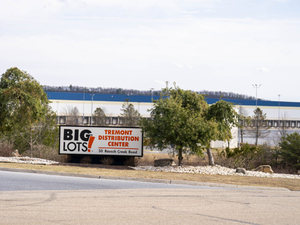
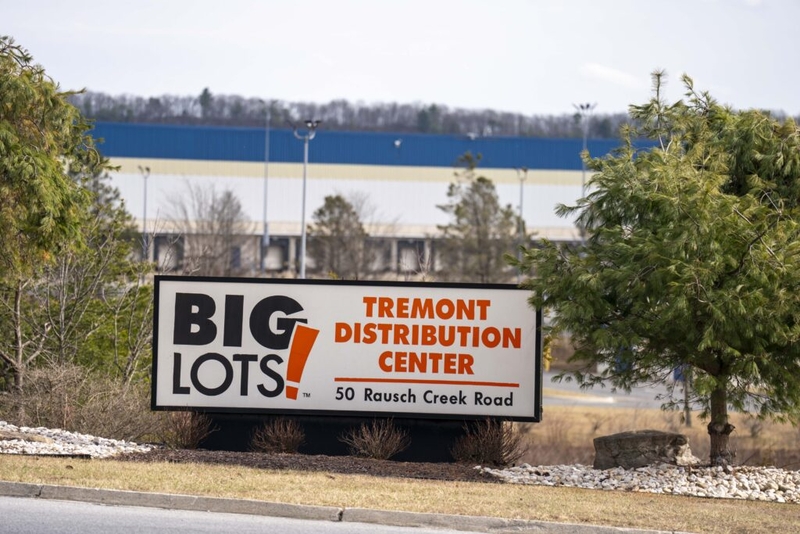
The site of the former Big Lots warehouse that Immigration and Customs Enforcement plans to turn into a 7,500-person detention center in Tremont, Schuylkill County, on March 12, 2026. (Photograph by Jessica Kourkounis/Pennsylvania Capital-Star)
Since Immigration and Customs Enforcement appears to have abandoned plans for converting some of its new warehouses to detention facilities, many questions remain about the future of the properties.
A big one, at least in Pennsylvania, is how to offset millions of dollars in local government revenue that’s been lost now that the properties are tax-exempt.
Some local officials have hoped for payments in lieu of taxes from the federal government – while others say they don’t expect that to happen.
The loss amounts to more than $1.6 million annually, combined, for six taxing districts between the two sites in Tremont Township, Schuylkill County, and Upper Bern Township, Berks County, according to local officials.
“I don’t want to sound pessimistic, but if they mothball it, I don’t think we’re going to get anything,” said Pine Grove Area School Board Treasurer Dave Frew, noting the hope is that the government will sell.
Federal officials stated during conference calls that they’d be open to a three-year agreement to compensate taxing districts for revenue losses, Schuylkill County Board of Commissioners Chairman Larry Padora has said.
But in Berks County, officials aren’t expecting to get any money through a payment in lieu of taxes because “facilities of this type are excluded from PILT eligibility”, said spokesman Jonathan Heintzman.
Like most federal agencies, the Department of Homeland Security is not authorized to execute PILT agreements nor make payments to counties. That’s up to Congress, according to the National Association of Counties (NACO), which has lobbied for years to change PILT policies.
Generally, the agreements are linked to what are known as entitlement lands – mainly, national parks and forests, in addition to wildlife refuges, U.S. Army Corps of Engineers dredge areas and other tax-exempt properties administered by agencies within the Department of Interior (which administers the PILT program), according to federal statute and DOI’s press office.
The Department of Energy also can make payments for properties that aren’t considered entitlement lands, according to CRS.
Beyond that, a PILT agreement – or alternative that practically functions as one – is rare. And, while not impossible, individual payments are unlikely and would occur under limited “extraordinary circumstances”, according to NACO.
Asked about alternative mechanisms, a spokesman for Republican Rep. Dan Meuser (PA-9) said the congressman is “advocating directly with DHS” – as he has been for months – about plans for and concerns about the properties, in general, including for “payments to be made to Schuylkill and Berks counties to offset property tax revenue shortfalls.”
DHS and ICE’s media relations team have not provided details about payments in lieu of taxes for the Pennsylvania warehouse properties or alternatives that would achieve a similar aim in response to multiple requests from the Capital-Star.
“I don’t care if it’s sitting there,” Padora said of the 1.3-million square feet structure in Tremont. “We want our tax revenue. If they sell, it gets back on the tax rolls. If it’s given to another government agency, we’re going to push for payment in lieu of taxes.”

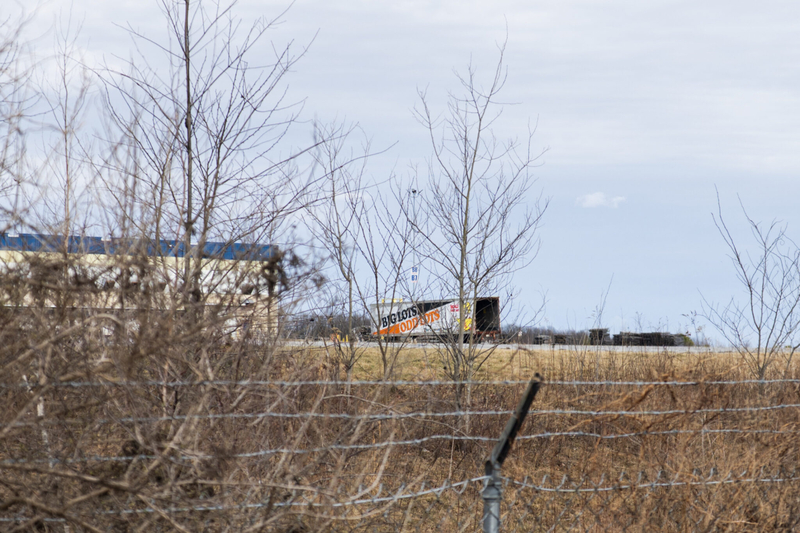
Padora spoke at his last commissioners meeting June 24 before going on vacation. He confirmed to the Capital-Star July 1 that he hadn’t engaged directly with ICE or DHS in recent weeks about future plans for the Tremont property, a warehouse that’s been sitting empty for about 18 months after former operator Big Lots closed up shop.
Padora hasn’t responded to the Pennsylvania Capital-Star’s attempts to contact him this week. A phone message left for the county solicitor also hasn’t been returned.
Meuser previously provided a statement confirming the DHS is pivoting on its plans for the properties and pledging to “provide an update upon learning of the definitive future plans for the sites.”
“The Administration’s plans evolved based on operational needs and, in large part, the extensive due diligence conducted by county and local officials, working alongside my office to ensure the best possible outcome for the community. The careful review of the proposed sites and engagement with DHS played an important role throughout this process,” it said.
At one point, the plan was to detain up to 7,500 people in Tremont (which would’ve been one of the nation’s biggest such immigration centers) and as many as 1,500 people in Upper Bern Township in Berks County. Employees would’ve added thousands of additional people to the count.
Meuser’s reference to “due diligence” refers to the fact that infrastructure in the rural Coal Region area cannot accommodate ICE operations at the scale envisioned – something that local and county officials immediately flagged and that added to the community backlash.
Meuser’s statement came more than a week after The New York Times reported the change, citing unspecified documents.
Pennsylvania U.S. Senator John Fetterman, a Democrat, also said he confirmed the news in a press release in mid-June. His office hasn’t responded to the Capital-Star’s requests for more details.
When the properties changed hands last winter, county governments collected recording fees of $37,000 in Schuylkill and $26,220 in Berks (a fraction of the taxes typically generated), according to Padora and Berks County Recorder of Deeds Fred Sheeler.
Upper Bern and Hamburg Area School District each took in $428,000 of real estate transfer taxes, according to Sheeler.
Tremont and Pine Grover Area School District each drew about $660,000, according to Frew, enough to buffer the property tax revenue loss in the short-term.
“That windfall will help us offset what it would’ve generated [in property taxes]. But that’s a non-recurring revenue,” Frew said, noting school officials aren’t panicking yet because the district has savings, reserves and minimal debt.
“In a perfect world, the federal government would sell it and trigger another $664,000 in real estate transfer taxes. And the new owner establishes fair market value at $128 million, generating $1.8 million [in annual tax revenue] for us,” Frew said.
In the meantime, ICE’s case before the state Environmental Hearing Board remains status quo. The agency is appealing state orders barring local officials from facilitating water and sewage use at both properties.
The board allowed two environmental advocacy organizations – the Delaware Riverkeeper Network and Green Amendments for the Generations – to intervene in an order filed June 22.
Maya K. van Rossum, who heads both groups, noted ICE contested their petitions to join the case, most recently with a response filed June 11.
“We’ve seen press reports, but their [formal] actions and activities suggest it’s still an outstanding question when it comes to the Pa. warehouses,” she told the Capital-Star. “Until it’s official and formal, we’re proceeding as though it’s happening. It looks like they’re keeping all options open.”

Harrisburg, PA