Freedom Summer 2.0: Tennessee and the redemption of democratic possibility
May 28, 2026 | 5:59 am ET
Description
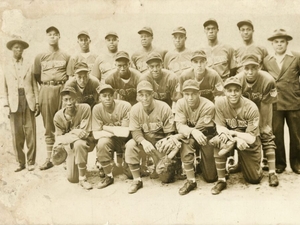
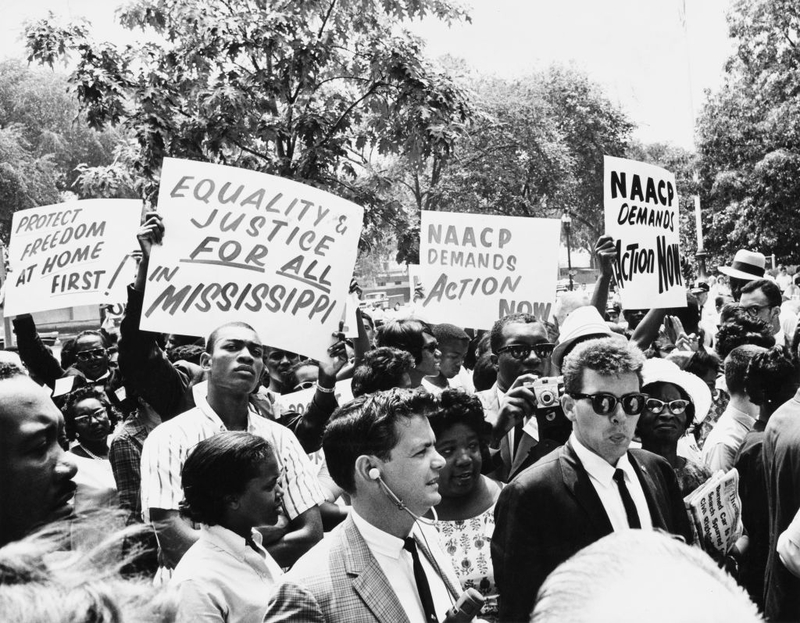
Freedom Summer was a 1964 movement to call attention to the plight of Black Mississippians; Is it time for a Tennessee Freedom Summer? (Photo by Archive Photos/Getty Images)
If Mississippi was ground zero for Freedom Summer in 1964, Tennessee may well be ground zero for Freedom Summer 2.0 and the fight to redeem democratic possibility in America.
That claim may sound improbable in a state too often caricatured as “ruby red.” But caricatures are often convenient political fictions. Tennessee is not nearly as politically settled as its maps suggest, nor as ideologically fixed as those in power would have us believe. In fact, one of the greatest political lies told about our state is that Tennessee is hopelessly conservative and permanently decided.
That lie has consequences.
It is part of the logic that justified the dismantling and splitting of the 9th Congressional District — a district rooted in Memphis and long representative of Black political agency. The cracking of the district was not merely about geography. It was about political imagination. It was about reinforcing the message that Black political power can be diluted, democratic participation managed and public resistance rendered futile.
But the numbers tell a different story.
According to recent voter analysis, Tennessee’s electorate is made up of roughly 33% Republican voters, 18% Democratic voters, and 48% independent voters. Because Tennessee does not formally register voters by party, these estimates are derived from voting behavior — especially participation in partisan primaries and modeled voting patterns over time. In other words, these numbers are not based on party registration cards but on how voters actually move politically.
The point is not mathematical perfection. The point is political possibility.
Tennessee is not “ruby red.” Tennessee is politically fractured, politically fluid and politically persuadable.
And perhaps the most revealing number of all is this: approximately 1.7 million registered Tennessee voters sat out the 2024 election cycle.
Read that again.
The largest political bloc in Tennessee is not Republican. It is not Democrat. It is the disengaged.
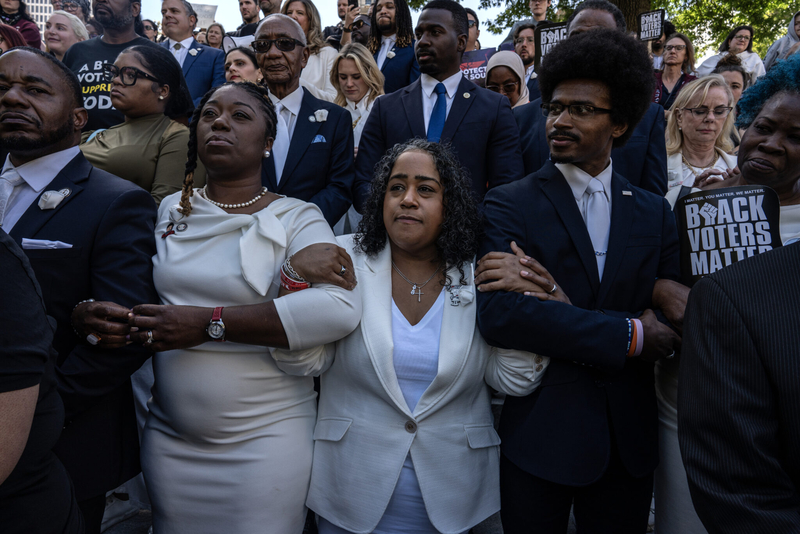
Some are disillusioned. Some are misinformed. Some are exhausted. Some have been conditioned to believe that participation changes nothing. Others have experienced decades of political and economic neglect and have concluded — not irrationally — that democracy has never fully shown up for them.
Can we really blame them?
For too many Tennesseans, democracy feels like an occasional performance rather than a sustained investment. Politicians show up during campaign season only to disappear after Election Day. Communities are courted with slogans but abandoned when it comes to healthcare access, living wages, affordable housing, quality education, reliable transportation and public safety that does not depend upon over-policing and under-serving vulnerable communities.
These are not partisan issues. These are kitchen table issues.
How much does it cost to fill up the gas tank? Can wages keep up with inflation? Can families afford healthcare? Will our children attend schools that prepare them for meaningful futures? Can working families survive without having to choose between medicine and rent?
These are the concerns that shape everyday life far more than partisan talking points.
And yet, if we are honest, there is not an overwhelming amount of public energy surrounding most political candidates in Tennessee right now — with some notable exceptions, including Rep. Justin J. Pearson.
But we cannot candidate our way out of democratic decline.
If Tennessee is going to experience a Freedom Summer 2.0, increased voter turnout will not happen because of personalities alone. It will happen because ordinary people commit to extraordinary organizing.
That means direct engagement. Relational organizing. Civic education. Texting neighbors. Knocking on doors. Hosting conversations in churches, barber shops, beauty salons, union halls and neighborhood associations. It means building trust with those most alienated from political institutions — not on behalf of any candidate, but on behalf of democracy itself.
Particular attention must be given to Black men, young people ages 18–34, and working-class families who too often experience political engagement as symbolic rather than substantive. If democracy is going to survive, these communities cannot merely be targeted during elections. They must be respected, informed, invested in and organized with.
The goal should be ambitious but clear: 50% turnout in the August primary and 75% turnout in November.
Impossible? Perhaps.
But so was Freedom Summer in 1964.
What if Tennessee — and especially Memphis and Shelby County — decided to become the proving ground for democratic resurrection? What if we overwhelmed voter suppression, cynicism, and disenfranchisement with education, organization, and disciplined hope?
We may not save democracy entirely. But we just might preserve and expand the fragile semblance of democracy — and Black self-determination — this country has struggled to hold onto for the last sixty years.
Freedom Summer did not begin with certainty. It began with commitment.
Perhaps ours can too.
Nashville, TN