Incarcerated people make their cases to Wisconsin’s new commutation board
Aug 24, 2026 | 4:30 am ET
Description
A dozen people applying to have their prison sentences shortened spoke about how they had changed their lives at the first hearing held by Wisconsin' new Commutation Advisory Board. (Getty Images)

On Friday, Gov. Tony Evers’ Commutation Advisory Board heard from 12 incarcerated people who are asking the governor to shorten their prison sentences, as well as some of the victims of their crimes.
“I found myself thinking of this a lot, really often, and feeling terrible for what I had done to these people, and wished more than anything that I could just take it back, and never hurt anyone in any way,” said applicant Aaron Smith.
Evers issued two executive orders in April that revived commutations in Wisconsin after decades of governors not exercising their power to alter prison sentences. The advisory board is responsible for reviewing commutation applications that meet Evers’ criteria for consideration and for making recommendations to the governor about who should receive a commutation. The board also recommends how a person’s sentence should be changed or shortened.
Granting commutations rewards incarcerated people who are committed to change, according to Evers, promoting rehabilitation.
On Wednesday, Republican state Sen. Van Wanggaard (R-Racine) announced in a press release that he was releasing the names of more than 800 incarcerated people who were seeking commutation of their sentences. He argued that Evers is using “hand-picked, unelected bureaucrats” to second-guess prosecutors and judges.
At the Friday hearing, 12 incarcerated people spoke before the board. After the applicants took questions from board members, victims had a chance to give statements.
Sharif Green
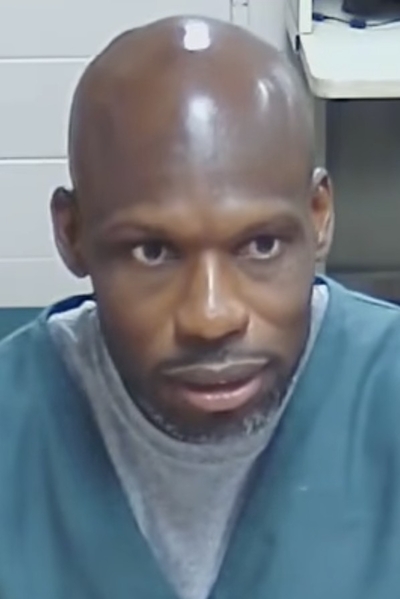
In 2015, Sharif Green was sentenced to 20 years of incarceration and 10 years of extended supervision on charges of possessing cocaine and heroin with intent to manufacture, distribute or deliver it.
“I take full responsibility for my wrong action,” Green said. “And I believe from the bottom of my heart, I’ve changed. I had conversations with people, they see the change in me. I no longer earn money illegally. I’ve been working since I’ve been here.”
Green previously served time in Wisconsin’s prison system after a drug-related conviction in 1997. A board member said that many of the applicants being reviewed by the board at the hearing were young when they committed their offenses, while Green was 40 years old at the time of his 2014 offense.
She asked Green what he thinks helped him change this time that’s different from the first time he went to prison. He spoke about a time in which people turned away from him during a conversation after hearing about his sentence, and about a time when he’d received bad news from family.
“All that time I was wasting for no reason when I could’ve changed, and I had the opportunity to do it but I didn’t,” Green said. “So this time, I have no choice.”
Mighty Howell
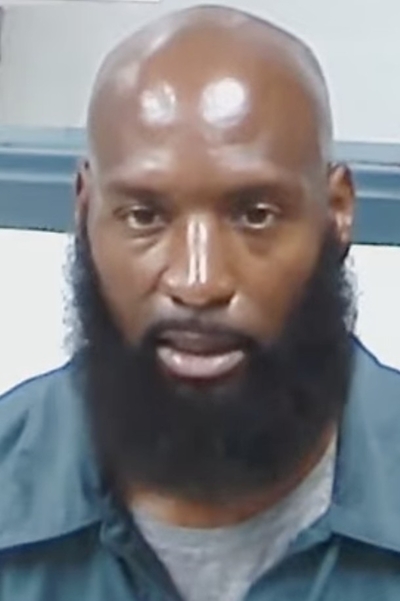
Mighty Howell, 50, a resident of Jackson Correctional Institution, incarcerated for 33 years, was convicted of first-degree intentional homicide for the May 27,1993 killing of Roger Bucholz in Milwaukee. He recounted how at age 17 he and three friends were inspired to commit armed robbery after watching a movie, firing shots in the direction of Bucholz’s vehicle and later realized Bucholz had been killed.
“He had no reason to not believe that he was going to make it home safe that night to his family and his kids,” said Howell. “Not only did I take away his opportunity to live a full, successful life, I took it away from his family. I took away from his kids, and I think that at this moment I want to apologize to his parents, his wife, his kids, his relatives, all his relatives.”
He said one of the ways for him to show “genuine remorse” was to change while incarcerated. He recounted the programs he had participated in, including furthering his education as well as his efforts to confront his fears and make decisions to mature.
“I’ve done 33 years and about five months now,” he said. “The 17-year-old bears no resemblance to the 50-year-old that sits before you today.”.
“It was a difficult process to remove those bad habits,” he said and talked about making the decision to cut ties with friends and gang members, and his decision while he was in solitary confinement to change his life.
Asked if he had forgiven himself, he said, “It was hard because I always felt like, man, you killed somebody, bro. So I always felt that pain.”
He added that through religious services, he had addressed his guilt.
“In order for you to move forward, you have to forgive yourself,” he said, “and I believe I’ve done a great job so far, but it’s still there.”
Aaron Smith
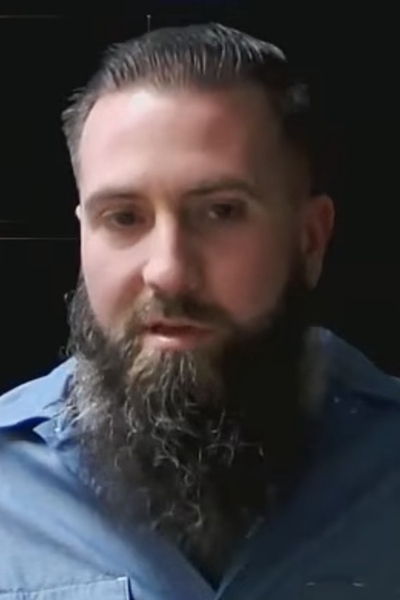
In 2008, Aaron Smith was convicted of four counts of armed robbery with threat of force, a count of burglary and a count of attempted armed robbery with threat of force. He received 20 years of incarceration and 15 years of extended supervision for the offenses, which took place between September and November 2007.
Smith said he was 18 years old at the time he committed his crimes and made bad decisions fueled by a drug addiction. He said that early in his incarceration, he didn’t think of his crimes as having victims. While volunteering in a prison program that involved training dogs for PTSD service work for war veterans and people affected by crime, he had the opportunity to work with crime victims, which opened his eyes, he said.
“I remember working with these people and thinking to myself, ‘How did my actions affect these people in my case?’” Smith said. “Did my victims in my case get affected in such a way as the people I was working with?”
A board member questioned Smith about the motivation for his crimes, stating the criminal complaint in his case showed that at the time, Smith had said his motivation was needing money, not addiction. Smith replied that he’d initially lied about his drug use and eventually admitted to having a drug problem and had to complete treatment programs.
Smith was also questioned about a conduct report he received for tobacco earlier this year, asking why he would risk his work release program. Smith called it a “very dumb decision.”
“I’m going to be looking at my freedom, and that potentially being taken away from me if I make mistakes,” Smith said. “So I need to be able to refer back to the treatment that I have and stop and think, go through the scenario. What’s about to happen if I do this?”
Board chair Mel Barnes read an anonymous statement from a victim in Smith’s case, who said that he should not receive a commutation and that they still experience flashbacks, nightmares and hypervigilance. The victim said Smith has the right to file for his sentence to be adjusted but argued that the judge in Smith’s case made his decision carefully, and that Smith’s offenses were not just one impulsive act.
“Aaron Smith obviously believed that robbing people was the easy way, and better than making an honest living,” the victim’s statement said. “I didn’t deserve this to happen to me, but it did because (of) Aaron Smith…I do believe that people can change, and I do believe in second chances. Aaron Smith may have changed his life while in prison, but to me, trying to get out of your prison sentence early doesn’t really show accountability.”
Natalie Murphy

Natalie Murphy, 33, a resident of Taycheedah Correctional Institution, was sentenced on December 16, 2016, in Juneau County for first-degree reckless homicide that led to the death of her boyfriend, Andrew Dammen, 24, and for second-degree reckless endangerment of her oldest daughter. She received a 20-year sentence of incarceration, followed by 10 years of extended supervision.
“I’ve spent every day thinking about all the things that I could have done differently prior to Andy’s death that night, and I can see how all of my unhealthy choices resulted in the loss of Andy’s life and the exposure to toxic and dangerous situations for our daughters,” she said. “While our relationship was far from perfect, Andy was a good father to our child, and I wish more than anything he could have been here for her and for his son Weston.”
Murphy talked about her determination to be a better person, including participating in therapy groups, working on parenting skills, gaining a diploma as a culinary assistant, becoming a certified peer specialist (CPS) and becoming a CPS trainer, completing a four-year personal enrichment course through Moody Bible College, obtaining a paralegal certificate and working toward an associate’s degree from University of Wisconsin-Green Bay.
She said she is working on making her re-entry as “seamlessly as possible.”
“I’ve been focusing on education to better prepare me for re-entry, and on treatment to change the unhealthy aspects of who I am or who I was,” she said, adding, “to learn better ways of interacting with the world.”
Murphy read a letter from her oldest daughter, whom she said is the person most affected by her crime.
“I did this for my own growth, to show my family what’s possible if you put hard work in to succeed upon release, and in order to prove to the children in my life that no bad decision is ever bad enough that you cannot be a better person every day,” she said.”
Asked about her response to her victims other than her children, Murphy said she would apologize, but she is under a no-contact order.
“I have never not been sorry that my presence was harmful,” she said. “No amount of sorry is ever enough. No amount of trying to empathize will ever understand their loss. I can never understand what losing a child is,” she said, adding, “All I can say is that I am exceptionally sorry for their pain that will be with them.”
Asked what accountability meant to her, she said, “There’s saying sorry and then there’s acting sorry. I think everybody can say sorry. I strive to act out my remorse, and I strive to act in such a way that this terrible, terrible thing that has happened, I can do something to help somebody else because of what I had done.”
Zane, Andrew’s brother, spoke against commuting Murphy’s sentence.
“I have spent the past 10 years rebuilding, digging, and fighting to stay afloat,” said Zane. “The ripple effects caused by Natalie Murphy are still being felt to this day.”
He added, “On the day that we got some relief knowing that justice had been served, however, almost a decade later now, I feel as if my family is being suspended over an ocean of sorrow at the whim of a commutation board. Andrew will never get to know his children. He will never have a second chance to be a father due to Natalie’s actions. With this single act, the lives of everyone she touched has been irrevocably destroyed. Children, parents, and friends on both sides of this tragedy will never be the same.”
Andrew’s mother, Kimberly, also spoke against a commutation.
“Over the past 10 years, Natalie has never demonstrated what I believe to be genuine remorse for her actions or accepted responsibility for the reckless homicide of my son,” said Beverly. “To this day, she continues to characterize Andrew’s death as an accident rather than acknowledging her responsibility for what occurred.”
Kimberly expressed concern that if Murphy were released, it would cause “significant conflict and disruption to our family,” including issues of guardianship of the grandchildren and being required to interact with Murphy because of the grandchildren.
Sammy Cole
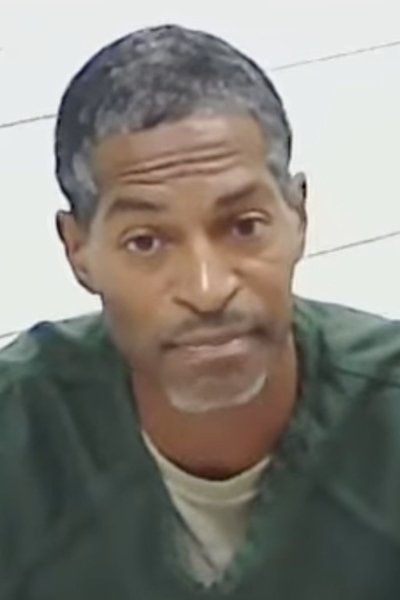
In 2001, Sammy Cole was sentenced to 35 years of confinement and 10 years of extended community supervision after a conviction of armed robbery with threat of force. A charge of possessing a firearm as a felon was read into the case.
The victim in the case had driven with her roommate to an ATM machine to withdraw money, where Cole, wearing a bandanna around his face, pointed a gun at her and demanded money, according to the criminal complaint in the case. After she had trouble getting money out of the ATM, he took cash from her wallet and fled the scene.
Cole told the advisory board that he felt “profound regret and shame.” He said that he was under the “complete grip” of a severe addiction at the time and made a terrible choice. He said that saying sorry is not enough.
“At sentencing I apologized, but that apology was worthless without some action,” Cole said. “I spent my years in prison doing all I can to be a better person, from the very beginning of my incarceration. I didn’t waste no time.”
Cole said he didn’t have a violent conduct report during his incarceration and acquired various job skills. He said that his mission was to address his addiction and the criminal behavior that supported it, and that he took rehabilitative programs.
The victims, he said, were “out to go into their neighborhood to an ATM machine and to get money out of their account, and they was expecting not to have any harm come upon them,” Cole said. “…My sisters (were) highly upset with me that I committed this crime, and it hurt them, as females.”
Cole said that the crime was a choice he made, because “not all drug addicts go to the extreme.” He said that “somehow, they find a way, but I didn’t find that way,” and that he was deeply sorry.
One board member asked Cole about a 2016 conduct report, where it appeared Cole had been reprimanded for drinking wine, and asked about addiction and recovery and what Cole had learned from that incident.
Cole said he previously thought that he could still drink a beer or smoke marijuana after he got out of prison because those substances didn’t cause him the type of problems that led him to prison, but he said this wasn’t the case. He said he didn’t have a chance to drink the wine, and that it was taken out of his room.
“There will be no beer drinking…I don’t have the strength, as guys in (Narcotics Anonymous and Alcoholics Anonymous) tell me, that it could be a gateway to going right back to heroin,” Cole said. “But I strongly don’t believe heroin would ever seize me ever again.”
Michael Maldonado

Michael Maldonado, 47, a resident of Kettle Moraine Correctional Institution, is serving a life sentence for the 1994 killing of Ruben Borchardt, when he was 15. Two other boys also received lesser sentences because Maldonado was named as the shooter, but after the others were paroled from prison, one of two, Douglas Vest, said that he had been the shooter. As a result Maldonado’s sentence was modified in 2025, pushing up his eligibility for parole from 2044 to 2025.
(Read more about Maldonado’s potential commutation in the Examiner)
Maldonado talked extensively about interacting with Borchardt’s family after his sentence modification hearing on October 9, 2025:
It was clear to him, he said, that the family continues to suffer from the loss he inflicted on them and that they continue to miss Borchardt every day.
Maldonado said when he was sent to prison at age 16 he had made up his mind to “make the most of a bad situation and do my best to honor all the victims left in the wake of what I had done.”
He recounted taking advantage of several educational opportunities and volunteering to frame houses for Habitat for Humanity, speaking with at-risk youth, and training dogs for the disabled.
He noted that he had completed an associate’s degree with 4.0 average and been accepted into the bachelor’s program at the University of Wisconsin-Green Bay.
Maldonado also described an extensive support system for his re-entry (including housing, employment, and legal assistance) in Wisconsin and Texas, where most of his family lives.
“In my over 30 years of incarceration, I have done my best to identify and acknowledge my faults, and I have actively worked on them in attempts to make myself a better person in the process,” he said. “I have worked to give back to the community, and I have learned so much from those opportunities.”
Christopher Smith
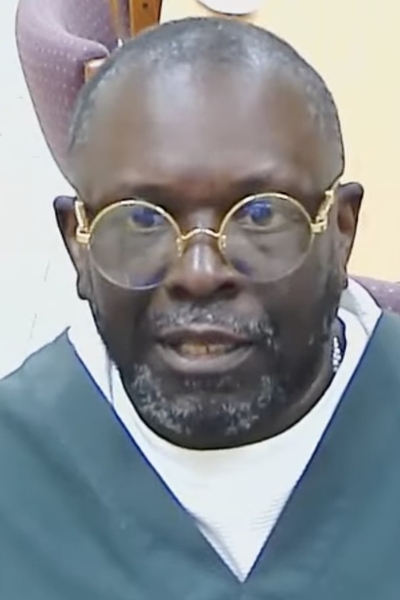
In 2002, Christopher Smith was sentenced to 45 years of incarceration and 15 years of extended supervision in the community after he was convicted on three counts of armed robbery with threat of force. He was convicted as a party to the crimes, indicating that he provided aid or conspired to commit the crimes.
A Court of Appeals opinion dated February 7, 2006 denied an appeal from Smith, stating that the trial court’s sentence was not unduly harsh. The opinion states that the trial court described the armed robberies as “‘appalling crime[s] against each of these victims,’ who had been planning their mother’s funeral, and were then confronted by armed robbers.”
“Each perpetrator threatened each victim with a gun, and demonstrated little patience or humanity in robbing each victim,” the opinion states.
At sentencing, the trial court counted “the negative aspects of Smith’s character” against him, the opinion states. The court said Smith repeatedly attempted to deflect blame, “characterizing him as manipulative, ‘conniving,’ and ‘slick’ and found his “different versions of the robberies and his shifting degrees of involvement” to be unbelievable.
The 2006 opinion states that the trial court was convinced Smith’s “character defects and his brazen attitude required prison because he was ‘a riskier proposition in the community.’” The court had the right to consider Smith a greater community risk because Smith failed to use opportunities for rehabilitation and had returned to criminal behavior on parole, the opinion states.
Because of the evidence in the case, the trial court considered Smith to have more culpability than his accomplices “‘as the ringleader,’” the opinion states.
At the hearing, Smith said he thanks God that none of the victims were hurt. He said that no weapons were used and no one was injured, but that he caused the victims hurt, shame and disappointment by his actions. He described his role as being tossed a victim’s fur coat and fleeing the scene.
Smith said he’s completed restorative justice programming that gave him insight into the ripple effects of his actions upon others and the harm he caused.
Cindy O’Donnell, the board’s vice chair and a former deputy secretary of the Wisconsin Department of Corrections, questioned Smith. He said he accepted responsibility for causing the victims harm. When asked to specify what he was accepting responsibility for doing, he said that he participated in the crime when he knew better, by taking the coat and fleeing the scene.
Another board member said that Smith said in his application for commutation that it was not his decision to take part in the act, and asked for him to explain. Smith said it was a spur of the moment decision. He said he didn’t know what was going on, was tossed a coat, panicked and ran.
A board member said it appeared that one of Smith’s co-defendants had a gun, and asked Smith whether he knew that that person had the gun before the armed robbery.
Smith said property was taken forcefully but argued that he did not see a gun and that a gun was not found.
Daniel Cerney
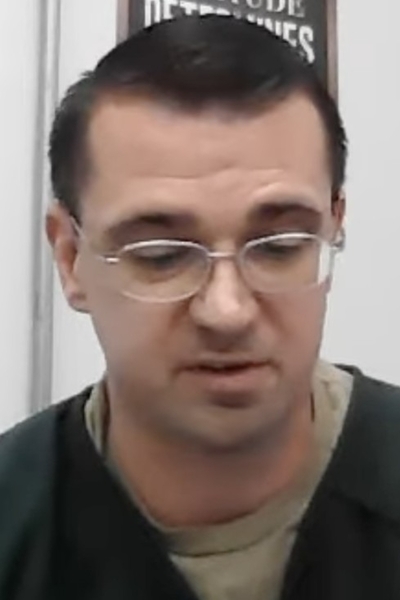
Daniel Cernye, 43, a resident of Dodge Correctional Institution, was sentenced to two concurrent life sentences for the 1999 shooting deaths of Wiliam Leis, 51 and his 85-year-old mother, Evelyn Leis, when Cerney was 16, and he was also sentenced for burglary armed with a dangerous weapon and theft of movable property.
At the hearing, Cerney said he shot William but that an accomplice, Jimmy Grimes, killed Evelyn.
“I shot William Leis, and I take full responsibility for my actions,” he said. “I say that Jimmy told me what to do, but at the end of the day, I made my own decision to pull the trigger. I could have made a different decision. I could have even helped Evelyn. Until this day, I do not understand why I would take someone’s life, but now I see how selfish and influenced I was. It took something that tragic to show me how much I value life, and I never want to follow those types of influences ever again.”
He added, “I can never express how sorry I truly am, and every choice and decision I made that day, that night, changed many lives, even my own family.”
He recounted talking to victim family members via the restorative justice project and learning how they had been affected, including trauma and depression.
He also described his efforts to rehabilitate his life through educational opportunities and required programming that included talking with family members. He described how one of the victims’ family members, Mary Rezin, met with him and prayed with him, and later, after he had served 17 years, forgave him.
He recounted volunteering in the Journey Together Dog Program, training dogs for the disabled, which helped him find purpose in life.
“One of the biggest things I learned in this program was that it wasn’t about me anymore,” he said. “It was about the dog and the client. I was a part of training two service dogs for military veterans who were diagnosed with PTSD. Being a part of those trainings and watching the client and dog mold together was the reward for me.”
He also became a mentor to other incarcerated people, sharing his experience on how to make better decisions.
“Being in all of these rehabilitative programs has taught me coping skills, communication skills, and many others. I have learned to communicate with staff,” he said, adding, “It doesn’t matter what the name of the program is; they all have tools to help us become better people and make better choices. And I’m grateful for the programs and education I have taken because they put me in situations where I needed to communicate, learn, grow, and treat everyone with respect.”
His re-entry plan includes living at a cottage his mother and stepfather own and obtaining work.
He finished by offering his perspective on his life.
“When I committed the crime, I was a different person than who I am today,” he said. “Today, I am a new self, and I love and trust my new self. Mary helped me accomplish that. And through these 27 years since I committed my crime, I have changed.
Cerney was asked how he would face strong feelings from the public if released.
“Everyone can have an opinion of me, and I respect it,” he said, “but first and foremost, I will never ever put myself in a position to harm someone else or think bad of someone else. I’m just willing to foster my own behavior and show everybody who I am, now, today.”
A statement by Brittany, Mary’s granddaughter was read saying that Mary believes Cerney is a changed person who should be given a second chance.
Amanda Weaver
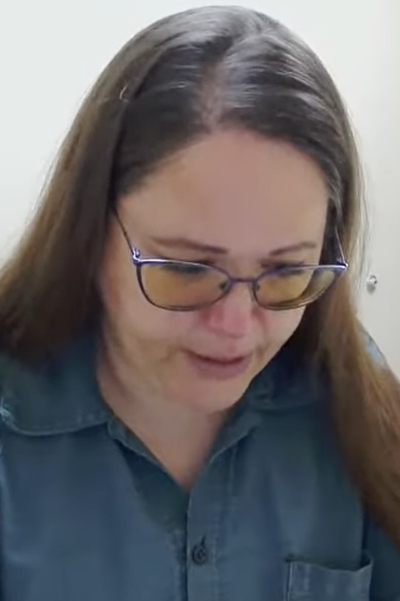
In 2008, Amanda Weaver was sentenced to 30 years of incarceration and 20 years of extended supervision in the community, after being convicted of five counts of burglary. She told the board that she and others broke into businesses and churches to steal “money, alcohol and anything else that would bring more money.”
She said this occurred over a three-month span of time and that the group quickly went from smoking weed and drinking to using hard drugs. She said that she’d denied a leadership role in this for many years but was the oldest of the group and had a record with burglaries, and that she supported the group’s behavior rather than curbing her own actions and trying to influence those younger than her to curb theirs.
“That behavior brought loss to others, not just the obvious financial losses, but the sense of safety and trust these people had in their community and the people living in it,” Weaver said. “That trust and sense of safety is something I cannot pay back with restitution or an apology.”
Weaver said she was motivated to start seeking real help. This led her to complete groups, schooling and therapy that are mentioned in her application for commutation, she said. She said she participated in about 40 groups, was valedictorian of her high school equivalency diploma class, and worked toward two associate’s degrees in business and ongoing intensive therapy for almost two decades.
“It is with the tools I have gained over the years that I will re-enter society as the rehabilitated and very much changed person I have become,” Weaver said.
Demian McDermott
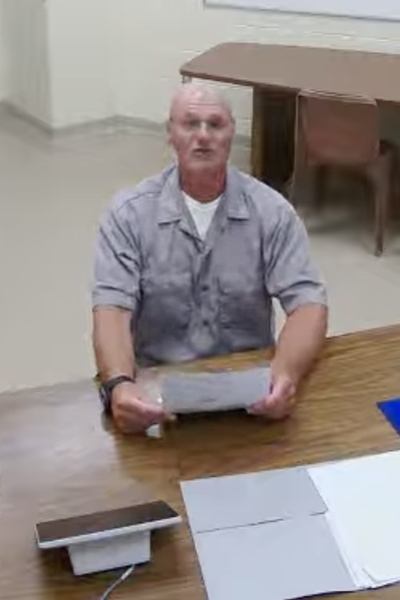
Demian McDermott, 53, a resident of the Winnebago Correctional Center, received a life sentence for the October 13, 1990 killing of Francisco Questell in Milwaukee. At the time McDermott was 18. He has spent the last 36 years behind bars.
“The ripple effect of my actions had a profound negative impact on my community as well,” he said. “Young men like me, who had no thought for the consequences and after-effects of our selfish actions, were a plague on our neighborhoods and surrounding communities. This crime did not end with the premature death of one person, but impacted the lives of everyone connected to him, to me, and changed the way people in the community felt about safety, trust in one another.”
At 25 years into his incarceration at Green Bay Correctional Institution, McDermott said, a social worker recognized that he wasn’t able to maintain the “façade” that others were to blame for his crime, and encouraged him to join a program to reach at-risk youth. Working in that program required McDermott to be honest with himself, he said.
He talked about being sober for 28 years, earning an associate’s degree from Ohio University, working toward a bachelor’s degree, completing five vocational programs, and participating in three restorative justice programs.
He said that he had always been employed during his incarceration and had never been fired, and talked about his experience training dogs to help the visually impaired.
“Over the past 30 years, I have spent time in here as constructively and positively as possible, so I could grow in evolving to be a better person,” he said.
He talked of his re-entry plan that included a supportive family that would provide housing in Madison, and he said there were accounts set up for him to help purchase a vehicle and clothing and to cover other needs. He also said he had work opportunities including working as a dog trainer.
“I fully understand that nothing is guaranteed in life,” he said, adding, “I have prepared myself to the best of my ability to not only survive, but thrive out in society and contribute in a positive way. I believe we live in a society that gives me second chances, but they are not an entitlement. I needed to earn one, not expect one.”
Raquel Questell, Francisco’s sister, spoke against offering McDermott a commutation.
“Since October 13, 1990, when my brother went missing, it destroyed my family’s heart, mind, and soul,” she said. “Getting the news on October 17, 1990, at the tender age of 16, was something I would have never imagined could happen, let alone in the manner he was murdered. I am here to express the agony, just knowing the possibility that Damian can be released due to the new law of the juvenile life sentence commutation that became effective April of 2026. My brother’s life is more precious than just 36 years. Damian was the ringleader to my brother’s death. He planned a day to pick up my brother since my brother did not have a car. He found a person to give him a gun.”
Francisco’s niece, Ms. Torres, who had never met her uncle, also spoke out against granting McDermott a commutation.
Lawrence Northern
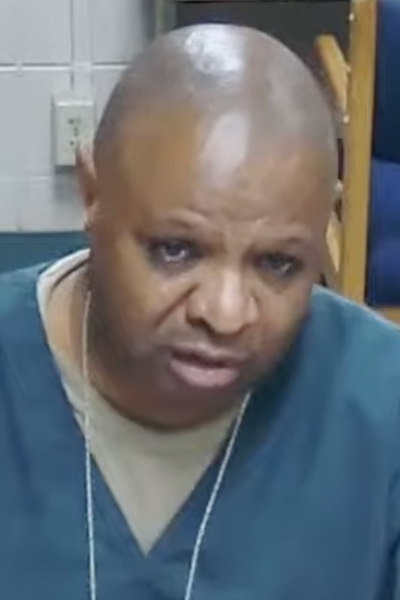
In 2002, Lawrence Northern was sentenced to 30 years of incarceration and 10 years of supervision in the community for one count of possessing cocaine with intent to manufacture, distribute or deliver, and one count of being party to a crime. Northern told the board that he accepts full responsibility for his crimes without minimizing their seriousness.
“My actions were wrong and harmful,” Northern said. “Selling drugs is not a victimless crime. It damages individuals, tears families apart, and negatively impacts communities.”
Board member Maryann Sumi, a former Dane County Circuit Court judge and chair of the Wisconsin Ethics Commission, said the list of programs and opportunities that Northern had taken was impressive. She asked him about a specific course that focused on change from within.
Northern said that growing up, he developed a defense system and coping mechanism “that was grounded on everything wrong, believing that it was necessary to survive the streets of Chicago.”
“And so after taking that course, upon reflection, it brought me back to the core values that my mother taught me,” Northern said. “And that was to accept life on its terms, not run from them. Accept them.”
Sabir Wilcher
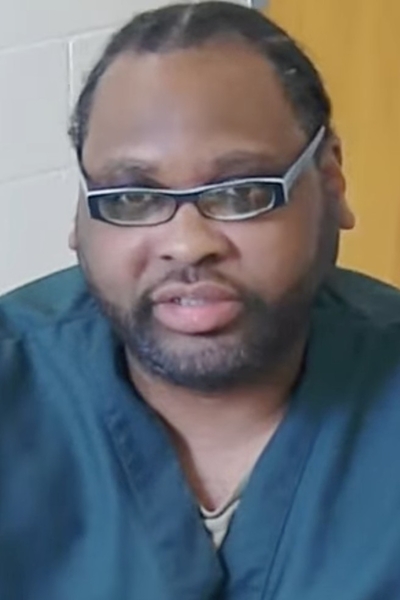
Sabir Wilcher, 46, a resident of Oakhill Correctional Institution was given a life sentence in 1995 when he was 15 for the killing of Elvis Anderson, 20, in Milwaukee. He has been incarcerated for 31 years.
“I can’t begin to imagine the impact of what I did to his family and the community,” Wilcher said of murdering Anderson. “To this day, I know that his family still feels the impact of their loss. Not being able to sit with him, hug, laugh, cry with him has to be a draining and sickening feeling. And I am truly, truly sorry for the pain I’ve caused them. One of the things that pains me the most is knowing that I’m the reason Mr. Anderson never got a chance to see his son grow into a man that chose to forgive the person that took his father away from him.”
Wilcher said the last 31 years have been “hard,” but he has also learned by being involved in the restorative justice program that helped him understand the impact of his actions and by taking vocational training and obtaining a bachelor’s degree from Trinity University.
He said he’s had many jobs in prison, including being the head baker and noted one of his goals on the outside is to gain more experience and operate his own bakery selling fresh baked products and helping youth learn skills that are alternatives to street life and selling drugs.
“I’ve done a lot of work trying to rehabilitate my mind from an impulsive and impressionable 15-year-old to the man that’s addressing you today,” he said. “There were a lot of turning points in my life that made me want to change. When I first came to prison, I found myself still following behind the wrong group of people and giving the wrong people my loyalty.”
He said a time in solitary confinement caused him to reflect on his life, stop blaming others and take responsibility for his life
“I always blamed everyone but myself for being in prison, as well as everything that’s ever happened to me, I blamed God. I blamed my parents for being addicted to crack and not being there for me. I blamed the other, the older guys that I looked up to, that put me in the drug houses, that ordered me to kill Mr. Anderson,” he said. “However, now I know that only children blame other people for their own mistakes, and being a man means making my own decisions and owning up to the mistakes that I make in life.”
He was asked why he got in trouble in prison in 2022 for a new tattoo and in 2023 for using intoxicants, and he explained those years had been at a low point in his life and he was feeling alone, and then family members became involved in his life, including his mother and siblings, and people helped him to choose a better path.
Wilcher recounted that when Anthony Anderson forgave him that he cried for the first time in prison.
“I didn’t expect that from anybody, especially not my victim’s family, and for me that was a powerful moment of my life,” he said.
The Commutations Advisory Board will hear the cases of another 12 incarcerated people on Sept. 18.

Madison, WI