Fishermen question LNG industry’s efforts to boost Louisiana fisheries
Sep 23, 2026 | 5:00 am ET
Description
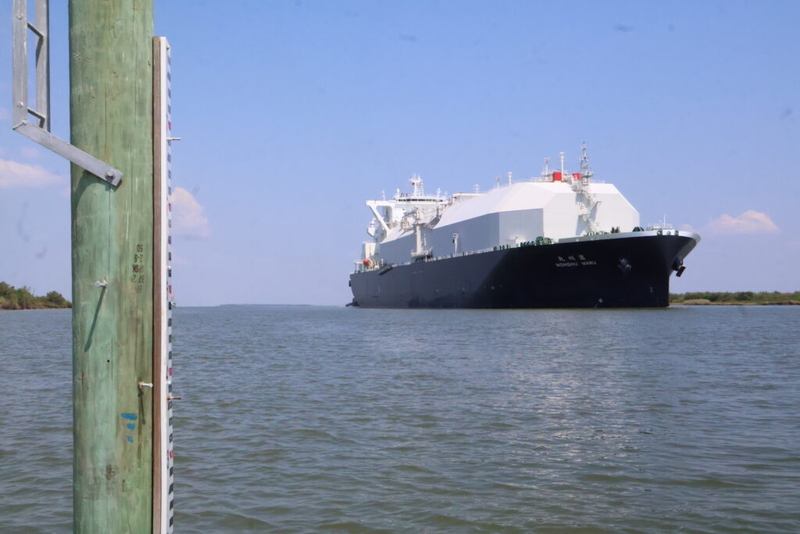
A liquified natural gas tanker travels into Calcasieu Lake. (Photo by Elise Plunk/Louisiana Illuminator)
Two major players in the liquified natural gas industry in Louisiana covered part of the cost of a recent restocking of redfish in coastal waters, but fishermen are skeptical about whether it will be effective. They’re instead calling for more investment in marshland restoration.
The Louisiana Department of Wildlife and Fisheries released 150,000 redfish on Sept. 18, with young, hatchery-raised fingerlings in the Rigolets just outside New Orleans, near Grand Isle and in West Cove, adjacent to Calcasieu Lake.
The releases were funded in part by the joint venture Cameron LNG, which operates a large export terminal along the Calcasieu Ship Channel, and Sempra Infrastructure, the company that has a controlling interest in the facility. Restocking costs amounted to about $6 per fish, according to The Times-Picayune, which would total $900,000.
The Coastal Conservation Association of Louisiana and the nonprofit Recreational Fisheries Research Institute organized the restocking, which also had financial support from Air Products, the American Fishing Tackle Co. and Jefferson Parish, according to the report.
Commercial and charter fishermen who traverse Calcasieu Lake and surrounding marsh for their living say that while the release is a nice gesture from Cameron LNG, efforts from the industry to improve the environment near the export facilities should go further.
“They didn’t have to, so we all appreciate it. But although it’s appreciated, we need more of it,” Justin Lyons, a fishing guide from Cameron Parish, said about the redfish release.
Lyons said more investment in coastal restoration in the area would help young fish from restocking efforts survive and grow.
“Habitat replacement, I feel, is more important,” he said.
Asked for comment on the fishing community’s reaction, Cameron LNG issued the following statement:
“Calcasieu Lake is part of the fabric of this community, and redfish are an important part of what makes Southwest Louisiana such a special place to live and work. Cameron LNG is proud to support an effort that is happening right here in our backyard that could help strengthen the fishing industry in the area.”
Fishermen in Southwest Louisiana have butted heads with LNG companies, attributing the industry’s boom to a decline in the ecosystem’s health. They blame construction of export facilities and constant traffic from LNG transport vessels for deteriorating the marsh habitat where fish, shrimp and crabs live.
Some of the conflicts have erupted into legal action.
Commercial fisherman Eddie LeJuine is a plaintiff in a lawsuit filed July 30 in Cameron Parish against Venture Global, which operates an LNG export facility on Calcasieu Pass and is building another facility next to it. The lawsuit alleges dredged mud from the construction site spread beyond where it was permitted to be dumped, killing oysters and harming seafood catch in the area.
Dredge material is supposed to be used to restore 260 acres of surrounding wetlands per its permit with the Louisiana Department of Conservation and Energy. But plaintiffs in the lawsuit against Venture Global say the work is building dry land instead of marsh and not addressing the problem of disappearing estuaries.
LeJuine said the LNG industry’s recent investment in replenishing redfish numbers is miniscule when compared with its earnings.
“They’re good at giving back, oh, $20,000 worth of this or that and taking $20 million, you know,” LeJuine said, speaking to the amount of money LNG companies make from Louisiana exports.
Venture Global, which also has an LNG facility in Plaquemines Parish, reported net income of $2.3 billion in 2025, according to its annual report. The company did not respond to emails or a call seeking comment for this report.
Sempra Infrastructure, a subsidiary of the energy and utility company Sempra, recorded $160 million in losses last year.
LeJuine said recreational anglers, fishing guides and commercial harvesters often find themselves at odds with one another, but they agree on one point: The wetlands around Calcasieu Lake need restoration that isn’t happening like it should. Without sustainable marshlands, the newly released redfish won’t have the habitat and food supply they need, he said.
“If they turn them loose into anything with any depth … where the sharks are, they’re probably gonna get eaten,” he said.
Meaningfully addressing larger issues with restoration work in the Cameron Parish marshes would go a long way with local fishermen, Lyons said. He hopes to see more LNG companies put money into rescuing the coastal wetlands.
“If they did things like that, creating edge habitat, creating reef habitat, it would be really hard as a fishing guide to be mad at them while you’re catching fish off of the stuff they built,” Lyons said.
Baton Rouge, LA