Fifty for 150: Court in 1996 shuts down anti-LGBTQ amendment that made Colorado ‘the hate state’
Jun 11, 2026 | 6:10 am ET
Description
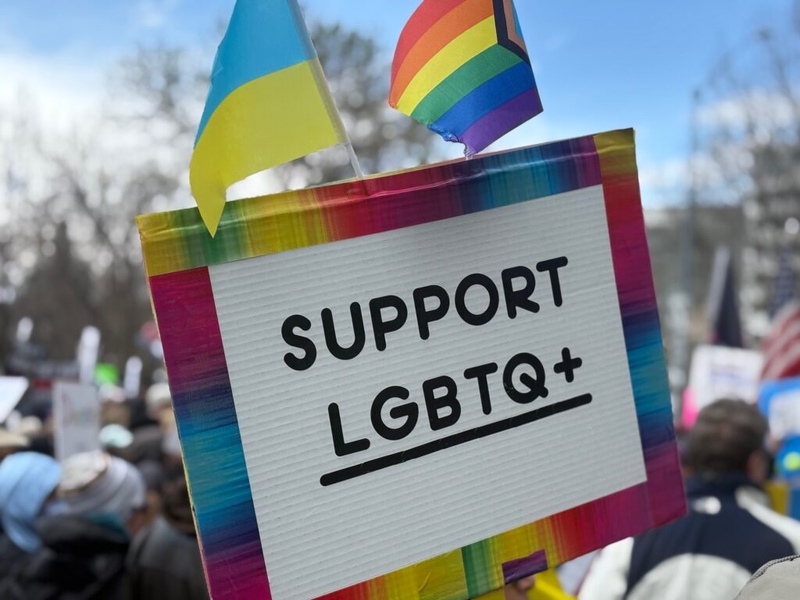
A person holds a "Support LGBTQ+" sign during a rally at the Colorado Capitol in 2025. (Quentin Young/Colorado Newsline)
A voter-approved constitutional amendment that prohibited local governments in Colorado from banning discrimination based on sexual orientation prompted a national boycott and gave Colorado the infamous nickname “the hate state.”

This story is part of Colorado at 150. Each Fifty for 150 story focuses on an event that helped define Colorado over 150 years of statehood. Newsline is publishing one Fifty for 150 story every weekday in reverse chronological order until the sesquicentennial, Aug. 1, when the final of 50 stories, about the declaration of statehood, will appear.
But on May 20, 1996, the U.S. Supreme Court struck down Amendment 2 in the Romer v. Evans case, saying the law violated the equal protection clause of the 14th Amendment to the U.S. Constitution. The ruling said the state amendment was “born of animosity” toward LGBTQ+ people.
Richard Evans, a gay man who worked for the Denver mayor, sued the state, with then-Colorado Gov. Roy Romer named as the defendant. Romer, a Democrat, opposed Amendment 2 when it was on the ballot.
Multiple Colorado municipalities had banned discrimination “based on sexual orientation in housing, employment, education, public accommodations, health and welfare services, and other transactions and activities,” which led conservative religious groups in Colorado Springs to write Amendment 2. In November 1992, 53% of Colorado voters approved the amendment, which preempted all local ordinances.
The 6-3 Supreme Court ruling became the first of many decisions from the country’s highest court regarding protections for LGBTQ+ people in the U.S. Jean Dubofsky, the lead attorney who argued the case before the Supreme Court, also served as deputy attorney general in Colorado and was the first woman to serve on the Colorado Supreme Court.
Colorado has come a long way from its time as the hate state. Gov. Jared Polis, elected in 2018, became the first openly gay man to serve as a state governor in the U.S. The state Legislature has passed numerous laws adding protections for LGBTQ+ people, including a shield law that protects people who travel to Colorado for gender-affirming care from prosecution in other states.
But Colorado has also seen court cases challenging many of those laws reach the Supreme Court, with the conservative majority shutting down several protections in recent years in favor of Christian plaintiffs who say state laws violate their First Amendment rights.
Most recently, the court ruled Colorado’s ban on conversion therapy may violate the free speech rights of a Christian counselor. Other rulings said a Colorado web designer does not have to make websites for same-sex couples, and a cake shop owner could deny a same-sex couple a wedding cake based on religious beliefs.
In 2006, Colorado voters approved another anti-LGBTQ+ amendment that stated “only a union of one man and one woman shall be valid or recognized as a marriage in this state.” The provision became inoperative after the 2015 Supreme Court decision in Obergefell v. Hodges legalizing same-sex marriage nationwide, and Colorado voters repealed the language in 2024.
Denver, CO