Feds jump in after battle over prediction market regulation hits Rhode Island
May 28, 2026 | 4:51 pm ET

Description
A laptop displays Kalshi’s homepage featuring prediction odds on the winner of the men’s French Open. (Photo by Christopher Shea/Rhode Island Current)
Add the federal agency overseeing prediction markets to the list of antagonists seeking to supersede the state of Rhode Island’s authority to regulate online platforms that allow wagering on everything from politics to sports.
The Commodity Futures Trading Commission (CFTC) on Thursday moved to intervene in the federal lawsuit Kalshi filed against Rhode Island last week. The five-member commission, appointed by the president to oversee futures trading and financial technology, argues the agency alone has the authority to regulate online betting on national and world events.
“This lawsuit is about whether Rhode Island state officials can usurp the CFTC’s jurisdiction and enforce state gaming laws against federally regulated exchanges in connection with the listing of federally regulated event contracts,” the commission’s filing states.
The motion came a week after Rhode Island Attorney General Peter Neronha filed his own lawsuit in Providence County Superior Court asking the court to declare companies such as Kalshi and Polymarket as effectively sports betting businesses operating without state approval. Just hours before Neronha’s complaint was filed, Kalshi filed suit against the state in U.S. District Court for the District of Rhode Island, claiming its business activity does not fall under state gambling laws because its event-based contracts are assets traded between its users on a federally regulated exchange.
The CFTC took a similar position in a statement issued Thursday afternoon.
What are the odds? Dueling lawsuits filed on prediction markets in state and federal courts.
“Event contracts allow businesses and individuals to hedge event-driven risks, enable investors to manage portfolio exposure, and provide the public with information about the outcome of future events,” said Commission Chairman Michael S. Selig.
Because prediction markets fall under federal trading regulations, the CFTC argues that only it has authority to take enforcement action against companies like Kalshi. The commission also contends that if the state is allowed to enforce its gambling laws, designated contract markets and the derivatives products they offer could become unavailable within Rhode Island’s borders.
“That would effectively cripple the CFTC’s ability to approve such exchanges and financial products for listing in the state of Rhode Island and, more broadly, would undermine the CFTC’s mandate to ‘promote responsible innovation and fair competition’ in American derivatives markets,” the commission’s motion states.
Neronha said in a statement to Rhode Island Current that his office remains confident in its case against prediction markets.
“We allege that Kalshi and Polymarket are operating outside of our sports betting laws, and ultimately, Rhode Islanders will be footing the bill for their actions,” he said. “Federal intervention in this lawsuit doesn’t change that.”
A spokesperson for Kalshi did not immediately respond to a request for comment on the federal intervention against the state.
Patrick Kelly, a professor of accountancy at Providence College who studies gambling, was unsurprised to see the CFTC step in.
“Historically they have been the regulators of these types of prediction markets,” he said in an interview.
The commission has also challenged efforts by other Democratic-led states to ban sports- and election-related betting on Kalshi and similar platforms, filing lawsuits against Arizona, Illinois and Connecticut in April.
The commission has also taken legal action against Minnesota, New York, and Wisconsin. In a social media post Tuesday, President Donald Trump said it was critical that the commission’s exclusive jurisdiction over prediction market regulation is maintained.
“Under my leadership, we are setting ‘rules of the road’ that are the Gold Standard for the States,” he posted.
At stake for many states is tax revenue from permitted gambling within their borders being siphoned off by online prediction markets, which are not subject to state gaming rules.
Online traders do not bet against the exchange — as gamblers do against the house in a casino. For prediction markets, their profits come from transaction fees placed on contracts for events such as baseball games.
“There are times when the sports betting platforms have a bad day, the prediction markets never have a bad day,” Kelly said. “All they’re looking for is the activity.”
No matter the outcome in Rhode Island’s U.S. District Court battle, Kelly predicts any decision would likely be appealed.
“This is a high-profile issue,” he said. “These will be highly contested in courts because there’s so much at stake.”
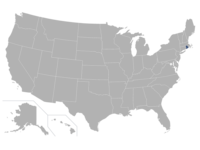
Providence, RI