Federal staffing deficits ‘negatively affected’ Southern Nevada VA, report says
Feb 13, 2026 | 8:00 am ET

Description
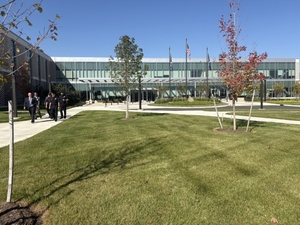
The North Las Vegas Medical Center is the VA Southern Nevada Health Care System's main campus. (VA Southern Nevada photo)
Staffing shortages, anticipated reductions in force, and limited participation from community specialty providers are affecting daily operations and patient care at the Southern Nevada VA, according to a Veterans Affairs independent oversight agency.
The U.S. Department of Veterans Affairs’ Office of the Inspector General (OIG) physically inspected the Southern Nevada VA on April 29 through May 1, 2025. The findings, published Feb. 3, are based on a facility-wide questionnaire, VA survey scores, patient advocate data, and interviews with leaders and staff.
The Trump administration has prioritized shifting the VA’s budget to the Veterans Community Care Program (VCCP) and cutting staff, moves which some Democratic lawmakers labelled as the privatization of veterans health care.
VCCP’s predecessor, the Veterans Choice Program, started in 2014 to expand medical access to those waiting over 30 days for an appointment and to save veterans from having to travel long distances, often out of state, for medical care.
The report highlights how the problem of veterans having to travel for specialized care has come full circle.
A large group of local urologists, the report said, left the community care program “due to the significant amount of paperwork VA requires to approve additional care needs.” The delayed urological and oncological access negatively affected veterans’ care, Southern Nevada VA Chief of Staff Ramu Komanduri told the OIG.
The corrective measure given to fill the gaps of lack of specialty community care at the Southern Nevada VA is to coordinate with the Veterans Integrated Service Network “to provide care through telehealth or at other VA facilities, sometimes out of state.”
Though Komanduri requested and received approval to increase payment rates to attract more providers to community care, many still declined due to administrative requirements, the report said.
Current and retired VA medical workers, including nearly 100 physicians, sent an open letter to VA Secretary Doug Collins in September 2025, calling attention to the workforce reductions and the “rapid growth of purchased (community) care that threatens to divert resources” from VA healthcare. The medical workers noted that they support community care, but their concern “is ensuring that policy and spending decisions are driven by veterans’ needs, not vendor incentives or market pressures.”
In Washington, the House voted to approve the Military Construction, Veterans Affairs, and Related Agencies Appropriations Act that will fund the VA for FY26. The bill funds community care at $33 billion, a 50% increase from FY25, which House Democrats labeled as Republicans privatizing veteran healthcare.
Nevada Democratic Reps. Dina Titus, Susie Lee and Steven Horsford voted against the bill. Republican Rep. Mark Amodei voted in support.
The appropriation bill passed the senate with support from Nevada Sens. Jacky Rosen and Catherine Cortez Masto.
DOGE and doubts about working for the VA
Vacancies for seven providers, four registered nurses, and five licensed practical nurses were reported by the primary care administrative officer. According to the report, some applicants declined offers due to concerns about the stability of government employment. The report noted that five physicians who had at first accepted job offers “ultimately decided not to take positions because of these concerns.”
These reported stability problems only compound the difficulty Southern Nevada VA executives have filling the positions already. Nevada has one of the lowest ratios of health care providers per resident in the nation, then- Acting Executive Director Michael Kiefer told the OIG, and the VA hospital competes with the private sector, which typically offers better wages, for providers.
Gutting VA staff has been a stated objective for the Trump administration since taking office last year. Over 2,400 VA workers were fired by Elon Musk’s now defunct Department of Government Efficiency, known as DOGE, initiative in February 2025, but the bleeding did not stop there. The VA announced that the agency was on pace to reduce staff by 30,000 employees by the end of FY25 through federal hiring freezes, deferred resignations, voluntary early retirement and normal attrition.
Southern Nevada VA leaders raised concerns in the report about staffing losses as “500 of the facility’s approximately 3,600 staff met criteria for the voluntary early retirement program”—a 14% potential loss of staff while new hiring has stalled.
Though VA Secretary Collins testified before a Senate hearing in May 2025 that “no one has discussed firing doctors or firing nurses,” the top positions that requested deferred resignations are nurses, medical support assistants and social workers, according to data shared with NPR.
A respondent to the OIG’s staff questionnaire said that serving veterans was “the most fulfilling” part of their long healthcare career, but that “staffing changes have been very challenging over the past two years.” The uncertainty of federal employment “causes them significant stress and results in burnout.”
Veterans in Southern Nevada feel the stress too. Over 243,000 veterans were assisted in 2024, but enrollments increased the following year due to the financial climate in the area, Chief of Staff Ramu Komanduri told inspectors. The VA uses clinical resource hubs to provide coverage in case a clinic does not have the staff or is over patient capacity, often through telehealth video exams.
Although the Southern Nevada VA referred over 2,100 patients in FY25 to the clinical resource hub in order to fill gaps in coverage, wait times for new patients “increased from 38.5 days in FY24 to 42.7 in the first three quarters of FY25.”
Executive leadership told the OIG that infrastructure issues such as broken air conditioners, aging medical equipment and water leaks “also negatively affected the facility.”
Still, the facility received a five-star rating from the U.S. Centers for Medicare and Medicaid Services in 2025, and the OIG noted that “patient advocate staff are responsive to veterans’ concerns, including long appointment wait times.”
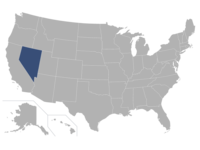
Las Vegas, NV