Federal regulators approve NorthWestern proposal for new Colstrip shares
Mar 02, 2026 | 7:16 pm ET
Description
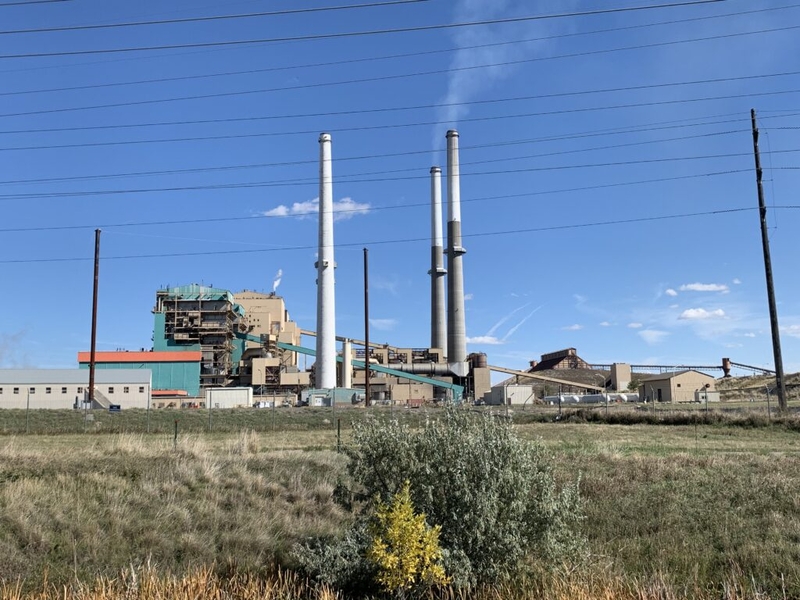
Colstrip Power Plant (Photo by Darrell Ehrlick of the Daily Montanan).
Federal regulators approved a proposal from a NorthWestern Energy subsidiary to use its new Colstrip shares from Puget Sound Energy for sales on the wholesale market.
Opponents of the deal had raised concerns it would mean existing customers would end up subsidizing costs, such as for fuel and maintenance, of the new shares.
They also argued the transfer of shares itself required approval by federal regulators, a step monopoly utility NorthWestern Energy had skipped.
In the order, however, the Federal Energy Regulatory Commission said the value of the transaction — $0 according to Puget Sound and NorthWestern Energy — was lower than the $10 million threshold that requires federal approval.
FERC said it found evidence that showed the book value of the shares was $0, and Puget Sound couldn’t find any other bidders for its share of the coal-fired plant at Colstrip anyway.
As for the concern captive customers might have to pick up the tab for costs tied to the new subsidiary, FERC found that matter to be under the jurisdiction of the Montana Public Service Commission.
“The Montana PSC can, through its retail rate authority, protect NorthWestern’s captive retail customers from any improper cost shifts,” the order said.
The Montana Environmental Information Center, a conservation and energy watchdog, intervened in the case, and the center’s Anne Hedges said FERC’s statement that customers should look to the PSC for protection is worrisome.
“That’s a little unnerving considering how much they’ve raised rates in recent years,” Hedges said. “They side with NorthWestern almost indiscriminately.”
In the most recent rate case, the PSC chastised NorthWestern Energy for the way it built a methane fired gas plant, the Yellowstone County Generating Station. However, it approved the plant anyway for $246 million, less than the $289 million the monopoly wanted, but with customers on the hook for the bill.
The case before federal regulators came more than a year after NorthWestern Energy announced in July 2024 it would acquire Puget Sound Energy’s 370 megawatts of the Colstrip plant on Jan. 1, 2026.
That deal, plus the acquisition of Avista’s 222 megawatts, also on Jan. 1, makes NorthWestern a 55% owner of the plant.
When it announced the deal, the monopoly utility said the additional power would provide a benefit to existing customers.
However, late last year, NorthWestern said the new shares would go to a new subsidiary, Colstrip 370 Pu LLC — an entity it alleges is outside the control of the Public Service Commission.
In December, the Public Service Commission called on federal regulators to investigate NorthWestern Energy for evading the law in shifting shares to the shell company, but it quickly withdrew its filing, alleging unspecified errors.
At the same time, the PSC voted to open its own investigation related to NorthWestern’s agreement to acquire the shares. Monday, PSC spokesperson Jamey Petersen said staff are working on finalizing a draft Notice of Investigation for consideration by the Commission.
The federal case had drawn interest from Montana’s Congressional delegation, Gov. Greg Gianforte, Attorney General Austin Knudsen, and others, including a call on FERC to move quickly so as not to create uncertainty for NorthWestern.
Gianforte, for example, urged federal regulators to approve the NorthWestern subsidiary’s filings, arguing in part regulatory delay “presents real risks to Montanans.”
“NorthWestern is obligated to take its share of Colstrip’s output, yet without timely Commission action, it lacks certainty regarding its ability to market that power,” Gianforte said.
Recently, a couple of members of the Montana Public Service Commission weighed in independently, arguing Montanans still needed representation in the matter, even if the rest of the PSC decided to sit it out.
The PSC is made up of five commissioners elected by district, currently all Republican.
Commissioners Brad Molnar and Randy Pinocci argued Montanans would “enjoy the lowest energy rates in the nation” if federal regulators turned down NorthWestern’s proposal and ensured the new Colstrip shares would benefit existing ratepayers.
“But … if these rate-based electrons are contracted to a large use customer, they will not be available to help Montana’s families, farmers or small business(es),” Molnar and Pinocci said of the wholesale contracts.
In the order Friday, FERC approved the NorthWestern subsidiary’s “tariff,” or rate and structure, for making “short-term sales of electricity” produced by its share of Units 3 and 4 of the Colstrip Generating Station.
The order said the “tariff” outlines terms and conditions that govern the availability of service, sales of capacity or energy, expansion of facilities, service agreements and rates.
“We find NorthWestern Colstrip’s proposed CBR (Cost-Based Rate) Tariff to be just and reasonable,” said the order, effective Jan. 1, 2026.
Although the order noted MEIC argued the proposal likely underestimated actual maintenance costs, which could result in existing customers paying more than wholesale customers, FERC found differently.
“NorthWestern Colstrip (the subsidiary) … maintains that it has no authority to recover any wholesale costs from retail customers in Montana,” the order said. “NorthWestern Colstrip asserts that it is ‘walled off’ from NorthWestern, which services retail customers.”
FERC said the tariff it approved doesn’t authorize the shifting of costs either, and it pointed to the subsidiary’s comment that it’s a separate legal entity from NorthWestern, and it has no mechanism to recover costs from the utility.
However, Hedges, with MEIC, said the deal is “extremely risky” for NorthWestern Energy, and without proper oversight, it could be risky for existing ratepayers.
Unlike years ago, NorthWestern now “is awash in excess power,” Hedges said, and more supply drives down prices.
“What happens when NorthWestern doesn’t make enough money to pay for things like maintaining the plant?” Hedges asked.
The cost of coal has been increasing and recently jumped again, she said, and the coal-fired plant has 200 miles of tubing that leaks.
Hedges said watchdogs are going to have to keep a close eye on the PSC to verify captive customers aren’t paying more than their fair share for significant capital expenditures or are otherwise unduly harmed from risks the utility has taken.
“If NorthWestern makes bad bets, its borrowing ability is going to be constrained,” Hedges said. “Its interest rates will go up. Its ability to borrow money is going to be constrained. And we are the ones who are going to suffer.”
In an email, PSC spokesperson Petersen said the Commission will ensure ratepayers are billed only for prudently incurred costs.
“The Commission will evaluate any proposed allocation of Colstrip-related costs to Montana customers in the appropriate state proceedings and will exercise its ratemaking authority as necessary to ensure that only just and reasonable, prudently incurred costs are recovered from regulated utility customers,” Petersen said.
Hedges said MEIC has not decided whether to appeal the decision.
NorthWestern Energy could not be reached for comment Monday, but a spokesperson earlier said it expected FERC would rule in favor of its proposal.
FERC order 1
Helena, MT