Federal Regulations Are Crippling Hawaiʻi Farmers, Report Says
Oct 26, 2026 | 6:01 am ET
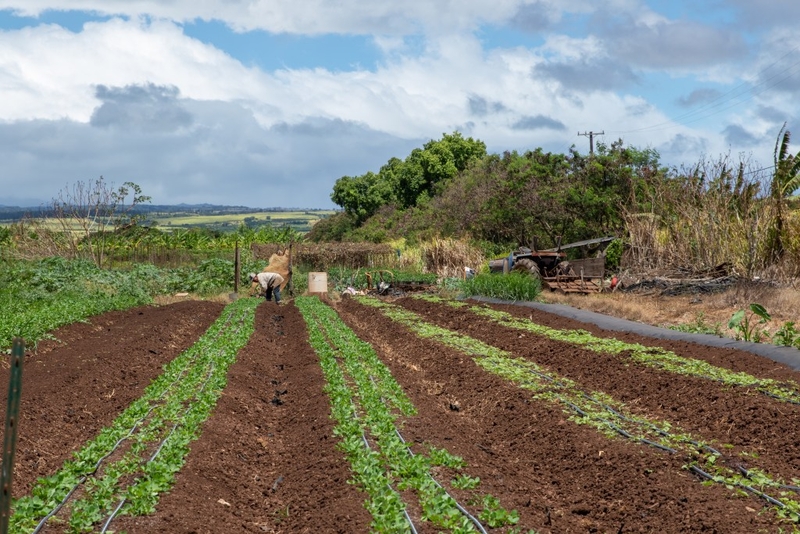
Description
Photo courtesy of Honolulu Civil Beat
The state could more than double the value of its agricultural industry if Hawaiʻi-specific federal regulations were streamlined to give local producers a greater chance of selling products in the continental U.S.
That’s according to the Hawaii Institute for Public Affairs, whose latest report estimates that farmers lose out on approximately $800 million in potential mainland sales every year – more than the entire industry’s estimated value.
The current federal biosecurity framework essentially treats Hawaiʻi like a foreign nation, pitting farmers against a tedious set of biosecurity regulations which, according to the institute, could be simplified to help local agriculture. Those regulations are designed to protect the mainland from Hawai'i’s myriad agricultural pests, such as fruit flies, but have crippled the islands’ farmers by keeping them from key mainland markets, the report says.
The problem should be a statewide economic concern, the report says. Addressing the problem would be a game-changer for the state, allowing farmers to unlock entirely new markets with new and existing crops, said Cameron Deptula, one of the report’s authors.
State leaders have long pledged to increase local food production and food security, though persistent struggles with regulations and the cost of land, labor, water and infrastructure have hampered efforts. Agriculture currently accounts for just 0.4% of the state’s economy, about $554 million in 2025.
The lion’s share of that value is created within the state, as hardly anything leaves Hawai‘i.
“We export pineapples, papaya, basil, but not much else,” said Brian Miyamoto, Hawaiʻi Farm Bureau executive director.
The list of permitted produce is short. For new commodities, such as specific varieties of banana or citrus fruits, the approval process includes specific testing that leaves farms in a bind as they try to expand their markets, Deptula said.
Reducing regulatory burdens — primarily by shortening the length of time it takes for a new commodity to be approved, which can take five-plus years — should be a priority, said Deptula, who also serves as a special adviser to Gov. Josh Green.
Hawaiʻi must ultimately bolster its own biosecurity to help convince the feds to ease restrictions and truncate approval timelines for new produce, he said.
Just two agricultural operations are currently going through the regulatory process: Mahi Pono on Maui, for limes, and Volcano Wasabi on the Big Island.
The level of scrutiny crops face is largely based off the potential risk they could have to mainland crops. For limes and lemons, that’s quite high, especially in places like California. So if Mahi Pono wanted to send a different lime variety to the mainland, it would have to do the same process all over again.
“It shouldn’t matter what variety of avocado, it shouldn’t matter what kind of mango,” said Ken Love, executive director of Hawaiʻi Tropical Fruit Growers.
But even for Volcano Wasabi, which grows wasabi on the Big Island, the process started more than four years ago with a pest risk assessment. The assessment, which requires extensive research into any associated pests’ impacts on mainland flora and fauna, took two years. It’s taken another two years for the review process, which is still not complete.
The report estimates the impact is $760 million in lost revenue for the industry, as well as over $40 million in pre-departure inspection and compliance costs.
“It doesn’t matter if you’re a big old farm with resources to work with lobbyists and to get legal advice, even the smallest level and largest system is stuck,” Deptula said.
There are then added stipulations, including mandatory treatments, which can alter the quality of the produce and render the process worthless. For Hawaiʻi's mangoes, which have to be heat-treated before export, it's not even worth shipping off island, Love said.
That has left farmers with two options: Sell exclusively in Hawaiʻi or find ways to process crops into shelf-ready and pest-free products.
Processing techniques like pasteurization are a way to maximize profits for farmers and eliminate waste by using produce that may not meet aesthetic standards. But it has also been a way to eliminate risk for farmers who might lose produce to the delays associated with federal quarantines, Deptula said, part of the reason why lawmakers have invested millions of dollars into food processing facilities statewide.
Miyamoto of the Farm Bureau said the issue has been discussed in Washington with Hawaiʻi's congressional delegation. He has also raised it with the secretary of the U.S. Department of Agriculture.
Love said the state must feed itself first and foremost. The state already ships out 20 million pounds of oranges and 45 million pounds of bananas, he said.
So while ramping up exports would be a good thing in some ways, initiatives to replace imported goods should also become more common. Love's organization recently distributed 12,000 orange and banana trees under such a program to find a "happy medium," he said.
Honolulu, HI