Federal judge denies U.S. DOJ attempt to obtain Wisconsin voter data
May 21, 2026 | 3:43 pm ET
Description
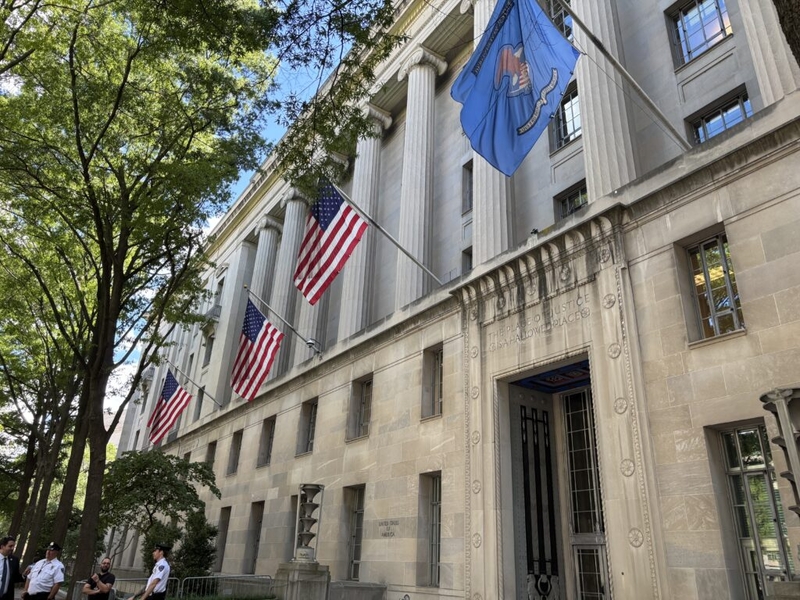
American flags hang alongside the official agency flag at the U.S. Department of Justice building in Washington, D.C., in August. The Justice Department is sharing state voter roll data with the U.S. Department of Homeland Security.
(Photo by Jonathan Shorman/Stateline)
A federal judge on Thursday dismissed the request from the U.S. Department of Justice for Wisconsin’s unredacted voter rolls. The ruling marks a defeat in the Trump administration’s renewed effort to scrutinize the election administration of swing states that President Donald Trump lost in 2020.
The federal government first requested Wisconsin’s unredacted voter registration list last summer, making a similar request to most other states. The Wisconsin Elections Commission denied the DOJ request, citing state privacy laws, and pointed the department to the publicly available redacted list.
The DOJ responded by suing WEC for the unredacted list. The federal government has filed similar lawsuits in 30 other states.
Republicans and their allies have for years alleged that the data management practices of state election administrators are vulnerable to fraud. Voting rights groups and Democrats have countered that the Trump administration is seeking to fan the flames of election conspiracy theories and meddle in state elections by collecting massive amounts of voter data.
U.S. Judge James Peterson found that the personal information of voters, including birthdays, Social Security numbers and driver’s license details, isn’t a record the DOJ can demand under the Civil Rights Act.
“Defendants and their amici contend that the government’s position fails for multiple reasons, specifically: (1) a voter registration list is not a record subject to production under Title III; (2) the government has not provided an adequate statement of basis and purpose, as required by the statute; (3) the government has not explained why it needs an unredacted copy of the voter list, as opposed to the publicly available redacted version; and (4) the government’s request is barred by state and federal privacy laws,” Peterson wrote. “The court agrees that a voter registration list is not a record subject to production under Title III, so it will dismiss the complaint on that ground without considering defendants’ other arguments.”
The DOJ has lost parallel efforts to obtain this type of data in eight other federal district courts.
After Peterson’s ruling, attorneys from Law Forward and the ACLU celebrated the decision, stating that it protects Wisconsin’s voters from potential intimidation.
“Requiring Wisconsin to disclose this sensitive personal information despite laws prohibiting just that would have threatened the privacy of Wisconsin voters and the removal of eligible voters from voter rolls for no reason,” said Doug Poland, Law Forward’s director of litigation. “Federal law leaves it to states to administer their own elections, and Wisconsin already has reliable processes for maintaining its voter rolls.”
Poland said the purported premise behind the federal demand — to uncover evidence of noncitizens voting in elections — was a pretext.
“Given the rarity of noncitizen voting, this lawsuit, and similar efforts in other states, are thinly-masked efforts to manipulate and subvert future elections,” he said. “The court recognized this as an illegal attempt to gather and weaponize data on Americans, dressed up in the language of voting rights enforcement. We will continue to stand up to the Trump administration’s illegal schemes to interfere with elections administration and erode the rights of voters in Wisconsin.”
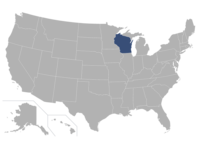
Madison, WI