Federal judge blocks use of Alabama’s nitrogen gas execution protocol
Jun 09, 2026 | 8:49 pm ET
Description
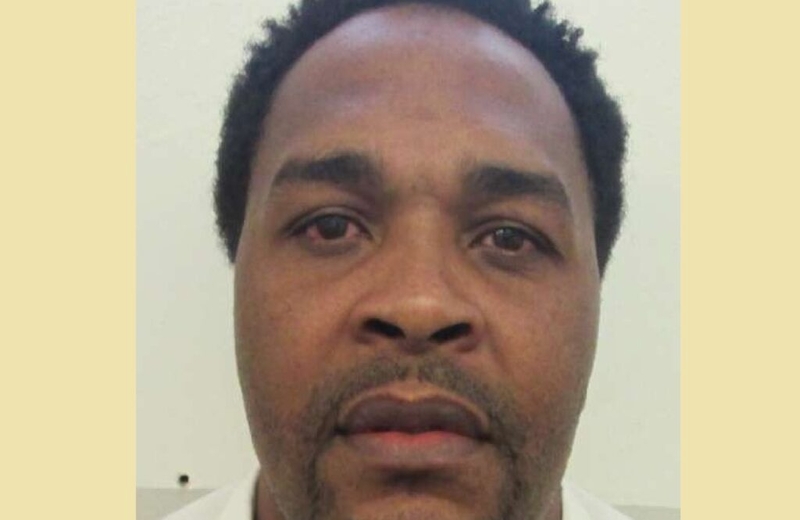
A jury convicted Jeffery Lee, 50, of the 1998 murders of Jimmy Ellis and Elaine Thompson during a pawn shop robbery. Lee was scheduled to be executed by nitrogen gas on Thursday, but a federal judge Tuesday ruled that it constituted cruel and unusual punishment. (Alabama Department of Corrections)
Key points
- A federal judge Tuesday ruled Alabama’s nitrogen gas protocol constituted “cruel and unusual punishment” and said a death row inmate showed a firing squad was a feasible alternative.
- The ruling came after an appeals court ruled that the “air hunger” created by the method was “over and above” distress allowed in executions.
- Tuesday’s decision throws future uses of nitrogen gas — which Alabama has employed in seven executions since 2024 — into uncertainty.
A federal judge Tuesday ruled that Alabama’s nitrogen gas execution protocol constituted “cruel and unusual punishment,” throwing future uses of the controversial method into doubt.
U.S. District Court Judge Emily Marks, ruling a day after a three-judge panel found the method constituted a “substantial risk of serious harm” to Jeffery Lee, scheduled to be executed on Thursday, wrote that Lee’s proposal to be executed by firing squad was a feasible alternative method.
“The state has failed to articulate a legitimate penological reason for refusing to adopt Lee’s proposed alternative,” Marks wrote. “Therefore, Lee has shown by a preponderance of the evidence that the protocol constitutes cruel and unusual punishment in violation of the Eighth Amendment.”
Marks said the ruling “does not disturb the state’s ability to administer capital punishment,” noting the state still has electrocution and lethal injection on the books. The state does not currently use the firing squad as an execution method.
But the order throws future executions using nitrogen gas into uncertainty. Alabama began putting people to death under the method in 2024, with witnesses often reporting lengthy gasping and convulsions from those undergoing them. Alabama has carried out seven nitrogen gas executions. Louisiana conducted a nitrogen gas execution in March 2025.
Attorneys for Lee declined comment Tuesday night. It was not immediately clear if the state would appeal. A message was left Tuesday with the Alabama Attorney General’s Office.
Jeff Hood, who works as a spiritual advisor to those on Alabama’s death row, said in a statement Thursday that the “truth is finally free” on the execution method.
“Every attorney general who sold the method, every warden who administered it, every politician who approved it are all now under a scrutiny that will not stop at Alabama’s borders,” the statement said.
A quest for a stay
Lee, 50, was convicted of capital murder for his role in the deaths of Jimmy Ellis and Elaine Thompson in 1998 in Orrville, Alabama. A jury voted 7-5 to sentence him to life without the possibility of parole, but the judge overrode the recommendation and sentenced him to death.
Lee argued that the state’s nitrogen gas protocol violated his Eighth Amendment right against cruel and unusual punishment because it would cause “air hunger,” or sustained periods of oxygen deprivation that would expose him to psychological pain.
Marks found that the execution method does expose him to “air hunger” but only for one to three minutes, which Marks said was not a level that would be enough to violate his Eighth Amendment protections against cruel and unusual punishment
However, the three-judge panel disagreed.
“Counting to 60 or 180 seconds is not a quick exercise, and constitutionally speaking, that timeframe is intolerable given the suffering that would likely take place under Alabama’s nitrogen hypoxia protocol,” the ruling on Monday stated. “Such suffering, we believe, is over and above the mental distress that typically accompanies the knowledge of impending death by execution.”
Days before Alabama execution, federal court orders new hearing
The judges ordered Marks to evaluate whether a firing squad execution would be feasible. Lee’s attorneys argued in a Tuesday filing that they presented evidence that execution by firing squad was an acceptable alternative.
“Dr. James Williams — the only expert on gunshot wounds, ballistics, and firearms to testify at trial — explained that execution by firing squad is very likely to result in rapid loss of consciousness and death with no pain,” the filing states. “Based on his review of the medical literature and his extensive knowledge about firearms, Dr. Williams testified that multiple gunshot wounds to the cardiac bundle by high caliber rifles would render an inmate ‘deeply’ unconscious in three to five seconds.”
They also challenged testimony from the expert put forward by the Attorney General’s Office that executing a person by firing squad is painful based on a single experience, “the botched execution of Mikal Mahdi in South Carolina, a firing squad protocol that Mr. Lee did not propose.”
Mahdi was executed in April 2025. Witnesses reported that Mahdi groaned as the bullets struck him and took at least 45 seconds to die.
Filing a motion in opposition to the request, the Alabama Attorney General’s Office said that the U.S. Supreme Court has never invalidated a method of execution and that it will take time for the state to approve Lee’s proposed alternative.
“Those methods—whether they involved ‘several minutes’ of ‘suffocation’ or ‘seven minutes of physical pain…and terror’ — were constitutional even though the State could have used (a) firing squad,” the state’s motion said.
The Attorney General’s Office also said that ruling in Lee’s favor would prevent the state from carrying out justice.
“Among other concerns, the state cannot risk being unable to carry out its sentences because of labor supply issues any more than drug supply issues,” the AG’s motion states.
To carry out Lee’s recommended method, Alabama would need to find “five expert marksmen willing and able to serve as executioners.”
Sufficient pain
In the end, Marks disagreed with the arguments provided by the medical expert who testified on Lee’s behalf, who said that death by firing squad would be less painful than nitrogen gas.
Kenneth Eugene Smith executed by nitrogen gas for 1988 murder-for-hire scheme
“When the bullets strike the heart, according to Dr. Williams, the result will be an immediate and total loss of blood flow to the brain, producing unconsciousness within three to five seconds,” Marks said in her order.
Marks also disagreed with the claims made by the Alabama Attorney General’s Office. She said that Joseph F. Antognini, the medical expert for the state, did not provide sufficient evidence that Lee would experience significant amounts of pain while he is executed by firing squad.
“Antognini could not identify the names of any studies or authors he relied on to form his opinion that an inmate’s consciousness would persist for eight to ten seconds after being shot,” Marks said. “Considering Dr. Antognini’s concessions, the Court excluded Dr. Antognini’s opinions regarding pain caused by a firing squad execution.”
Marks also did not find the state’s argument that it would not be able to find volunteers compelling.
“Notwithstanding the State’s argument, Hamm and Charles Williams both testified that if firing squad were an approved method of execution, the ADOC would be able to train and staff an execution team capable of executing an inmate by firing squad,” Marks said.
“And the state’s concern regarding the use of volunteers would apply to all methods of execution—the State cannot compel staff to participate in any execution, regardless of the method.”
Updated at 9:14 a.m. Wednesday with a key points box, written by Editor Brian Lyman.
Montgomery